- Updated on September 10, 2020
 By Dr. Artour Rakhimov, Alternative Health Educator and Author
- Medically Reviewed by Naziliya Rakhimova, MD
Mouth Respiration in Kids, Babies, Toddlers, and Infants
“Baby sleeps with mouth open”
Mouth Respiration causes, effects, treatment, and prevention
 Children (including babies, toddlers, infants and newborn) who are mouth breathers experience the same pathological effects of mouth breathing as adults. These effects include abnormalities in blood gases, cell hypoxia (reduced body and brain oxygen content), reduced perfusion of all vital organs, suppressed immune system and many other “adult” effects. Apart from this, there are specific dental effects related to children and their developmental dynamic. Mouth breathing in children, as many studies showed, leads to permanent structural changes in the shape of the face. After years of mouth breathing, the jaws become protruded forward. Therefore, parents and care-takes must be concerned about mouth breathing in children and when seeing that their “baby sleeps with mouth open”.
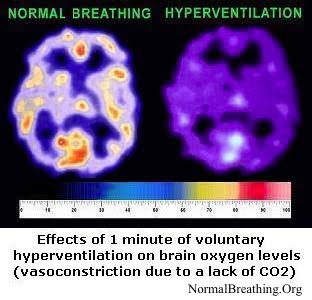
Mouth Respiration
You may read abstracts of these studies on the separate page here. Here are their titles: – Prevalence of malocclusion among mouth breathing children: do expectations meet reality? (Souki et al, 2009)
- Etiology, clinical manifestations and concurrent findings in mouth-breathing children (Abreu et al, 2008)
- Relationship between mouth breathing and postural alterations of children: a descriptive analysis (Krakauer et al, 2000)
- Radiological evaluation of facial types in mouth breathing children: a retrospective study (Costa et al, 2008)
- Indicative factors of early facial aging in mouth breathing adults (Oliveira et al, 2007)
- Prevalence of oral malodor and the relationship with habitual mouth breathing in children (Kanehira et al, 2004)
- A comparative study of effects of mouth breathing and normal breathing on gingival health in children (Gulati, 1998)
- The negative effect of mouth breathing on the body and development of the child (Flutter, 2006)
Mouth Respiration in adults remains one of two factors contributing to mortality in the severely sick due to chronic diseases. Statistically, early morning hours (from about 4 to 7 am) have the highest death toll due to heart attacks or anginas, strokes, seizures, asthma attacks and many other acute episodes. This phenomenon and related medical articles are discussed on the web page “Sleep Heavy Breathing Effect“.
 Is there any therapy or organized group of medical professionals who provide techniques to stop Mouth Respiration in adults, children, babies, toddlers, infants and newborn, and who demand nose breathing as a necessary quality of good health?
To my knowledge, there is only one medical therapy that provides solutions and techniques for mouth breathing problems in adults and children of all ages, including newborns and infants. This therapy also considers and demands nose breathing 24/7 as a crucial factor for health and wellbeing. Mouth Respiration has been practiced by over 200 MDs in the USSR and Russia and was developed by leading Soviet physiologist Dr. K. Buteyko. It is known as the Buteyko breathing method.
Mouth Respiration in infants, babies, toddlers, and children
| – Malocclusion – Higher levels of Gingival index – Allergic rhinitis – Enlarged adenoids and tonsils – Constipation – Obstructive deviation of the nasal septum – Postural alterations – Facial changes (long face, half-open mouth, and increased anterior facial height) – Oral malodor.
(Article abstracts related to these medical research findings are also provided below.) |
Photo. Dr Konstantin Buteyko, leading Soviet physiologist, MD, Ph.D. with a child (1980s) |
Typical clinical manifestations in children, toddlers, and infants, who are mouth breathers– Sleeping with mouth open |
Main causes of problems with nose breathing and poor health in children– Over-heating (wearing too much clothing) |

Mouth Respiration in toddlers, babies, infants, and children can also intensify the development of any chronic pathology, including obesity, cancer, diabetes, asthma, heart disease, and many other conditions.
Hence, oral breathing promotes “adult” diseases in children. Breathing training is vital in order to experience all benefits of breathing normalization and nose breathing, and stop mouth breathing during the daytime, sleep, play, and at all other times.
YouTube video: Mouth Respiration, Swaddling, Effects on Body O2.
How to treat and stop mouth respiration in kids, babies, toddlers, and infants
 The main requirement for success in dealing with young mouth breathers, while using the Buteyko breathing method, is nose breathing parents and caretakers who also understood and learned the Buteyko method and applied its techniques on themselves.
The adults need to increase their brain and body oxygenation to at least 30 seconds.
Only then, kids can learn, or rather copy, their parents’ habits in relation to, for example, mouth taping during sleep, physical exercise performed with nose breathing only, and the use of other beneficial techniques and habits to increase body oxygen and to improve one’s health.
Amazing bonus content
For further education of Mouth Respiration, see the medical research article “Using the Buteyko Breathing Method For Children” (translation from Russian) written by Dr. Natalia Lapa, MD. The paper is provided below as your bonus content.
Dr. Lapa was trained as a Buteyko breathing practitioner by Dr. Konstantin Buteyko himself. The paper was published in the book “Buteyko method. Its application in medical practice”, ed. by K. P. Buteyko, 2nd ed., 1991, p. 57-62, Titul, Odessa, USSR.
References for this page: Mouth breathing in children – studies.
Related web pages:
– Croup cough– Overview of croup
– How to unblock the blocked nose – This article provides a Buteyko breathing exercise that can be used by adults and children
– How to maintain nose breathing 24/7 – Instructional Guide, which describe what to do at night during sleep to stop mouth breathing.*Children 3-4 years or older can follow and use many of these techniques, while infants (less than 3 years) require different methods and strategies (see the next article).
Here is the fantastic article (hidden right below here). It was written by Dr. Lapa, MD who taught thousands of children in Russia and England. The paper provides detailed instructions about how to teach easy nose breathing to children of three different age groups.
You can unlock this bonus content by sharing the URL of this page on one of your social networks.
Bonus article
Dr. Natalia Lapa, MD, Specialist in Remedial Gymnastics
Children Hospital No. 8, Novosibirsk, USSR, 1991
The paper was published in the book “Buteyko method. Its application in medical practice”, ed. by K. P. Buteyko, 2nd ed., 1991, Titul, Odessa, USSR [in Russian].
To run the Buteyko breathing method sessions with children is a kind of professional test on how well one knows the Buteyko method as doctor-practitioner and also it is a serious exam for parents. This is creative and exciting work, promising even with very ill children.
They have a strong capacity to acquire new information, their bodies contain less poisons and toxins, their compensatory body function is not completely destroyed, metabolism is flexible and the ability to regenerate is high.
Working with children means to care about our future generations as they will later become parents themselves.
Unlike adults, children are not familiar with popular medical views. They are more instinctive, their inborn reflexes are correct, and that explains why alternative medicine notions are more in tune with children’s needs and wishes.
Children do not want to cough phlegm out but they are forced to do that. Many of them do not want to drink after meals, and they do not like sandwiches.
They prefer natural vegetables to salads, but gradually get trained to eat them. I have never met children who don’t cry in the doctor’s office or while some tests are taken. But they are very happy with non-medicinal treatment especially when some physical or water activities are included.
A doctor working with children for Mouth Respiration has to be able to give them a clear and easy to understand explanation of the theory and practice of the Buteyko breathing method, or that which is causing the disease and how they can become free of it.
Don’t convert your teaching method into cliches and stereotypes.
Make it different for each individual!
It is very important to help parents to understand that the process of sanitation and keeping children healthy will last their whole lifetime. Remind them that children are individuals requiring respect and having their own desires.
The most serious damaging factors causing uncontrollable growth of the depth of breathing are over-feeding of kids, over-heating and a lack of physical activity.
Children’s development depends greatly on their environment. The smaller they are, the greater the dependency. That is why they often copy a character, views, habits of their parents, including their attitude to health.
If mother and father do nothing to improve their health, any attempts to do something for children in this respect are taken by them as unjust and a constraint.
The best encouraging motivation for kids is an example from parents, a competition with them. That means rehabilitation must be a family business.
During our sessions of Mouth Respiration, we tried to explain to both parents and children that health is a real treasure and to achieve it takes a great deal of effort. A child should comprehend what is the cause of his illness and how the Buteyko breathing method works.
Otherwise, our teaching will become a set of cliches: sealing up a mouth at night, training is just 10 control pauses [body oxygen test], stopping an [asthma] attack is 5 breathing cycles, etc. For better motivation and consolidation of the method, you can offer a kid to share his knowledge with newcomers, encouraging him to use examples from his personal experience.
Both parents and children have to learn a fresh approach to life. And in case they forget about something like nasal breathing, walking, proper nutrition, then it is up to a doctor to remind them gently.
In accordance to the particular features, we can divide children into three age groups: up to one-year-old (infants), from one to three (toddlers), older than three-year-old.
First group (infants, up to one-year-old)
It is necessary to start training infant children with the Buteyko breathing method from the day they are born. Don’t wait until an infant child will begin to understand your theory and recommendations.
Parents have to expose their willpower, patience, and love in order to conquer their child’s illness. Elimination of deep breathing can be performed on kids of that age by using a range of factors decreasing a breath and normalizing nasal breathing.
This includes tight swaddling, mouth fixation by a dummy or patch, water and tempering procedures, physical exercises and rational nutrition.
Also, we can use – as a variation of the Buteyko breathing method training- I. B. Charkovsky method: diving in a bathtub, showering, and teaching babies to swim. This is a wonderful method. Every dive is a control pause. Their number should be gradually increased up to 100-200 times a day.
Second group (toddlers, from one to three years old)
This group is the most complex one with respect to the method’s recommendations. At this time all children are admitted to a circle where they are fed constantly with sweet porridge with milk.
They are wearing shoes all the time and they spend a lot of time in stuffy rooms. But even under this condition parents and doctors have to control their nasal breathing day and night.
If necessary, you have to seal the toddler’s mouth up with a piece of tape at night. Toddlers must sleep on their tummies on a hard bed.
It is recommended to conduct the Buteyko breathing method sessions with toddlers using some elements of games:
1. Sitting in front of the mirror we are breathing “like mice” – one can’t see or hear us.
2. The “Rabbits – wolves” game. After running around for 2-3 minutes we stop and hold our breath. Toddlers are “rabbits” and a doctor or a parent or one of the kids is “a wolf”. The wolf is walking around and listening for rabbits’ breathing. If he can hear it, then he “eats” that rabbit.
3. To cover a distance between two balls on the floor keeping a control pause, to climb a gymnastic ladder holding their breath, etc.
4. Sitting after a control pause we become “as soft as a cloth” and breathe “like mice” (a doctor checks their ability to relax).
For kids, at the age of 1 to 3, a leading role in the adaptation to nasal breathing and a constant growth of CO2 belongs to physical exercise. We have to remember that at that age the ability to copy and imitate especially their parents is developed utmost.
Therefore, sessions should be conducted together with parents who can participate in measuring a control pause, running around breathing through the nose and dousing with cold water. It helps a lot if we seal child’s mouth up with a piece of tape while running or doing physical exercises.
Exercise programs can vary, but I prefer yoga, as each exercise in yoga is accompanied with a breath holding, many of them are performed with a significant relaxation of muscles-retractors which produces some general relaxing effect.
In my view, at this age, a control pause does not play a role of a health index as it does for adults and does not reflect the stage of the disease. The longer the child’s control pause, the better he comprehended your requirements. Certainly, their control pause can fluctuate greatly – from 2 to 20 and even to 60 and back.
Thus, at that age, we have to rely more on keeping nasal breathing up and the child’s adaptability to a load. On that ground, I believe that to teach children the Buteyko breathing method without physical activities during the sessions, putting them in seated position as it is recommended by some practitioners, is a mistake.
Third group (children older than three years old)
At the age of three and above children begin to behave consciously and capable of acquiring the method at times even better than their parents.
We give children the following explanation. This is:
1 – the continuous (day and night);
2- decrease (holding chest and stomach still);
3 – of the depth of breathing (breathe so quietly nobody can notice anything);
4 – along with a relaxation (be soft “as a cloth”); 5 – until slight shortness of breath is felt (desire to inhale deeper).
We always measure a control pause after physical activities (walking, jogging, marching, squatting, etc.). Parents are taking part in our training sessions where we teach children to be relaxed walking and jogging, to keep a beautiful posture with shoulders lowered, chest and stomach “soft”, movements light and free.
It’s a good idea to organize competitions between children and parents: the greater someone’s control pause and the number of those pauses, the better marks one obtains.
Some tests examining the knowledge related to the Buteyko breathing method and readiness to work independently on it also can be held in the middle and at the end of a session. In K. P. Buteyko’s recommendations, there are specific questions for such exams. For parents, special attention should be paid to role-playing.
Examples:
1. Seven-year-old child with bronchial asthma is using the Buteyko breathing method for two weeks; his control pause is 6-8 seconds, pulse 100-120 beat/min., shortness of breath occurs up to 4 times a day. The Buteyko breathing method helps to stop half of those attacks. What are your actions?
2. Four-year-old child with dysbacteriosis has been practicing the Buteyko breathing method for 10 days. His control pause has been doubled. He has the following symptoms: groundless diarrhea, vomits once, temperature rose to 39C. Your actions?
During the sessions, parents should control their children and vice versa. Children should observe their parents at training, correct their mistakes, explain to them why, for example, over-holding of control pause is dangerous.
Duration of the course for kids is from two weeks to one month, better daily, at 30-60 minutes each followed by water procedures.
An example of the session with children aged from 2 to 7
1. Sit, shut the mouth, check posture, lower shoulders, make a breath quiet, relax chest and stomach. Count pulse and breath frequency, define a control pause. Check nasal breathing. If it does not work properly start the Buteyko breathing method or physical activities.
2. Measure a control pause, then breathe only through the nose “like mice”. Remember that the mouth is for eating and talking, eyes for seeing, ears for listening, and a nose for breathing. How should we be breathing? Only through the nose and quietly.
3. Divide into groups of 2-3. Each group is measuring their control pauses. Children from other groups observe that and offer their comments. Then parents are measuring their control pauses and children are checking their breath after the pause.
4. Children with parents are walking in a circle slowly, watching their posture, breathing quietly through the nose. Gradually they are switching to sporting walking and jogging. 2-3 minutes-run keeping nasal breathing. Then all come to stop and start playing “rabbits and wolves”.
5. Measure control pause while walking, running, squatting, jumping up, and turning on the right and left legs. During breaks breathe quietly and unnoticeable.
6. Several yoga exercises: “swing”, “bow”, “snake”, “perfection”, “fish”, etc. Control your breath.
7. Exercises with dumb-bells. Control your breath.
8. Cold water sponge down.
9. Manual therapy or cups massage if required.
10. End of session: sit down and measure a control pause, pulse, respiratory rate.
11. 10-15 minutes of theory.
[/sociallocker]