- Updated on September 13, 2020
 By Dr. Artour Rakhimov, Alternative Health Educator and Author
- Medically Reviewed by Naziliya Rakhimova, MD
How to Stop Mouth Breathing: Techniques and Program
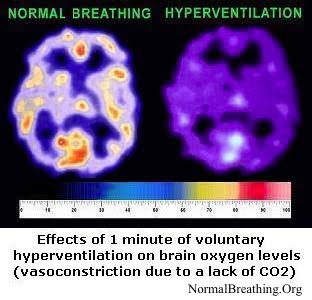 When you stop nose breathing and your mouth is open, you suffer from deficiencies in O2 (oxygen), CO2 (carbon dioxide), and NO (nitric oxide) in body cells due to hyperventilation.
This leads to:
– decreased perfusion (blood supply) of all vital organs
– suppressed Bohr effect
– over-excited state of nerve cells causing increased anxiety, more problems with sleep, etc.
– constrictions of airways, leading to dyspnea, nasal congestion, and frequent infections
– muscular tension
– tissue hypoxia
– generation of free radicals in body cells
– increased inflammation and heart rate
– abnormalities related to regulation of the blood pressure, blood glucose levels, and body weight
– suppressed repair of cells, tissues, and organs; and so forth.
For medical research related to these and many other effects, visit the links below or the web page Mouth vs. Nose Breathing Effects.
Stop mouth breathing works if you know the cause
 Regardless of the superficial causes and triggers, there is one cause of mouth breathing: chronic hyperventilation. Hyperventilation leads to the primary effects outlined above. These effects produce secondary symptoms of hyperventilation such as sinusitis, extra-mucus production, enlarged tonsils, and adenoids, deviated septum, snoring, sleep apnea, and other pathologies that worsen nasal breathing, creating an illusion that they cause mouth breathing. Hence, in order to stop mouth breathing, one needs to stop his or her hyperventilation and increase body-oxygen levels.
Mouth breathing treatment options are numerous. Depending on the current clinical picture and symptoms, the effective treatment for mouth breathing includes immediate respiratory techniques and long-term breathing exercises and lifestyle changes in order to retrain the automatic breathing pattern.
Mouth-breathing treatment options
– If you suffer from occasional sinusitis (nasal congestion, blocked nose, or stuffy nose), apply the technique How to Unblock the Nose Breathing Exercise. It works in 1-2 minutes and this exercise can be applied as many times as you like. (By the way, this exercise instantly proves that heavy breathing, which is the cause of your mouth breathing and nasal congestions since CO2 does wonders as an instant and long-term mouth breathing treatment).
 – If you suffer from mouth breathing during sleep, learn the medical technique How to Tape the Mouth at Night for stopping oral breathing during night sleep. Note that for most people it is impossible to stop mouth breathing if they sleep on their back at night. Sleeping on your back increases chances of mouth breathing some 5-10 times. For this reason, if you sleep on your back, it is also important to apply the treatment Prevent Sleeping on One’s Back.
– If you are afraid or nervous to use tape at night, you may tape only one half of your mouth, or you may use 2 clean cotton socks and sew them together to make a support for your jaw. Sleeping in a sitting position is another excellent option to feel better in the morning and have higher morning body-oxygen test results.
 – If you suffer from memory problems and your mouth opens automatically (you are a habitual mouth breather), learn about steps related to constant reminding about the importance of nasal breathing. Use stickers on your tables and desks, PC screens, doors, and other places on the house reminding you, “Nose breathing!” or “Close the mouth”. Keep a large mirror on your working desk in front of you so that you can see your face and the way you breathe. If you have children, promise them a treat if they notice you breathing through the mouth.
– If you are a chronic mouth breather (due to adenoid vegetation, nasal polyps, deviated septum, and other causes), a simple and effective way to acquire nasal breathing fast and all the time is to apply Buteyko reduced breathing exercises.
However, right now, there are better and even faster options than the Buteyko breathing methods for people with sleep apnea, snoring at night with mouth breathing, obesity, hypertension, asthma, and diabetes. These 2 options are provided below as your bonus content.
You should consider using breathing devices: the Frolov breathing device or Amazing DIY breathing device. A blocked nose will not prevent you from using breathing devices. In addition, there is no need to have a breathing teacher or practitioner.
[/sociallocker]
In general, your chance of success for this (stop mouth breathing treatment) program depends on your unconscious or automatic breathing pattern in the following manner.
Relationships between body oxygen level and chances of an open mouth
| Body-Oxygen Level | Minute Ventilation* | Chance of mouth breathing, especially during sleep |
| Less than 10 s | Over 20 L/min | Very likely |
| 10-20 s | 12-20 L/min | Likely |
| 20-30 s | 9-12 L/min | Very unlikely |
| 30-40 s | 6-9 L/min | Almost impossible |
| >40 s | <6 L/min | Virtually impossible |
* Minute ventilation for a 70-kg person at rest
In order to achieve a higher body-oxygen level right now, you can use free Buteyko breathing exercises and breathing techniques. Free detailed instructions (breathing exercises and lifestyle changes) are provided in the section Learn.
Check it here: a mouth breather has a low body oxygen level: Body Oxygen Test.