- Updated on August 13, 2020
 By Dr. Artour Rakhimov, Alternative Health Educator and Author
- Medically Reviewed by Naziliya Rakhimova, MD
Learning the Buteyko method by modules
Module 8-A. Restrictions, side effects, limits, and temporary contraindications for breathing exercises
Some breathing students can experience very high or increased heart rate (pulse) and feel worse after breathing sessions, including the Buteyko, reduced breathing exercise. These students may also notice that they feel worse and their breathing becomes more irregular (dysregulated breathing). Note that we are not talking here about irregular breathing patterns that can be caused by sleep apnea when people have apneic episodes (breath holds) during sleep. We discuss here the effect of breathing dysregulation that can be caused by breathing exercises.
Generally, correctly done reduced breathing sessions should not lead to an increased heart rate. In fact, the final pulse (after the session) should be lower than the initial pulse for Buteyko exercises unless this student drank coffee or ate foods with caffeine within hours before the session. What are the causes of higher pulse and dysregulated breathing?
Dysregulation of respiration due to a loss of CO2 sensitivity is a specific topic that can be very important for some students and is surely important for practitioners or teachers of the method. Among all available DVD breathing courses, this topic is discussed in detail only in the Advanced Buteyko Breathing Exercises book.
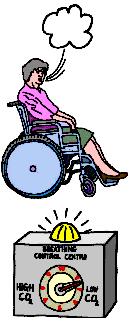 What is the cause? Breathing becomes dysregulated when the capnostat (the breathing center that is controlled by changes in CO2) has a too large alveolar CO2 increase. The effect takes place only in a small number of people who are genetically predisposed to heart disease, suffer from allergies, inflammation, low body weight, overheating, a lack of Ca and arginine in diet, and/or a lack of deep stages of sleep or sleep deprivation. It is a combination of factors that lead to dysregulation of respiration. problems with normal control of breathing, and a loss of CO2 sensitivity.
Loss of CO2 sensitivity and dysregulation of respiration cause vasoconstriction and reduced blood flow to vital organs. This effect can cause headaches and drastically reduce the well-being of a person.
Loss of CO2 sensitivity is practically manifested in dysregulation of breathing and sudden increase in resting pulse, generally up to 90 beats per minute or more, after a single breath hold (it can be a CP or a longer pause) or after 1-3 minutes of reduced breathing. The effect can last for hours, weeks, or months depending on personal lifestyle and techniques used to treat this condition.
Treatment of dysregulation of breathing and lost CO2 sensitivity
Among crucial factors for recovery from lost CO2 sensitivity and restoration of regular respiration are: no air hunger, no breath holds (no CP tests as well), arginine in diet (to increase nitric oxide production), no overheating or overcooling, humming (after meals and/or nearly all the time), correct posture, avoidance of low and high blood glucose levels, and some other factors.
There is one central idea that is very useful in order to monitor which activities and breathing exercises are beneficial in order to treat and cure dysregulate breath. You can find out this idea below here as your bonus content.
Measure your heart rate (pulse) before and after breathing exercises and any other activity that you want to use. Your final pulse (after the activity) should be lower than your initial pulse. But, for physical exercise, you need to wait for double exercise duration to see its effects on your pulse and health.
[/sociallocker]
But you can find many more details and tips about how to treat lost CO sensitivity and dysregulated breathing in the book:
“ Advanced Buteyko Breathing Exercises” (Kindle and paperback) on Amazon.com or
“Advanced Buteyko Breathing Exercises” (in PDF format) on this site.
– This page in Spanish: La pérdida de la sensibilidad de CO2 y ejercicios de respiración.