- Updated on September 13, 2020
 By Dr. Artour Rakhimov, Alternative Health Educator and Author
- Medically Reviewed by Naziliya Rakhimova, MD
Module 6 (Part A). Best sleeping positions and supine sleep
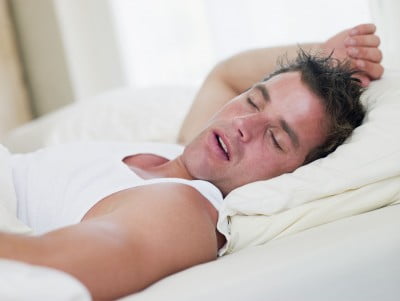
Medical research (over 25 Western clinical studies) testifies about the adverse effects of supine sleep on different groups of adults. These studies tested 100s of people for effects of different sleep positions, and found that sleeping on the back leads to higher incidence of sleep paralysis (with terrifying hallucinations), stroke, asthma, increased airway resistance, and sleep apnea episodes: see best sleep positions for the summary and a separate page with abstracts and details of these studies.
Several of these studies found lowered blood oxygenation for sleeping on the back. These abstracts are quoted in Module 6-B: Sleep Positions. As a result, it is smart to stop and prevent supine sleep.
Benefits of the body-oxygen test for testing supine sleep

Over 170 Soviet and Russian practical Buteyko breathing medical doctors tested thousands of people with various health problems and suggested that their body oxygen level (which is measured with the CP test – see instructions in the link below) is the best ever-known health-state indicator.
These doctors intensively investigated sleep and its effects on health. They suggested that supine sleep and mouth breathing during sleep are the key causes that the explain highest mortality rates in the severely sick with chronic diseases. Buteyko doctors also discovered the following order of sleeping positions for maximum health benefits (the best at the top and the worst and the bottom):
– sitting
– prone (or on one’s chest)
– left side
– right side
– supine sleep (see the web page Sleep Positions for more detail).
These doctors suggested using this body-oxygen test to check different sleep positions. Perform this test after sleeping in different sleeping positions. Note that you should spend about 10-15 minutes in a certain position in order to achieve a stable metabolism which corresponds to this sleeping position before you can measure the effectiveness of any sleeping position on your health.
Sleeping on the back causes the lowest body oxygenation since our breathing is unrestricted: our belly and chest muscles can move without any restrictions. As a result, sleeping on one’s back intensifies breathing and causes ineffective, heavy, and/or irregular breathing patterns.
If you find that your body-oxygen content does not decrease (or maybe it even improves) after sleeping on your back, you must sleep on the back all the time. However, all people (who tried so far sleeping on their back) found that it causes reduced body oxygenation and has the worst impact on health.
The only exception I have heard about relates to American Indians who probably slept on their backs some 2-3 centuries ago while propping their heads against a stone so that their chins were pressing against their chests. If you try it, you can find that it is hard to breathe in this position. Furthermore, their sleep was probably about 2 hours due to their high CP level– around 3 min CP – see the Buteyko Table of Health Zones. When you get over 60 s CP, you can sleep in any posture you like and enjoy a higher degree of flexibility and freedom in terms of your sleeping position without having to experience any negative health effects.
Dr. Buteyko and his colleagues about sleeping on the back

According to clinical observations of Dr. Buteyko (Dr. Buteyko’s Lecture in the Moscow State University, 1972),
Many severely sick patients remain sitting up, afraid to lie down. This is sensible. We should lie down only for a minimum amount of time, and only when sleeping. Our patients with deep breathing practice [breathing exercises], but cannot control their breathing at night, and hence, sleep is actually a poison for them. The longer he sleeps, the more chances that his breathing will be increased causing attacks. Therefore, we wake him up after 1-2 hours, he practices decreasing respiration…
Children, especially asthmatics, or the deep-breathing children turn themselves over on the tummy during sleep. And here it begins: the parents are on guard, the fight goes on, sometimes for years. The child turns on the tummy hiding its head under the pillow, but no, they turn him over to face up. Again and again, he tries to rescue [himself], but they will not give in. There is no rest for him, nor for the others. And if we take a child sick with asthma, he sleeps on his back and wheezes. He turned on his tummy, the wheezing disappears in a minute. [He is] again on his back: in a minute the wheezing starts again.

Their clinical observations suggest that supine sleep, for many sick people with COPD, cancer, cardiovascular disease, diabetes, etc., means about twice as much breathing and a corresponding drop in the morning CP (the main number that reflects one’s health). This often causes acute symptoms during early morning hours and even death (highest mortality) in severely sick people.
Hence, Dr. Buteyko and his medical colleagues who practiced the Buteyko breathing method, and their numerous patients used a variety of tools, methods, and techniques to stop or prevent sleeping on the back.
In this video, Dr. Artour Rakhimov overviews the main and simplest techniques on how to prevent sleeping on the back.
Methods to stop sleeping on one’s back
1. Some people were sleeping with a backpack to prevent turning on the back. This is one (“awkward”) option.
2. It is possible to prop oneself from the sides with pillows.
3. Another option is to sew a pocket on the back of your nightshirt and put a tennis ball there.
4. Or one can take a sock and wrap it around the middle of a belt making a knot. The belt can be positioned around the middle of the chest with the knot on the back of the person. The knot should be big enough to prevent the person from sleeping on the back and it would not wake the person up since it is soft.
There is now even a better solution (Remedy No. 5) that is simple and effective. Hundreds of my students applied this method to themselves with great results. You can find out this remedy right below here as your bonus content.
5. Currently, the most popular solution is to take a double cotton layer (strip) of bed linen about 2 m long and 20-30 cm wide. Wrap it around yourself, make two knots on your chest and move them on your back. A simple scarf can be also used.
[/sociallocker]
The practice of Buteyko breathing teachers shows that sleeping on the back is a sign of low body oxygen levels. This problem is present when the CP is about 20 s or less. Once, your morning CP is over 25 s, you are very unlikely to sleep on your back at all-natural and there is no need to use any of these anti-supine sleep techniques.
This manual can be downloaded for printing: PDF Manual “How to prevent or stop sleeping on one’s back”.