- Updated on September 11, 2020
 By Dr. Artour Rakhimov, Alternative Health Educator and Author
- Medically Reviewed by Naziliya Rakhimova, MD
Mouth Respiration vs. Nasal Breathing (for Mouth Breathers)
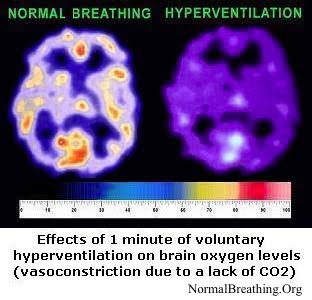 Mouth respiration effects are lower levels of oxygen, CO2 (carbon dioxide), and NO (nitric oxide) in body cells. Nose breathing treatment for a mouth breather involves slower breathing to remove the cause. If you are a mouth breather, you need to know the following medical facts. The published western clinical evidence clearly proved that mouth breathing is one of 2 immediate leading causes of mortality in the severely sick patients with chronic diseases. Early morning hours (from about 4 to 7 am) have the highest death rates due to coronary-artery spasms, anginas, strokes, asthma attacks, seizures, and many other exacerbations. The relevant medical research is considered on the web page “Sleep Heavy Breathing Effect”.
This page will answer the following: Why does mouth breathing contribute to deaths? How does it undermine the health of any mouth breather? What are the biochemical effects of mouth breathing on the health of a mouth breather?
Mouth breathers were not welcomed in the past
 When seeing modern people on Western streets and in public places, one may easily notice that up to 30-40% of them breathe through their mouths when walking or even while standing or sitting. Most people these days are mouth breathers. The same can be easily observed during night sleep. Some decades ago mouth breathing was socially abnormal and unacceptable. For example, one dictionary suggests that a “mouth-breather = n. a stupid person; a moron, dolt, imbecile”. What are the confirmed mouth-breathing effects?
CO2-related biochemical effects of mouth respiration
 CO2 is not a toxic waste gas (see links to studies below). Research articles on respiration often mention dead space, a physiological parameter, which is about 150-200 ml in an average adult person. Dead space is inside the nose, throat, and bronchi. This space helps to preserve additional CO2 for the human body to invest elsewhere. During inhalations, we take CO2 enriched air from our dead space back into the alveoli of the lungs. When the mouth is used for respiration, the dead space volume decreases, since nasal passages are no longer a part of the breathing route. Consequently, air exchange for mouth breathing is stronger since air goes directly from the outside air to the alveoli. This reduces alveolar CO2 and arterial blood CO2 concentrations. Such an effect does not take place with nose breathing.
Furthermore, the nasal-breathing route provides more resistance for respiratory muscles as compared to oral breathing (the route for mouth breathing is shorter and it has a greater cross-sectional area).
In their study “An assessment of nasal functions in control of breathing” (Tanaka et al, 1988), Japanese researchers discovered that end-tidal-CO2 concentrations were higher during nose breathing than during oral breathing. This research study revealed that a group of healthy volunteers had an average CO2 of about 43.7 mm Hg for nose breathing and only around 40.6 mm Hg for oral breathing. In practice, in terms of body oxygenation or the CP, this corresponds to 45 s and 37 s at sea level. Hence, mouth breathing reduces oxygenation of the whole body.
 Each mouth breather needs to know this short summary of immediate negative biochemical effects of mouth-breathing related to CO2:
– The reduced CO2 content in alveoli of the lungs (hypocapnia)
– Hypercapnic vasoconstriction (constrictions of blood vessels due to CO2 deficiency)
– Suppressed Bohr effect
– Reduced oxygenation of cells and tissues of all vital organs of the human body
– Anxiety, stress, addictions, sleeping problems and negative emotions
– Slouching and muscular tension
– Biochemical stress due to cold, dry air entering into the lungs
– Biochemical stress due to dirty air (viruses, bacteria, toxic and harmful chemicals) entering into the lungs
– Possible infections due to the absence of the self-immunization effect
– Pathological effects due to suppressed nitric oxide utilization, including vasoconstriction, decreased the destruction of parasitic organisms, viruses, and malignant cells (by inactivating their respiratory chain enzymes) in alveoli of the lungs, inflammation in blood vessels, disruption of normal neurotransmission, hormonal effects.
Nose breathing delivers nitric oxide to lungs, blood, and cells
 Normal nose breathing helps us to use our own nitric oxide that is generated in the sinuses. The main roles of NO and its effects have been discovered quite recently (in the last 20 years). Three scientists even received a Nobel Prize for their discovery that a common drug, nitroglycerin (used by heart patients for almost a century), is transformed into nitric oxide. NO dilates blood vessels of heart patients, reducing their blood pressure and heart rate. Hence, they can survive a heart attack.
This substance or gas is produced in various body tissues, including nasal passages. As a gas, it is routinely measured in the exhaled air coming from nasal passages. Therefore, we can’t utilize our own nitric oxide, an important hormone, when we start mouth breathing.
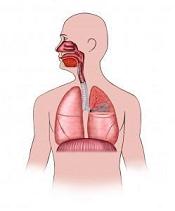 The confirmed functions of nitric oxide are:
1. Destruction of viruses, parasitic organisms, and malignant cells in the airways and lungs by inactivating their respiratory chain enzymes.
2. Regulation of binding – the release of O2 to hemoglobin. This effect is similar to the CO2 function (the Bohr effect).
3. Vasodilation of arteries and arterioles (regulation of blood flow or perfusion of tissues).
4. Inhibitory effects of inflammation in blood vessels.
5. Hormonal effects. NO influences secretion of hormones from several glands (adrenaline, pancreatic enzymes, and gonadotropin-releasing hormone)
6. Neurotransmission. Memory, sleeping, learning, feeling pain, and many other processes are possible only with NO present (for transmission of neuronal signals).
Obviously, during mouth breathing it is not possible to utilize one’s own nitric oxide which is produced in the sinuses. The mouth, according to Doctor Buteyko, is created by Nature for eating, drinking, and speaking. At all other times, it should be closed.
Read more research abstracts about nasal nitric oxide.
Cleaning, humidification, and warming of airflow due to nose breathing
 Our nasal passages are created to humidify, clean and warm the incoming flow of air due to the layers of protective mucus. This thin layer of mucus can trap about 98-99 percent of bacteria, viruses, dust particles, and other airborne objects.
If you are an endurance athlete and an asthmatic, you must train mostly, or even better, only, with nasal breathing. For really important competitions, you can use the mouth for breathing, but only if you have no current problems with your asthma. Sports training is useful due to its aerobic training effect. This is achievable while breathing only through the nose, as one Australian study confirmed (Morton et al, 1995; see the abstract in the references).
A group of US doctors from the Department of Surgery, University of Chicago even wrote an article with the title “Observations on the ability of the nose to warm and humidify inspired air”. The abstract of their study is also provided in the references.
Mouth breathing influences the self-immunization effect
 This is another advantage of nasal breathing over mouth breathing. The thin layer of mucus moves as a long carpet from sinuses, bronchi and other internal surfaces towards the stomach. Therefore, objects trapped by the mucus are discharged into the stomach, where GI enzymes and hydrochloric acid make bacteria, viruses, and fungi either dead or weak. Later, along the digestive conveyor, some of these pathogens (dead or weak) can penetrate from the small intestine into the blood (due to the intestinal permeability effect). Since these pathogens are either dead or weakened, they can not do much harm (cannot cause infections). Moreover, they can provide a lesson for the immune system. This is exactly how natural auto-immunization can work with success. Medical doctors and nurses inject vaccines with dead or weakened bacteria or viruses so as to teach and strengthen our immune response to these pathogens. Therefore, nasal breathing creates conditions for natural self-immunization.
Practically, when a household member is sick (as with the flu or cold), the still-healthy people could breathe either through their nose, teaching their own immune system how to deal with the pathogenic bacteria or viruses, or through their mouth, as in mouth breathing, allowing these pathogens to gain access, settle and reproduce themselves in various parts of the body, causing the infection.
Medical therapy to get rid of mouth respiration
 It is one of the key goals of the Buteyko breathing method to stop mouth breathing and ensure nose breathing 24/7, to prevent all these mouth-breathing effects. Over 150 Soviet and Russian MDs have been using this system.
For many mouth breathers and sick people, quick health improvement (the initial stage of breathing normalization) is accomplished by one change only: learning how to breathe through the nose 24/7. Just this step alone can make a big difference in the health of many people so that the main symptoms are reduced and less medication is required.
Permanent solution for mouth-breathing problems
Use your willpower to stop mouth breathing. If a mouth breather suffers from a stuffy or blocked nose, or sinusitis, such things can exist or appear only in conditions of abnormal breathing. In order for these problems to exist, one must breathe at least 2 times more air at rest than the medical norm.
If you have problems with mouth breathing, your goal should be to slow down your automatic or unconscious breathing pattern so as to have over 25 seconds of body oxygen 24/7. The “Learn here” section provides numerous breathing techniques and methods to improve body-oxygen levels.
Resources and techniques for mouth breathers
There are 2 amazing resources that provide detailed instructions for a mouth breathing treatment. I tested these instructions on hundreds of my students. The direct links to these resources are provided down below here as your bonus content.
– Mouth-breathing treatment – Methods and techniques to help mouth breathers
– “How to maintain nasal breathing 24 hours per day” (Breathing retraining manual with details of the mouth taping technique during sleep).
[/sociallocker]
YouTube video: Mouth breathing and its effects.
 References and related web pages
– References for this page: Studies on mouth breathing (Including research abstracts about mouth breathing and morning fatigue; sleep apnea and snoring; mouth breathing in asthmatics; etc.)
– Mouth breathing in infants and children (with medical research articles and abstracts).
Back to the homepage
<!–
References
- Mouth Breathing: Symptoms, Complications, and Treatments (From HealthLine.com)
- Mouth Breathing Vs. Nasal Breathing (From LiveStrong.com)
- Nose breathing versus mouth breathing; nose breathing is Optimal (From Breathing.com)
–>