- Updated on November 1, 2020
 By Dr. Artour Rakhimov, Alternative Health Educator and Author
- Medically Reviewed by Naziliya Rakhimova, MD
(This is Part 6 of Module 10. Learn Buteyko breathing exercises)
Introduction
 Dr. KP Buteyko often used the term “maximum pause” for the CP (Control Pause) or stress-free breath holding time test done only until initial stress or discomfort. This fact may cause serious misunderstanding when Buteyko words in Russian (“the maximum pause”) are directly translated into English. The traditional Western and Russian meaning and definition of the “maximum pause” is breath-holding for as long as possible and, if we are talking about the Buteyko method, all these breath holds (also called “pauses”) are done after one’s usual exhalation. For most people, including Buteyko students during their initial stages of learning, the maximum pause is about 2 times longer than the control pause, as we can see it in the Buteyko Table of Health Zones.
 Warning. Strong air hunger and similar effects can be produced during very shallow breathing (sometimes called “VSB”) without any pauses at all. This effect takes place when a student starts to breathe about twice less.
Maximum pauses, long pauses, and modern Buteyko teachers
 The use of breath holds and extended breath holds (more than the CP) considerably varies among modern Buteyko teachers. Some Russian doctors did not and do not use any breath-hold at all, while for followers of Sasha Stalmatsky, long pauses and maximum pauses are very important or crucial parts of teaching the method. Furthermore, they often use AMP (absolute maximum pauses) which are done using special techniques, like the Valsalva maneuver (attempts to forcibly exhale while keeping the mouth and nose closed), fist-clenching, stomping, jumping, etc. to prolong breath-holding.
Unfortunately, due to poor knowledge of the method and physiological effects of breath holds, some Buteyko practitioners do more harm than good to certain groups of their students (see examples below).
Effects of maximum pauses and long breath holds on arteries and arterioles
 There are many situations when MP and AMP must not be done. Let us look at the causes of possible problems with long breath holds. Breath-holding causes a fast rate of accumulation of CO2 and a reduction in O2 in the lungs. Hence, the arterial blood gets more CO2 and less O2. Hypercapnia and hypoxia produce 2 opposite effects on smooth muscles of blood vessels: vasodilation due to local hypercapnia and hypoxia and central vasoconstriction caused by the release of norepinephrine and epinephrine that bind to alpha-receptors in most arterioles (in heart and skeletal muscles, epinephrine binding to beta-2 receptors causes vasodilation). Since norepinephrine and epinephrine are stress hormones, this vasoconstrictive effect is also influenced by psychological stress (in opposition to relaxation).
 In the 1960s, when Buteyko was working in the respiratory laboratory, he and his colleagues conducted numerous studies about the effects of inhaled gases with various compositions on the tone of blood vessels (Buteyko et al, 1964a, 1964b, 1965, 1966a, 1966b). He found that the body could maintain its physiological processes normally when changes in the composition of the inspired gas were gradual. Sudden changes in blood gases could lead to vasoconstriction, significantly increased heart rate and blood pressure, while in normal conditions, breath-holding leads to the “diving reflex” when blood is diverted mainly to the brain and heart, and one’s heart rate drops. In the case of vasoconstriction, it can last for many hours causing a maladaptive response to breath-holding due to sudden changes in gas composition. As a result, blood vessels can lose their sensitivity to CO2 and this can be a serious concern for some breath training students.
In order to achieve positive cardiovascular or circulatory effects, Dr. Buteyko taught his susceptible students how to gradually change one’s breathing without disruptive or sudden variations in blood gases. The reduced breathing exercise was the main tool for ventilation reduction and the level of air hunger was light. Here are the situations when certain groups of people can experience various problems due to long pauses and sudden changes in the gas composition of the blood while learning the Buteyko breathing technique and other breathing methods.
When and how long breath-holding can cause serious problems
 • In a person with hypertension, even the CP test results in increased blood pressure often, depending on the severity of the condition, causing unpleasant symptoms. Such a practical result was received in many hypertensives (i.e., Kohn & Cutcher, 1971). Moreover, some of them had a systolic blood pressure increase from about 200 to 260 mm Hg during maximum pauses, making the whole procedure of doing the maximum pause dangerous (Ayman & Goldshine, 1939). Indeed, in rare, but possible causes of an undetected serious organic defect in the heart muscle, the maximum pauses may cause severe complications, including physical damage to the heart muscle.
Warning. There are poorly educated Buteyko practitioners, who teach their students with heart disease (e.g., hypertension) to practice maximum pauses and long breath holds while producing these negative cardiovascular GI effects. Later, such students may have weeks or months of headaches, nausea, poor sleep, feeling weak, etc., while these practitioners often present these symptoms as a “cleansing reaction”.
 • Similar negative cardiovascular effects can lead to the appearance of migraine headaches in those people who are predisposed to such symptoms.
• People with frequent panic attacks can experience their negative symptoms because of the CPs or longer pauses and mild or strong air hunger.
As another possible negative effect, long pauses and strong air hunger could cause greatly increased blood flow due to hypercapnic vasodilation. As a result, people with some serious pathologies can experience negative symptoms.
• Many acute gastrointestinal problems (gastritis, gastric ulcers, Crohn’s disease, inflammatory bowel disease, irritable bowel syndrome, intestinal ulcers, etc.) can dramatically worsen due to the sudden incoming blood intensifying peristalsis. Flare-ups, opening of healed lesions, intensive wear of mucosal surfaces, causing such symptoms as gases, cramps, thirst, and diarrhea, all are possible complications.
 • Patients with extensive damage to kidney nephrons can experience such sudden an increase in blood flow to kidneys, that the remaining working nephrons may be overburdened with the extra work to clean large amounts of the blood. Their possible congestion could result in the kidneys’ failure.
• Long breath holds can cause metastasis in people with malignant tumors (or cancer). Indeed, long pauses can be considered as light internal massage, due to their strong impact on microcirculation. Malignant cells can travel to neighboring lymph nodes, leading to the development of cancer in those people who do not increase their usual CPs. (Increase in the CP up to 35-40 s would indicate more normal work of the immune system and its ability to destroy malignant cells.)
 • Patients with acute brain trauma will experience an increase in intracranial pressure (the pressure inside the skull). Moreover, should their blood have recently coagulated and therefore not yet formed a firm protective layer, this layer can be broken (due to larger pressure from underlying fluids) causing more bleeding and severe complications.
• Patients with recent bleeding cuts and other acute skin injuries will have dilation of small blood vessels and increased blood flow. That will cause additional bleeding. If the cut or injury has just started to heal, the opening of healed areas due to increased pressure from underlying blood layers is possible.
• A blood clot, due to thrombosis in veins, can get loose and block a blood vessel leading to some organs causing severe problems or death.
• Maximum pauses, strong air hunger and high CPs (e.g., 30-35 s) can cause problems for people with transplanted organs due to increased sensitivity of the immune system in relation to foreign cells leading to rejection of donated organs.
• Spontaneous abortion of the fetus is possible if the pregnant mother practices strong air hunger or long breath holds. The immune system, in case of serious initial toxicity of the fetus, may decide that it is easier to abort the fetus than to rebuild, repair and readjust polluted tissues of the fetus.
Cases with severe bleeding
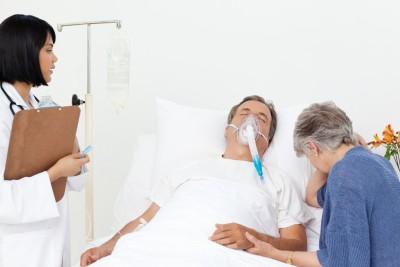 In very rare situations (e.g., immediately after dental or other surgery, or after brain trauma, or after getting a bleeding cut) any breath-holding, any sudden increase in carbon dioxide levels, or strong air hunger during RB could cause sudden dilation of small blood vessels and increased bleeding.
Hyperventilation has another extremely useful value in terms of the survival of different animals. As it is known, arteries are hidden deep under the skin in order to prevent bleeding, should a cut or severe open injury occur. Wise Nature anticipated such an unlucky turn of events. Moreover, Wise Nature also provided animals with hyperventilation in order to prevent excessive blood losses and possible death. There are medical studies that discovered that medical doctors could not draw a blood sample from the fingers of their patients who voluntarily hyperventilated. That was a normal result since low carbon dioxide values constrict small blood vessels, hence, greatly reducing their blood flow.
One may notice that in natural conditions wild and domesticated animals and humans over-breathe when they have, for example, bleeding cuts. Such over-breathing is done unconsciously due to the pain and vision of their own blood. Later, after coagulation, the breathing is gradually reduced and the pain is also less. In addition, if any further bleeding occurs, the emotional shock and vision of their own blood can again generate heavy over-breathing. This mechanism again helps to start the initial stages of wound healing.
 However, any excess carbon dioxide increases can immediately cause an opening of coagulated and hardened layers due to the increased pressure of the blood in the adjacent small vessels. That would result in additional blood loss.
The same ideas can be equally applied to acute brain traumas. These considerations caused a wide-spread appearance of prophylactic hyperventilation in the medical practice of neurologists to prevent acute bleeding (for reviews of this practice one may see Marion et al, 1995 or Yundt & Diringer, 1997).
Therefore, should you get any bleeding wound or cut after a surgery or injury, follow your natural impulses and breathe hard! That relates to dental surgeries; tonsillectomy; operations on the brain, internal organs, skin; industrial and domestic accidents, etc. when bleeding or severe hemorrhage is possible or present.
Loss of CO2 sensitivity
 A loss of CO2 sensitivity due to a single pause (or a series of consecutive pauses) depends on numerous factors, including the duration of breath-holding, and hereditary (cardiovascular or hypertensive predisposition), lifestyle, and environmental causes. Some of them are: being deprived of deep stages of sleep, Ca deficiency, insufficient protein and/or arginine in the diet, overheating, any inflammatory condition, including malignant and benign tumors, and some very rare situations like near-death experiences, when carotid bodies are removed, and when there is denervation of respiratory muscles.
Generally, students with low CPs and weak heredity in relation to the cardiovascular system have higher chances of developing this abnormal circulatory response (vasoconstriction) to breath-holding. It is usually manifested in headaches or migraine-type sensations, feeling weaker, possible nausea, thirst on lips, etc. A short nap (even 3-5 minutes) can often eliminate the maladaptive response, but mild after-effects are going to last until next night’s sleep. All other factors also play a role in this abnormal physiological reaction.
You can find more information about this effect and its treatment, in the digital book “Advanced Buteyko breathing exercises”.
Other common negative effects of maximum pauses or long holding breaths
 While one may not necessarily experience a loss of CO2 sensitivity due to breath-holding, many students, especially with low current CPs, can simply experience stress and an inability to control breathing after long pauses even when they do not have any of the predisposing factors (panic attacks, hypertension, pregnancy, etc.) described above. But most of them would not experience any negative effects due to, for example, the Control Pause test.
When the CP gets higher, the body’s ability to tolerate maximum pauses and long breath holds gradually improves. Hence, a longer breath holds can be practiced during later stages of learning (after some weeks or months of breathing training).
Common positive effects of maximum pauses or long holding breaths
 When the above cases are excluded, students can experience positive effects due to long breath holds. As it is also known among freedivers, who are generally a very healthy group of people, maximum breath-holding has 4 stages: a period of no respiratory sensations (the CP), a period of struggle (from the CP to MP), a period of bliss or euphoria due to the positive effects caused by the diving reflex (after the MP) and the last short period of stress or struggle. Such maximum breath holds do not lead to severe overbreathing and stress later. They do not cause loss of CO2 sensitivity. Furthermore, with some practice, students are able to practice reduced breathing or “switch” to reduced breathing after this one breath holds especially in cases when they had hundreds or thousands of shorter breath holds accompanied by reduced breathing later (the conditioned response due to past training).
Hence, certain training is required in order to consistently achieve these positive effects, while breathing sessions with strong air hunger and/or very long breath holds are most efficient for experienced students when there are no abnormal cardio responses.
How to check your reactions to maximum pauses and long breath holds
 In most cases, student’s personal sensations (or feelings) are correct indicators of bodily reactions and processes. In addition, in order to objectively check your cardiovascular responses, there is one effective test that provides a clear answer to this question that I heard from many students: Is it safe and useful to do breath holds for me right now? You can find the details of this test right below here as your bonus content. The bonus content also provides a certain minimum CP number which nearly always provides a guarantee that it is safe to do any breath-hold (even an absolute maximum pause).
Measure your heart rate (or pulse) before doing a breath-hold (CP, MP, etc.) and about 2-3 minutes after this breath-hold. If your pulse is the same or even lower after the breath-hold, then your body accepts breath-holding positively. The same test can be used for testing cardio responses to Buteyko exercises or sessions with breathing devices.
If your heart rate increases and remains high for many minutes after the maximum pause or any other breath hold, you should not practice this pause. Instead, use more gentle versions of breathing exercises to improve your body-oxygen content and normalize your breathing. Later, with slower breathing, longer breath holds become safer.
Any breath holds are usually safe when a student has over 30 seconds of CP.
[/sociallocker]
Note that many groups of students (e.g., people with hypertension) may have adverse reactions even to a CP test. Such students should temporarily avoid the CP test. There is a special daily log for them in the “Downloads” Section.
Conclusions
 Depending on a variety of factors (health state, genetic factors, quality of sleep, morning CP, current health problems, ability to use the diaphragm at rest and during breathwork, and many others), maximum pauses and other breath holds, even as short as one half of the CP, can cause various physiological reactions. In many cases, long pauses should not be used at all during the initial stages of learning. As for the effects of long pauses and strong air hunger, cardiovascular responses play the main role in bodily circulatory adaptation to changes in blood gases. Measuring own pulse and analyzing body sensations help to prevent useless suffering, damage to own health, and quitting breathing retraining.
– This page in Spanish: Retención de aliento y pausas máximas: Efectos sobre la salud y usos.
Note. On this site, you can get my PDF book “Advanced Buteyko Breathing Exercises” (about 124 pages, 12 USD). Read happy and great reviews of this book on Amazon.com. This book considers the effects of overtraining, lost CO2 sensitivity, blunted CO2 sensitivity, “click” effect, “Steps” breathing exercises for walking, Buteyko breathing exercises during physical activity, etc.
Back to: Learning Buteyko Breathing Exercises
Below are authentic comments, questions, and testimonials from the same page on the old PHP site before we converted it to WordPress.
On 2018-06-07T01:38:29, Mario wrote:
I have been doing the Buteyko method for about a month and a half, with no much results
I read many blogs and web site and videos, and I always notice comments that many practitioners do not teach right, mostly based on what you say I will not practice anymore, I think it is not safe for me it appears that is not much consensus and to many variants,
and even if i can afford a practitioner I am not sure if I can get the right information.
You delineated the dangers to certain people, I am 77 y.o and I think is better not to do,it is not safe but I try very hard, I spend at least 3 hours everyday day
On 2018-05-02T05:20:38, Dr. Artour (mod) wrote:
Your question relates to your personal breathing retraining program. This is impossible to answer without knowing tens of details related to personal lifestyle: symptoms, diseases, sleep, exercise, diet, breathing exercises, etc.
From your info below, one does not know even such basic things as which breathing exercises you do, for how long, with which intensity, what changes in the CP and pulse after sessions are, etc.
On 2018-05-01T12:37:18, Harold wrote:
I had zero pauses between inhale and exhale, In recent days I have forced breath holds and practice that all day. I breathe with pauses of 4-5 seconds more or less unconscious now. CP was 13. Will this be effective or should I increase it a few seconds or simply stop doing it?
On 2017-12-24T10:47:05, Dr. Artour (mod) wrote:
Hello, Vladimir,
Well, if you hope to hear from me then learning how to write my name also helps.
The difference in breath-holding after different maneuvers is explained here: https://www.normalbreathing.com/index-CP-normals-complete.php
Freediving is probably the healthiest known sport, and I met/tested many freedivers who demonstrated that.
On 2017-12-24T08:54:28, Vladimir wrote:
Hi Dr. Rakimhov. What is the difference of holding your breath after inhalation and exhalation for your breath retraining and health?
And is freediving training complementary to the Buteyko method?
Hope to hear from you
Bye
On 2017-05-21T17:28:09, Doona wrote:
A bit more info. I stopped their practice halfway through what they called a cleansing because I felt so ill and anxious. I still feel ill somewhat with bronchitis or something. I have been too anxious to do the practice they gave. I have been doing reduced breathing though. It is hard to know the difference between cleansing and illness. I would like to push this through but not sure what is safe exercises after this experience.
On 2017-05-21T13:54:43, Dr. Artour (mod) wrote:
I do not know your lifestyle, personal details, and past history. How can I suggest anything?
On 2017-05-20T16:47:35, Doona wrote:
I was doing maximum pauses with another group who teaches this and it caused me a lot of distress. Panic attacks as well as a racing heart. I can’t imagine that was a good thing for me to go through, even though they said it as a cleansing reaction. Right now I am just doing reduced breathing on my own. What would you recommend in this situation? Thank you
On 2016-10-05T08:40:36, Artour (mod) wrote:
Those can be safe for most people, not necessarily useful depending on relaxation and CO2 changes.
On 2016-10-04T15:03:47, Conor wrote:
These cautions relate to long breath holds or “maximum pauses” only, is that correct? The “many small breath holds” (breath normally for 10-15 seconds, hold for 3-5 seconds, breath normally for 10-15, hold for 3-5, etc) exercise is fine?
On 2016-01-27T10:57:00, Artour (mod) wrote:
Great to hear about her progress. Some urinary problems including chronic pyelonephritis are explained here: http://www.normalbreathing.com/retraining-clinical-5-urinary.php
It is the same here: 35-40+ s CP 24/7 makes the crucial difference.
On 2016-01-27T10:46:20, John C. A. Manley wrote:
Well, that’s promising here. It does seem like constriction of the nephrons due to hypocapnia would be a primary cause of kidney failure.
My wife has been on hemodialysis for the last 6 years. Here eGFR was as low as 3%. So far, Buteyko breathing has produced the most dramatic and quick improvement in her symptoms. She was becoming an invalid and now she can walk for an hour outside.
On 2016-01-27T07:11:07, Artour (mod) wrote:
Yes, breathing retraining works fine for that, but some other changes might be necessary. Do you suffer yourself?
On 2016-01-26T20:59:10, John C. A. Manley wrote:
You mentioned kidney failure in this article. Could you please tell me if you’ve seen breathing retraining reverse stage 5 kidney failure and take patients off dialysis?
On 2015-08-31T21:05:20, Artour (mod) wrote:
It depends on how your cardiovascular system reacts to breath holds. See which breath holds help you to reduce heart rate at rest.
On 2015-08-31T18:45:29, ….. wrote:
Hi, Artour would it be a bad idea to do breath holds if one has heart palpitations? My morning CP is 18 seconds. I work out for at least 40-45 minutes every day. I used to suffer from hypertension when I had a CP of 12 seconds, but not anymore.
On 2015-01-28T22:21:55, Artour Rakhimov (mod) wrote:
Practicing should help to boost CP and CO2.
On 2015-01-28T09:23:34, Anonymous wrote:
Thanks for answering! I was also wondering that if you had an infection like Glandular Fever in the past year, could practicing exercises to rapidly boost CP and Co2 bring it back?…as I’m feeling similar symptoms since reaching a CP of 16 from 6 within a week!
Thanks!
On 2015-01-27T21:51:46, Artour Rakhimov (mod) wrote:
A good practitioner training question. Get a lower pulse after breathing sessions.
On 2015-01-27T15:58:17, Anonymous wrote:
Hi Artour,
If you do maximum pauses for a few days and start to experience negative symptoms with a pulse raised more than normal, what would be your next course of action? Just stop the exercises? Will the symptoms disappear? and do I continue with light Buteyko exercises during this time?
Thanks!
On 2014-05-01T06:03:59, Artour (mod) wrote:
It seems ok.
On 2014-04-30T13:16:40, Anonymous wrote:
Very useful information! I have a question. I started some Maximum Pauses to see the effects on my body. After an MP, my pulse drops from 65-70 to around 55-58. Is this normal or is it too low? Because I don’t recall having that low pulse ever again. According to this
“If the pulse is the same or even lower than prior to the breath-hold, as it should be after Buteyko reduced breathing exercise, your body accepts breath-holding positively.”
I should assume that it is safe? My CP is not very high, it is around 20-30 all day and 15 in the morning.
On 2014-04-26T13:30:21, Lisa wrote:
The “Advanced Buteyko Exercises” Probably it was overtraining… I sometimes like the relaxation effect of the exercises that I forget to stop.
On 2014-04-25T07:39:54, Artour (mod) wrote:
Hard to tell which book and which symptoms you mean.
On 2014-04-24T12:38:09, Lisa wrote:
Thanks, I checked your book. You write that symptoms will last until next night. Should someone do the exercises the next day or wait till when symptoms are gone?
On 2014-04-22T17:20:43, Artour (mod) wrote:
The book “Advanced Buteyko Breathing Exercises” provides details.
On 2014-04-22T04:45:35, Lisa wrote:
Hi Artour, I did the breathing exercises yesterday (as always). My CP is around 40-50 at the moment and working to reach the 60s. I did them for 50 minutes. I was relaxed for the 50 minutes but in the end, I got a headache. It still lasts. It’s mild. Could it be due to hypercapnia? Is there an upper limit I can do the exercises? I stop them when I feel I run out of oxygen (because at some point CO2 displaces oxygen). Great website. I have learned a lot, your books are great too.
On 2014-02-26T14:58:30, Artour (mod) wrote:
You probably do not exercise.
On 2014-02-26T09:51:34, Jelena wrote:
In the last few days, I have tried to get rid of my strong air hunger by not take deep breaths when I feel the need to. Because of this, I have become much worse, with more fatigue and headache. Have I done any damage to my body? I’m a young person, normal weight, and I’m not suffering from any dangerous disease, except mild hypertension. Thank you so much for this website, you did an excellent job!
On 2013-07-14T18:25:09, Artour (mod) wrote:
No, it is not normal. If a headache lasts for hours later, something is missing or wrong. You may have some other symptoms in addition to this light headache. These extra symptoms may shed light on the cause.
On 2013-07-13T19:25:08, Gait wrote:
Hi Artour, I have a slight headache. My CP is always increased after the exercises (usually 5-7 seconds). My pulse is not bad now (65). After the exercises, it is lower. I wonder if it’s normal to get a headache. Cp is between 20 and 30. Thanks.
On 2013-05-15T18:52:31, Artour (mod) wrote:
I would say that the Buteyko goal is to breathe about 3 times less air, for an average person (with 20 s CP).
On 2013-05-15T15:25:20, kk wrote:
@Artour,
but our goal in Buteyko is to achieve the state when we start breathing twice less, isn’t it??
On 2013-05-15T11:29:41, Artour (mod) wrote:
It can be anything from very good to very bad depending on one’s health and body reactions.
On 2013-05-14T14:38:13, kk wrote:
I don’t understand the warning about the strong air hunger due to VSB.. so is this VSB a good thing or not?
On 2013-04-11T21:08:41, Artour (mod) wrote:
For the first question, I can paste the article from above.
For the second one, the MP can be 2-4 times greater than the CP.
On 2013-04-11T19:13:53, Duncan wrote:
Hi Artour,
I recently finished a Buteyko course that utilized maximum pauses following the Alexander Stalmatski school. My CP was around 15 and I was building up to MP of approx. 1 min 7 secs. Whilst this did improve my CP, I found the exercises too stressful and could not sustain 4 periods of training each day.
What is your opinion about maximum pauses and are they necessary to increase CP? If they are beneficial, can you give guidelines as to how long my MP should be in relation to my CP?
Best regards and thanks for a great site on breathing correction.
Duncan
On 2013-03-27T14:43:33, Artour (mod) wrote:
It is impossible to tell without any other details. Maybe you are tense during reduced breathing, which, for most people, works much better than yoga exercises. Or maybe you do not exercise and your lungs started to degenerate, etc.
On 2013-03-27T07:48:15, jane wrote:
Hi. I have been doing the reduced breathing exercise for 4 minutes followed by measuring the CP. I experimented with doing deep breathing, ie long breaths filling all my lungs for the same amount of time. I found that my CP had lengthened more after the deep breathing, than the reduced breathing sessions. My CP is about 10 seconds. Any suggestions?
On 2013-02-11T15:26:05, Artour (mod) wrote:
Why do you need rapid progress, if it can cause you problems? You can choose any rate you like.
On 2013-02-11T04:07:08, Nailah wrote:
Thanks. I’m still not clear if using the DIY breathing device places me a greater risk of the adverse effects listed above related to rapid progress?
On 2013-02-11T00:30:02, Artour (mod) wrote:
DIY instructions are only in the book.
The chest needs to be relaxed during breathing exercises.
On 2013-02-10T20:33:25, Nailah wrote:
Thank you so much for this website. I am learning a lot. I have several questions.
#1 If I use the DIY breathing device, am I in danger of the adverse effects listed above related to rapid progress?
#2 The instructions for the DIY device, are they on this site or just in the ebook.
#3 My chest (lungs) seem sore after working on the exercises yesterday, is that abnormal or typical? Perhaps I’m making mistakes.
On 2012-12-27T19:59:21, Artour (mod) wrote:
Buteyko suggested this way for health purposes, not for a larger number, since when we relax, we naturally exhale.
On 2012-12-27T18:00:01, Gollum wrote:
it seems to me that many breath-holding methods are done after exhalation. Holding the breath after inhalation seems more natural to me. is there a reason why they are done after exhalation?
On 2012-12-13T12:27:05, Artour (mod) wrote:
Yes. it will work too.