- Updated on November 1, 2020
 By Dr. Artour Rakhimov, Alternative Health Educator and Author
- Medically Reviewed by Naziliya Rakhimova, MD
 How does swaddling work? Why should it be tight to be effective? Why are light cotton swaddling blankets better than thick and warm ones, if swaddling is intended to make babies feel warm and snug, as many medical sources claim? Mainstream medicine still cannot provide answers to these questions (see a recent medical review below – van Sleuwen et al, 2007). But a leading Soviet physiologist, Dr. Konstantin Buteyko and his numerous medical colleagues (over 150 doctors) provided simple and sensible explanations. Swaddling prevents and stops hyperventilation and upper chest breathing.
 In other words, the baby breathes more slowly and inhales a smaller volume of air-breathing primarily with the tummy (diaphragm). This improves blood, brain and body oxygenation. Increased cellular oxygen levels improve cell oxygenation, sleep, digestion, stop or prevent SIDS (sudden infant death syndrome), rashes, digestive symptoms, and many other health problems.
Before the baby is born, the fetus gets all its blood supply from the mother through the umbilical cord. This includes CO2 and O2. Because of this, the breathing of the fetus depends solely on the mother’s breathing. Birth itself is a severe shock for the baby. Most of this shock is probably due to the drastic change in air composition: a reduction in blood CO2 concentrations of about 30-40%. The process of delivery and new environmental conditions cause severe stress and make the baby’s breathing heavy. Hence, swaddling makes this transition and adaptation to new air more gradual.
 All primitive and recent cultures, as historical and other evidence, suggest used swaddling (or tight wrapping) of babies. Speaking with people born and raised on different continents, I learned that swaddling was the norm in Africa, America, Europe, and Asia. In Asia, due to the hot climate, they used wooden sticks instead of clothes. The sticks were positioned along the baby’s trunk and tied snugly using ropes. In Scotland, swaddling blankets were passed from generation to generation. Medieval England is known for having separate swaddling clothes produced for rich and poor babies.
 Warning. Swaddling sometime can lead to overheating, and that can cause very serious health problems. Bear in mind that the metabolic rate of infants is about 2-3 times higher than of adults and infants develop better in relative colder conditions. In babies, over 60% of heat exchange takes place via the head. Hence, covering the head makes a significant difference in their heat exchange.
“But the cells of animals and humans need about 7 % CO2 and only 2% O2 in the surrounding environment. This is the way our cells live: cells of the heart, brain, and kidneys. But now the air has 10 times more oxygen and 250 less carbon dioxide, i.e., it is not suitable for our cells and is poisonous in its composition. This is confirmed by embryology. During recent years detailed studies of gas blood exchange in embryos of humans and animals were done. It was found that during 9 months we live in an environment, which has 3-4 times less oxygen and 1.5 times more CO2 (both as partial pressures) in comparison with adults. Obviously, the organism of the mother creates such conditions for the embryo, as they were billions of years ago. This supports the Law of Gekkel-Severtsev: the embryo, in its development, repeats the phylogenesis.
After birth, during the first breaths, there is a sudden increase in blood oxygenation and a sudden drop in CO2. It is known that the child is virtually disease-free in the womb of the mother. Only after the birth, do diatheses and all other abnormalities of metabolism appear. Why? There is a sudden change in the air. The wisdom of the East surprises us: the just-born infant is tightly swaddled, and in some places even tightened to a wooden plate. The chest is covered by layers of heavy material [voile]. Our grandmothers covered the cradle with the infant using material covering [leaving a small hole for air exchange], and used swaddling too… Folk wisdom understood, that this air, so poisonous for the newborn, requires gradual adaptation.” Dr. Buteyko lecture in the Moscow State University on 9 December 1969″
When to Stop Swaddling
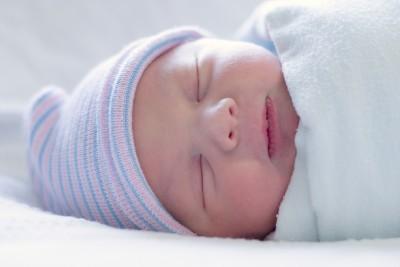 When to stop swaddling depends on the physical exercise and breathing patterns of the baby. If the baby’s body oxygen level remains high during and after sleep (no hyperventilation or upper chest breathing), one can stop swaddling without negative health consequences.
If you notice that the baby tries to turn and sleep in a prone position (on the tummy), it can be seen as a natural sign to stop swaddling. Bear in mind that un-swaddled babies will hyperventilate if they sleep in a supine position (or on their backs). Supine sleep, according to these 24 medical studies (see Best Sleep Positions Medical Research), is the worst position for all tested conditions and groups of people.
Covering a cradle with a blanket and leaving only a small hole for gas exchange (e.g., about a square inch in size for small and medium cradles) is another technique to ensure high body oxygenation and excellent health in babies. Note that even older children, when conditions are not hot or warm, like to hide under a blanket. It is not just a feeling of safety, but higher CO2 that makes this method effective. Puppets of wild dogs and the young of other animals also live well and even thrive for months in dens and borrow at very high CO2 levels (up to 5-7% and even more).
To measure the body-oxygen test results, one needs to observe how long time the baby can easily remain underwater (diving). Healthy babies can do it for up to 20-25 seconds. Swimming underwater is the best therapy and an excellent form of exercise to improve body-oxygen levels in babies and to slow down their automatic breathing at rest.
One may also measure the respiratory rate of the baby during sleep. While respiratory rates in babies are normally high, healthy babies with higher body-oxygen content have slower breathing. Ideally, the breathing rate should be near the minimum normal breathing rates for babies. Here is the normal respiratory rate chart for youngest and young humans.
Normal Respiratory Rates for Babies, Newborns, Infants, and Toddlers
| Groups and ages | Normal respiratory rates |
| Newborns to 6 months old | 30-60 breaths/min |
| 6 to 12 months old | 24–30 breaths/min |
| 1 to 5 years old | 20–30 breaths/min |
Generally, it is safe to stop swaddling if the baby is physically active with strictly nose breathing. However, caretakers need to monitor absence of mouth breathing or that the baby breathes only through the nose all the time. There is one great resource page that provides main ideas and techniques to promote nose breathing in newborn, babies and younger children. You can find the link to this page in your bonus content. Another part of the bonus content is an abstract of the medical article that reviewed swaddling and its effects.
See Mouth Breathing in Children).
Van Sleuwen BE, Engelberts AC, Boere-Boonekamp MM, Kuis W, Schulpen TW, L’Hoir MP, Swaddling: a systematic review, Pediatrics. 2007 Oct;120(4):e1097-106.
Swaddling was an almost universal child-care practice before the 18th century. It is still a tradition in certain parts of the Middle East and is gaining popularity in the United Kingdom, the United States, and The Netherlands to curb excessive crying. We have systematically reviewed all articles on swaddling to evaluate its possible benefits and disadvantages. In general, swaddled infants arouse less and sleep longer. Preterm infants have shown improved neuromuscular development, less physiologic distress, better motor organization, and more self-regulatory ability when they are swaddled. When compared with massage, excessively crying infants cried less when swaddled, and swaddling can soothe pain in infants. It is supportive in cases of neonatal abstinence syndrome and infants with neonatal cerebral lesions. It can be helpful in regulating temperature but can also cause hyperthermia when misapplied. Another possible adverse effect is an increased risk of the development of hip dysplasia, which is related to swaddling with the legs in extension and adduction. Although swaddling promotes the favorable supine position, the combination of swaddling with prone position increases the risk of sudden infant death syndrome, which makes it necessary to warn parents to stop swaddling if infants attempt to turn. There is some evidence that there is a higher risk of respiratory infections related to the tightness of swaddling. Furthermore, swaddling does not influence rickets onset or bone properties. Swaddling immediately after birth can cause delayed postnatal weight gain under certain conditions, but does not seem to influence breastfeeding parameters.
[/sociallocker]
References
Buteyko KP, Lecture in the Moscow State University, Soviet national journal Nauka i zshizn’; [Science and life]
Van Sleuwen BE, Engelberts AC, Boere-Boonekamp MM, Kuis W, Schulpen TW, L’Hoir MP, Swaddling: a systematic review, Pediatrics. 2007 Oct;120(4):e1097-106.