- Updated on August 3, 2026
 By Dr. Artour Rakhimov, Alternative Health Educator and Author
- Medically Reviewed by Naziliya Rakhimova, MD
Thousands of Singers Often Die Early than the average life expectancy.
Here are just a few famous names with their lifespan:
 – Whitney Houston, 48
- Amy Winehouse, 27
- Michael Jackson, 50
- Elvis Presley, 42.
It is possible to notice that, among different groups of singers, the typical life expectancy of opera singers is greater. However, many of them still had reduced life expectancy.
- Luciano Pavarotti, 71
- Elizabeth Connell, 65.
While there were many opera singers who lived up to their 80s and even 90s, the general situation with singers is horrible. There were dozens of famous singers who died in their 20s:
- Darby Crash (aka Bobby Pyn) 22
- Selena 23
- Andrew Wood 24
- Tammi Terrel 24
- Johnny Ace 25
- Tupac Shakur 25
- Gram Parsons 26
- Kurt Cobain 27
- Jim Morrison 27
- Jimi Hendrix 27
- Janis Joplin 27
- Big Pun 28
- Tim Buckley 28
- Bradley Nowell 28
- Shannon Hhoon 28
- Hank Williams 29.
And some singers died even in their teens:
- Bethany Durose, 17
- John Spence, 18.
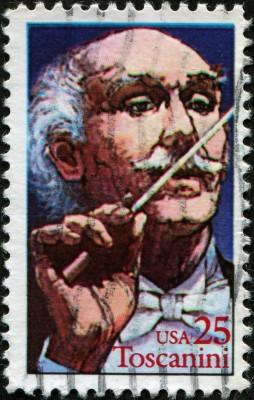 Why do singers often die early? Some researchers suggested that singers have stressful lives, and being famous is a negative factor that makes them prone to chronic diseases, addictions, suicides, and poor health. This idea is not correct since dozens of music conductors had very long lives. Here are some famous names:
- Arturo Toscanini, 89.
- Nadia Boulanger, 90
- Leopold Stokowski, 95
- Pablo Casals, 96
- Blanche Honnegger Moyse, 101.
Obviously, conductors have no less stress than singers and often even more responsibility in their work.
The most likely cause of poor health of singers lies in physical causes that relate to their professional work (i.e., singing). Singers often spent up to 4-5 hours daily with singing, and this produces a profound negative effect on their basal or automatic breathing patterns. The physiological effects of singing that we are going to consider here will explain the development of chronic diseases and addictions.
Firstly, note that chronic diseases and addictions are always accompanied by low body-oxygen levels and reduced brain oxygen content. For many diseases, low body oxygen content is the main driving force. We can consider many other serious health problems like heart disease, cancer, diabetes, and asthma. There are dozens of studies that testify that low oxygen in cells is the key cause for the development of these diseases.
Hence, in order to solve the puzzle of early deaths in singers, we need to analyze effects of singing on basal breath patterns and body oxygen. Singers are commonly taught to sing with abdominal breathing to improve the quality of voice. This is a positive factor because chest breathing that is present in most modern people dramatically reduces blood oxygen. However, singing requires an increased flow of air or ventilation.
The medical norm for minute ventilation is nearly 6 L/min at rest for a sitting 70-kg person. Such breathing ensures nearly ideal blood oxygen (nearly 98 %) and normal arterial CO2 (nearly 40 mm Hg). Since singing takes place in a standing posture, the norm for ventilation would be slightly higher or about 7 L/min. Hours of singing are done with much greater ventilation ranging from about 12 up to 20 L/min. This hyperventilation (breathing much more than the medical norm) resets the breathing center to increased ventilation days and nights. Our next step is to consider effects of hyperventilation on body oxygen.
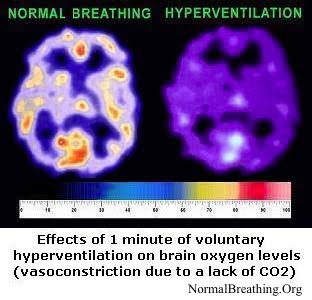 Hyperventilation could not boost blood oxygen. One could breathe in also two times below the healthcare standard, or 5 fold more, nonetheless in all these circumstances oxygen content in the arterial blood is going to be practically at the highest amount (roughly 97-98 %). In actual living, blood oxygen amount will be approximately exactly the same.
On the other hand, hyperventilation minimizes alveolar carbon dioxide levels together with blood carbon dioxide quantity. This loss triggers constriction of blood vessels and the reduced Bohr effect. Therefore, hyperventilation becomes the crucial reason for lessened oxygen concentrations in body tissues.
Obviously, low body oxygen also means low brain oxygen. Moreover, in conditions of hyperventilation, apart from lack of oxygen, the brain suffers from low CO2 that is another crucial chemical for normal function of nerve cells. This effect takes place due to low arterial CO2 levels. With reductions in brain CO2, nerve cells become over-excited. That leads to “spontaneous and asynchronous firing of neurons” (see medical references for CO2 effects below). In other words, low arterial CO2 causes the appearance of problems with sleep, mood swings, anxiety, panic, and addictions. It has been known for many decades that hyperventilation is the foundation for nearly all psychological, psychiatric and neurological problems.
Of course, not all singers acquire heavy basal breathing patterns, diseases, and addictions. There are tens of other factors that influence breathing, including exercise, sleep, diet, posture, and many others. Most influential negative factors are individual, and they include exercise with mouth breathing, supine sleep, poor posture, poor diet and many others. Generally, only some people are able to successfully counteract negative effects of hours of hyperventilation on body-oxygen content.
With developing hyperventilation, people get reduced results for the DIY body-oxygen test. Chronic diseases, such as cancer, heart disease, and asthma develop when a singer has a genetic predisposition to a particular disease and less than 20 seconds for body-oxygen test, while the normal value is about 40 seconds. This happens when this singer breathes over 2 times more than the medical norm. If body oxygen drops below 10 seconds, there is an immediate danger of heart attack, stroke, seizures, asthma attack, or some other severe exacerbation.
The solution to this problem of early deaths in singers is to keep body oxygen over 20 seconds 24/7. This is the minimum level that guarantees ordinary health levels. With the application of breathing techniques, it is possible to achieve normal minute ventilation and normal oxygen values in tissues. Furthermore, high body oxygen and CO2 values profoundly improve quality of voice in singers due to relaxation and expansion of smooth muscles of airways. This graph below provides some clues why singers of the first half of the 20th century had more melodic voices.

In general, due to varieties of factors, people used to breathe almost 3 times less. This tendency should be also present in singers living several decades ago.
Among most effective techniques for higher body oxygen are the Frolov breathing device (Breathslim is an American version of this Russian device), Amazing DIY breathing device and lifestyle factors related to the Buteyko breathing method.
On a practical note (since I taught breathing retraining to some singers), too much singing can prevent a person from getting over 30 s for the body oxygen test or be a hindrance even at lower numbers. For many people with up to 2-4 hours of daily singing, it is best to take a break for some weeks and get 30+ or even higher body oxygen numbers. Later the same person will be surprised by a greatly improved quality of his or her voice.
Natural lifestyle choices before and after breathing retraining
| Lifestyle factor: | Body oxygen < 30 s | Body oxygen > 50 s |
| Energy level | Medium, low, or very low | High |
| Desire to exercise | Not strong, but possible | Craving and joy of exercise |
| Intensive exercise with nose breathing | Hard or impossible | Easy and effortless |
| Typical mind states | Confusion, anxiety, depression | Focus, concentration, clarity |
| Craving for sugar and junk foods | Present | Absent |
| Addictions to smoking, alcohol, and drugs | Possible | Absent |
| Desire to eat raw foods | Weak and rare | Very common and natural |
| Correct posture | Rare and requires efforts | Natural and automatic |
| Sleep | Often of poor quality; > 7 hours | Excellent quality; < 5 hours naturally |