- Updated on October 29, 2020
 By Dr. Artour Rakhimov, Alternative Health Educator and Author
- Medically Reviewed by Naziliya Rakhimova, MD

Chronic hyperventilation syndrome
(chronic hyperventilation) is a physiological state characterized by chronic overbreathing or breathing more air than the medical-norm amount.
Normal minute ventilation at rest is about 6-7 L/min for a 70-kg man, as it was found in numerous studies done on healthy subjects (see the links and Table below).
Hyperventilation syndrome leads to reduced CO2 content in the alveoli of the lungs or alveolar hypocapnia. For most people, it also causes arterial hypocapnia (or CO2 deficiency in the arterial blood).
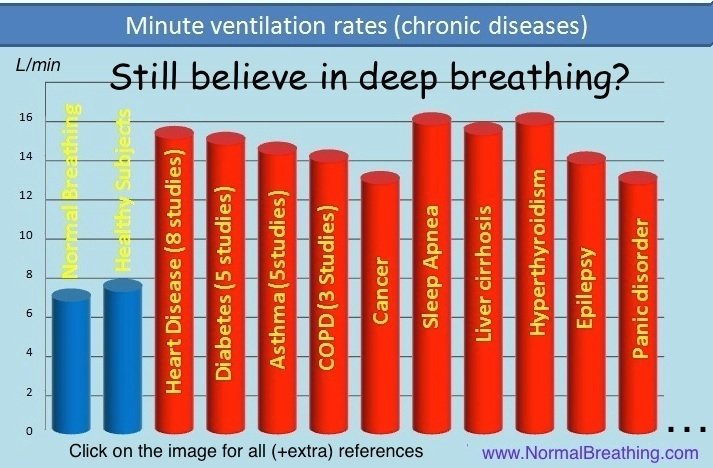
 Chronic hyperventilation syndrome in the sick is a common clinical finding, which is supported by the fact that many chronic diseases are developed from cell hypoxia. Many chronic diseases (including heart disease, diabetes, asthma, COPD, cancer, sleep apnea, obesity hyperventilation syndrome, liver cirrhosis, hyperthyroidism, cystic fibrosis, epilepsy, panic disorder, bipolar disorder, dystrophia myotonica) are possible only in people with hyperventilation syndrome in the lungs or alveolar, as this Table proves. This is regardless of silly ideas about the overbreathing present in popular medical sources, such as Wikipedia: click here.
Syndrome of chronic hyperventilation prevalence
Chronic hyperventilation is also common in the general population these days. Normal minute ventilation values for modern “normal subjects” suggest that hyperventilation (20 medical studies) is present in over 90% of normal subjects (see links below). Their average minute ventilation is about 12 liters of air min at rest, while published studies devoted to normal minute ventilation in the healthy subjects found only 6-7 L/min.
Hyperventilation syndrome reduces blood supply and oxygen levels for all vital organs of the human body. Hence, it is logical that sick people have poor results/ low CPs for their body-oxygen test (see results of studies below). There are many other negative effects related to symptoms of hyperventilation.
This YouTube video clip “Hyperventilation Syndrome” reviews main general ideas related to chronic overbreathing
The breathing patterns in normal subjects are nearly as unhealthy as the ones observed in people with chronic diseases. This explains why modern ordinary people can easily get overweight and obese, experience numerous symptoms of poor health, and eventually develop chronic disease. However, people living during the first decades of the 20th century had very different results for their minute ventilation. Right below here, there is a chart (graph) that provides exact results (minute ventilation) during the last 100 years. This chart is based on 24 published Western medical studies. This chart (with links to all clinical and physiological references) is provided as your bonus content down here.

[/sociallocker]
Causes, symptoms, and treatment of syndrome of chronic hyperventilation
| Main causes of hyperventilation are lifestyle risk factors such a sedentary lifestyle (lack of physical exercise), mouth breathing, chest breathing, poor posture, overeating leading to obesity, stress, … Learn more: | Common symptoms of hyperventilation include bronchospasm, constipation, coughing, muscle cramps, anxiety, nasal congestion, sighing, shortness of breath, angina pain, … Read more: | Successful treatment of hyperventilation is based on those breathing exercises that reduce minute ventilation at rest and increase alveolar CO2 levels. Correction of lifestyle risk factors is necessary too. More info: |