- Updated on August 13, 2020
 By Dr. Artour Rakhimov, Alternative Health Educator and Author
- Medically Reviewed by Naziliya Rakhimova, MD
Definition of quality of life
Quality of life definition is nearly impossible since various groups of people imply and value various parameters and their significance in the possible definition of quality of life. In addition, life quality can be applied to an individual, society, or social group. However, most people would agree that there are certain factors that indicate the poor or low quality of life in an individual, group, or society. For example, poverty, high crime rates, illiteracy, high infant mortality, high rates of divorces, stress, addictions, wide prevalence of chronic diseases, and low life expectancy are all factors that reflect low life quality. They are also called quality of life indicators. Based on such general ideas, it is possible to introduce quality of life as an integrative factor that could be subjectively measured using certain criteria.
Quality of life research
Clinical experience of over 160 Soviet and Russian doctors suggests that virtually all above-mentioned negative factors are connected, on a physiological level, with low body oxygenation due to ineffective breathing patterns that became very common in the general population during last several decades. Consider medical facts.
Health-related quality of life includes factors related to sleep, exercise, digestion, and other individual health parameters, abilities and choices. While many people understand that health related quality of life gets worse with the development of chronic diseases, very few people can pinpoint the key factor that controls this process. Why do modern people have much worse overall health, worse sleep, more problems with digestion, and significantly less fitness than our predecessors living 3-4 generations ago?
While there are dozens of medical studies that found that modern people have greatly reduced results for the body-oxygen test, we can consider the cause of low body oxygenation in modern people since there are studies that measured changes in minute ventilation rates during the previous century:
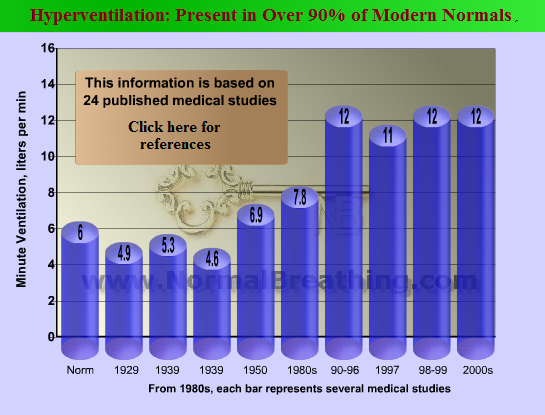
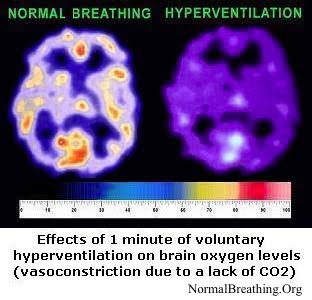 Abnormally heavy breathing is possible to notice, and it causes and promotes chronic diseases ranging from cancer and diabetes to heart disease and obesity. (Visit the Homepage for medical studies that testify even heavier breathing in people with chronic diseases.)
In addition, chronic overbreathing creates problems with sleep, digestion, ability to exercise and physical health. People with low body O2 generate free radicals, have over-excited brains due to deficiency of all three brain chemicals: O2, CO2, and glucose. Therefore, they will suffer from panic attacks, anxiety, addictions, inconsistent behavior, and other problems.
In short, low body O2 affects each and every aspect of health-related quality of life.
Natural lifestyle choices before and after breathing retraining
| Lifestyle factor: | Body oxygen < 30 s | Body oxygen > 50 s |
| Energy level | Medium, low, or very low | High |
| Desire to exercise | Not strong, but possible | Craving and joy of exercise |
| Intensive exercise with nose breathing | Hard or impossible | Easy and effortless |
| Typical mind states | Confusion, anxiety, depression | Focus, concentration, clarity |
| Craving for sugar and junk foods | Present | Absent |
| Addictions to smoking, alcohol, and drugs | Possible | Absent |
| Desire to eat raw foods | Weak and rare | Very common and natural |
| Correct posture | Rare and requires efforts | Natural and automatic |
| Sleep | Often of poor quality; > 7 hours | Excellent quality; < 5 hours naturally |
|
Sleep: Quality and duration of sleep are connected with our unconscious breathing patterns. |
Digestion: Quality and duration of digestion are also regulated by breathing. This is logical since blood and O2 supply for the gut depends on breathing. |
|
Energy: When our breathing is fast or heavy, we have less O2 in body cells. |
Performance: Our long-term accomplishments are controlled by our automatic breathing patterns since O2 is the key to success. |
YouTube Video Quality of Life and Health Depend on Body-O2 Levels. How and why can chronic diseases undermine the quality of life? Why do sick people have poor sleep, sluggish digestion, very low energy level and reduced life performance? All these and other questions are discussed in this video about health-related quality of life.