Breathing Less Header
Homepage Patterns CO2 effects Causes Diseases Symptoms Life quality Books ... Downloads More ... Search Map
Techniques Yoga Buteyko Frolov device Learn here Teaching Practitioners Testimonials Fitness Social issues Children
RSS feed

How to Build More Body Muscle with Less Diet Protein

Bodybuilder Sergey Dmitriev
"In order to achieve outstanding results in sports one must use all capabilities given to humans by Nature. In my program of training I apply the metabolism stimulation system using the Frolov Respiration Training Device. Breathing exercises using the Frolov Device have helped me to increase the efficiency of eutrophy and workouts, and to surpass my previous achievements!" Sergey Dmitriev, Threefold World Champion (2000, 2001, 2004), International Federation of Body-Builders IFBB

Triple World Champion Uses the Frolov Breathing Device. Why?

Bodybuilding and other intensive and prolonged types of sports and exercise require additional amounts of protein in the diet for faster adaptation of the human body, recovery, better performance and improved overall health. Thus, while most sedentary people are well nourished with 0.8 g or dietary protein per kg of body weight per day or 0.4 g/lb (FDA's suggestion), bodybuilders often use up to 2-3 g/kg per day or 1-1.5 g/lbs.

(Here is a sample of calculations. If your body weight is 150 lbs, your normal protein intake with a sedentary lifestyle should be about 60 g/day. If you do weight lifting and bodybuilding exercises, as well as intensive types of other exercise, you may need up to 150-215 g of protein daily.)

Medical people smilingWhat are the main dangers of high protein diets? Medical studies have not found any evidence that excessive use of protein in the diet can cause problems with kidneys in people with healthy kidneys (Faber et al, 1986; Poortmans & Dellalieux, 2000). However, what has been known in physiology for many decades is that high protein diets, and especially with animal proteins, have a negative impact on automatic breathing patterns and body-oxygen levels causing poor health and development of diseases. Furthermore, tissue hypoxia leads to anaerobic cellular respiration during physical exercise, elevated plasma lactic acid levels during and after workouts, production of free radicals (oxidative stress), acidic environment in body cells, chronic inflammation, immune dysfunction, reduced efficiency in protein metabolism and other negative effects.

How High Protein Diets Can Cause Low Body Oxygen and Poor Health

The main negative health effect of high protein diets is increased minute ventilation at rest (a heavier or faster/deeper automatic breathing pattern at rest and during sleep). Since oxygenation of the arterial blood during very small and slow normal diaphragmatic breathing at rest is about 98-99%, breathing more cannot improve oxygen transport. Hence, the main initial effect of heavier breathing is less CO2 in the lungs. Then low CO2 causes negative effects related to alveolar and arterial hypocapnia (lack of CO2) in the lungs, arterial blood and other body cells.

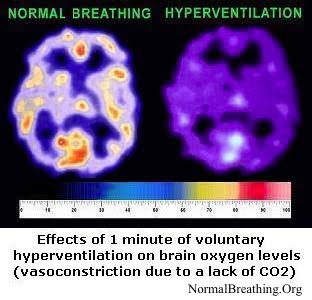
Brain oxygen levels: normal and after 1 min of hyperventilationAmong the central effects of arterial CO2 deficiency are constriction of arteries and arterioles (see CO2-vasodilation medical research 0 links below) and suppressed Bohr effect (reduced oxygen release in tissues). Hence, cell hypoxia (low body oxygen levels) triggers the cascade of negative effects described above (high lactic acid in blood, free radical generation, immunosuppression, and reduced protein metabolism).

As a result, many modern bodybuilders often suffer from chronic diseases, frequent infections, poor sleep, anxiety, and other abnormalities. In addition, hypocapnia suppresses synthesis of amino acids and proteins (see CO2 and Glutamine Synthesis research links below).

Hence, athletes and bodybuilders with heavier breathing at rest (or during sleep) require much more protein in order to build the same amount of body muscles.

Young MDsThis conclusion is in complete agreement with the clinical experience of Russian MDs practicing the Buteyko breathing method and Frolov breathing device therapy. These doctors found (and I have observed the same effect in hundreds of my students) that improved breathing at rest (slower and easier breathing patterns) increases body-oxygen test results. With more than 30 seconds of oxygen in the body, al people require less protein in their diets. Thus, it is common that even sedentary people start to eat less proteins themselves after their achieve easier and slower automatic breathing. This effect, as bodybuilder Sergey Dmitriev testifies, is very beneficial for overall health in bodybuilding.

There is no need to stop eating animal proteins. Dr. Konstantin Buteyko suggested that some people are better off with eating animal proteins, like meat, fish, dairy and eggs, while many breathing students drastically reduce their previous protein intake (up to 20-30% less) naturally with improved health and stronger body.

An additional benefit of correct breathing for bodybuilders relates to training and dietary manipulations during different seasons to perform better and have less fat (increased lean mass) for competitions and contests. There are several hazards of very low calorie diets that include hypokalemia, hypophosphatemia, rhabdomyolysis and flaccid tetraparesis (Britschgi & Zünd, 1991). Improved body-oxygen levels greatly reduce negative effects related to blood composition, retention of minerals, and kidney function before and during competitions.

What can be done in order to increase body oxygenation? Gradual breathing retraining (slowing down automatic breathing at rest) requires correction of lifestyle factors (causes of hyperventilation) and breathing exercises (e.g., with the Frolov breathing device). One important lifestyle factor that can lead to quick noticeable results in all bodybuilders and athletes in training is to breathe only through the nose during exercise. Nose breathing only (both in and out) makes work-outs more challenging, but it delivers nitric oxide (synthesized in nasal passages from arginine, another crucial amino acid) into the lungs, increases arterial CO2 tension, reduces heart rate for the same workload, and increases body oxygen level during and after exercise (additional information about nose breathing during exercise are on the page Effects of Exercise on the Respiratory System). More details about lifestyle for better body oxygenation are in the Section Learn here (see the menu above).

Therefore, improved body-oxygen levels provide double benefits for athletes and bodybuilders involved in intensive training:
- greatly improved quality of life and overall health
- reduced amount of dietary protein with increased efficiency in building body muscle.

Web pages about cardiovascular endurance, physical exercise, running, body building, and sports:
- Cardiovascular endurance and body O2 levels: How brain and body oxygenation influence cardiovascular endurance, desire to exercise, fitness-related lifestyle factors and physical health
- Physical health: It is impossible without high body-oxygen levels since low tissue oxygenation promotes chronic fatigue, diseases and abnormal states of the mind
- Breathing techniques for running: Which breathing techniques provide maximum body oxygenation at rest and during running?
- Benefits of physical activity: The main benefits of correct physical activity for health are due to more oxygen in body cells. Learn how to exercise correctly to get maximum benefits from exercise and sports
- Benefits of running correctly include increased cell and body-oxygen levels provided that you run with nose breathing only (in and out) mimicking some effects of high-altitude training
- Effects of exercise on the respiratory system: They are short-term and long-term and mainly depend on your breathing route: mouth vs. nose breathing
- Effects of lifestyle factors on sport performance are individual, but they all relate to increased O2 levels in body cells
- How to build more body muscle with less diet protein: Bodybuilding does not require as much protein in one's diet to build muscles if the body cells are well oxygenated due to correct breathing 24/7
- Graded exercise therapy: How to Make It Very Effective: Graded exercise therapy can be very beneficial, if it is done with one old key rule: nose breathing only
- Training Mask: Most advanced forms of physical exercise to boost body oxygenation, VO2max, endurance, and health.

Short sport and fitness articles: Breathing at rest, cardiovascular endurance and sport performance:
- Simple breathing exercise for higher VO2max
- Changing VO2max by breathing differently at rest
- Exercise is joy only when the body is oxygenated at rest
- When exercise is 100% safe for chronic diseases
- Why modern man gets little, if any, benefits from exercise
- Which exercise parameters increase body oxygenation

Reference pages: Breathing norms and medical facts:
- Breathing norms: Parameters, graph, and description of the normal breathing pattern
- 6 breathing myths: Myths and superstitions about breathing and body oxygenation (prevalence: over 90%)
- Hyperventilation: Definitions of hyperventilation: their advantages and weak points
- Hyperventilation syndrome: Western scientific evidence about prevalence of chronic hyperventilation in patients with chronic conditions (37 medical studies)
- Normal minute ventilation: Small and slow breathing at rest is enjoyed by healthy subjects (14 studies)
- Hyperventilation prevalence: Present in over 90% of normal people (24 medical studies)
- HV and hypoxia: How and why deep breathing reduces oxygenation of cells and tissues of all vital organs
- Body-oxygen test (CP test) : How to measure your own breathing and body oxygenation (two in one) using a simple DIY test
- Body oxygen in healthy: Results for the body-oxygen test for healthy people (27 medical studies)
- Body oxygen in sick : Results for the body-oxygen test for sick people (14 medical studies)
- Buteyko Table of Health Zones: Clinical description and ranges for breathing zones: from the critically ill (severely sick) up to super healthy people with maximum possible body oxygenation
- Morning hyperventilation: Why people feel worse and critically ill people are most likely to die during early morning hours

References: pages about CO2 effect:
- Vasodilation: CO2 expands arteries and arterioles facilitating perfusion (or blood supply) to all vital organs
- The Bohr effect: How and why oxygen is released by red blood cells in tissues
- Cell oxygen levels: How alveolar CO2 influences oxygen transport
- Oxygen transport: O2 transport is controlled by vasoconstriction-vasodilation and the Bohr effects, both of which rely on CO2
- Free radical generation: Reactive oxygen species are produced within cells due to anaerobic cell respiration caused by cell hypoxia
- Inflammatory response: Chronic inflammation in fueled by the hypoxia-inducible factor 1, while normal breathing reduces and eliminates inflammation
- Nerve stabilization: People remain calm due to calmative or sedative effects of carbon dioxide in neurons or nerve cells
- Muscle relaxation: Relaxation of muscle cells is normal at high CO2, while hypocapnia causes muscular tension, poor posture and, sometimes, aggression and violence
- Bronchodilation: Dilation of airways (bronchi and bronchioles) is caused by carbon dioxide, and their constriction by hypocapnia (low CO2)
- Blood pH: Regulation of blood pH due to breathing and regulation of other bodily fluids
- CO2: lung damage: Elevated carbon dioxide prevents lung injury and promotes healing of lung tissues
- CO2: Topical carbon dioxide can heal skin and tissues
- Synthesis of glutamine in the brain, CO2 fixation, and other chemical reactions
- Deep breathing myth: Ignorant and naive people promote the idea that deep breathing and breathing more air at rest is beneficial for health
- Breathing control: How is our breathing regulated? Why hypocapnia makes breathing uneven, irregular and erratic.

Sports Med. 2004; 34(5): 317-27.
Macronutrient considerations for the sport of bodybuilding.
Lambert CP, Frank LL, Evans WJ.
Nutrition, Metabolism, and Exercise Laboratory, Donald W. Reynolds Center on Aging, Department of Geriatrics, University of Arkansas for Medical Sciences, Little Rock, Arkansas 72205, USA.
Participants in the sport of bodybuilding are judged by appearance rather than performance. In this respect, increased muscle size and definition are critical elements of success. The purpose of this review is to evaluate the literature and provide recommendations regarding macronutrient intake during both 'off-season' and 'pre-contest' phases. bodybuilders attempt to increase muscle mass during the off-season (no competitive events), which may be the great majority of the year. During the off-season, it is advantageous for the bodybuilder to be in positive energy balance so that extra energy is available for muscle anabolism. Additionally, during the off-season, adequate protein must be available to provide amino acids for protein synthesis. For 6-12 weeks prior to competition, bodybuilders attempt to retain muscle mass and reduce body fat to very low levels. During the pre-contest phase, the bodybuilder should be in negative energy balance so that body fat can be oxidised. Furthermore, during the pre-contest phase, protein intake must be adequate to maintain muscle mass. There is evidence that a relatively high protein intake (approximately 30% of energy intake) will reduce lean mass loss relative to a lower protein intake (approximately 15% of energy intake) during energy restriction. The higher protein intake will also provide a relatively large thermic effect that may aid in reducing body fat. In both the off-season and pre-contest phases, adequate dietary carbohydrate should be ingested (55-60% of total energy intake) so that training intensity can be maintained. Excess dietary saturated fat can exacerbate coronary artery disease; however, low-fat diets result in a reduction in circulating testosterone. Thus, we suggest dietary fats comprise 15-20% of the bodybuilders' off-season and pre-contest diets. Consumption of protein/amino acids and carbohydrate immediately before and after training sessions may augment protein synthesis, muscle glycogen resynthesis and reduce protein degradation. The optimal rate of carbohydrate ingested immediately after a training session should be 1.2 g/kg/hour at 30-minute intervals for 4 hours and the carbohydrate should be of high glycaemic index. In summary, the composition of diets for bodybuilders should be 55-60% carbohydrate, 25-30% protein and 15-20% of fat, for both the off-season and pre-contest phases. During the off-season the diet should be slightly hyperenergetic (approximately 15% increase in energy intake) and during the pre-contest phase the diet should be hypoenergetic (approximately 15% decrease in energy intake).

Int J Sport Nutr Exerc Metab. 2000 Mar;10(1):28-38.
Do regular high protein diets have potential health risks on kidney function in athletes?
Poortmans JR, Dellalieux O.
Department of Physiological Chemistry, Institute of Physical Education and Kinesiotherapy, Free University of Brussels, Belgium.
Excess protein and amino acid intake have been recognized as hazardous potential implications for kidney function, leading to progressive impairment of this organ. It has been suggested in the literature, without clear evidence, that high protein intake by athletes has no harmful consequences on renal function. This study investigated body-builders (BB) and other well-trained athletes (OA) with high and medium protein intake, respectively, in order to shed light on this issue. The athletes underwent a 7-day nutrition record analysis as well as blood sample and urine collection to determine the potential renal consequences of a high protein intake. The data revealed that despite higher plasma concentration of uric acid and calcium, Group BB had renal clearances of creatinine, urea, and albumin that were within the normal range. The nitrogen balance for both groups became positive when daily protein intake exceeded 1.26 g.kg but there were no correlations between protein intake and creatinine clearance, albumin excretion rate, and calcium excretion rate. To conclude, it appears that protein intake under 2. 8 g.kg does not impair renal function in well-trained athletes as indicated by the measures of renal function used in this study

Eur J Clin Nutr. 1996 Nov;50(11):734-40.
Effect of chronic dietary protein intake on the renal function in healthy subjects.
Brändle E, Sieberth HG, Hautmann RE.
Department of Urology, University of Ulm, Germany.
OBJECTIVE: Relatively little is known about the influence of chronic oral protein intake on the kidney function. In most studies only the effect of a short-term change in protein intake [6-28 days] or the effect of an acute protein load on the glomerular filtration rate was studied. The purpose of this study was to investigate the effect of chronic oral protein intake on endogenous creatinine clearance and on the albumin excretion rate.
DESIGN AND SUBJECTS: In a prospective study 88 healthy volunteers with normal renal function (32 vegetarians, 12 body-builders with no supplementary protein concentrates, 28 body-builders with supplementary protein concentrates and 16 subjects with no special diet) were examined. In order to investigate the effect of chronic oral protein intake, the participants were on their diet for at least 4 months.
RESULTS: Endogenous creatinine clearance as a measure for glomerular filtration rate varied between 32 ml/min and 197 ml/min or 34 and 186 ml/min x 1.73 m2, respectively. Nitrogen excretion rate was used as a measure for the daily protein intake, since it is known to correlate linearly with the daily protein intake. Nitrogen excretion rates ranged between 2.66 g/d and 33.93 g/d reflecting a daily protein consumption between 17 and 212 g/d or 0.29 g/kg bw/d and 2.6 g/kg bw/day, respectively. Between nitrogen excretion rate and endogenous creatinine clearance a non linear, highly significant correlation was found showing a saturation with a maximum endogenous creatinine clearance of 181.7 ml/min (dose response curve). A similar correlation was observed between urea excretion rate and endogenous creatinine clearance. Using a model for multiple regression analysis the dependence of the albumin excretion rate on nitrogen excretion rate and endogenous creatinine clearance was examined. Only a significant correlation was found between albumin excretion rate and endogenous creatinine clearance, while the correlation between albumin excretion rate and nitrogen excretion rate was not significant.
CONCLUSION: This investigation shows that chronic oral protein intake of widely varying amounts of protein is a crucial control variable for the glomerular filtration rate in subjects with healthy kidneys. It is suggested that these changes reflect in part structural changes of the glomerulus and tubules due to chronic protein intake.

S Afr Med J. 1987 Dec 19;72(12):831-4.
Nutrient intake and dietary supplementation in body-builders.
Faber M, Benadé AJ.
National Research Institute for Nutritional Diseases, South African Medical Research Council, Parowvallei, CP.
The micronutrient intake of a group of 76 body-builders was studied. Sixty-three per cent of the subjects supplemented their diets with vitamin and mineral pills. The highest pill consumption was 87 pills per day. Fifty-nine per cent of the subjects used high-protein powders. The benefits of these powders is open to question, since the diet already supplied a high 2.2 g protein per kilogram of body weight. Thirty-nine per cent of the subjects used vitamin/mineral pills as well as protein powders. Because of the use of dietary supplements, the food in the diet supplied only a small fraction of the total intake of most of the micronutrients. The food supplied adequate amounts of nutrients according to the US Recommended Dietary Allowances, and the use of dietary supplements can therefore not be justified.

Int J Sports Med. 1986 Dec;7(6):342-6.
Dietary intake, anthropometric measurements, and blood lipid values in weight training athletes (bodybuilders).
Faber M, Benadé AJ, van Eck M.
Abstract
Dietary intake, plasma lipid levels, and anthropometric measurements were studied in 76 weight trained athletes (bodybuilders) who had been following a consistent eating and training program for at least 2 years prior to the study. Dietary data were collected using the 7-day diet record. Nutrient analysis indicated that these athletes followed an atherogenic diet, characterized by a high-fat, high-cholesterol intake. The high-cholesterol intake was due to a high egg intake, which varied from 0 to 81 eggs per week. Although those athletes with a high egg intake consumed significantly more fat and cholesterol than those with a low egg intake, plasma total cholesterol levels (mean = 182.9 +/- 25.7) did not differ over the range of egg intakes. Plasma HDL-cholesterol levels were higher and plasma triacylglycerol levels were lower at a high egg intake compared with that at a low egg intake. Plasma uric acid was not affected by the high animal protein intake. Despite the unfavorable intake of macronutrients, food alone supplied adequate amounts of micronutrients as compared with the RDA. Using different measurements of obesity, it was difficult to classify this group of athletes as overweight or obese, due to increased muscle development.

Phys Sportsmed. 2009 Jun;37(2):13-21.
Protein for exercise and recovery.
Kreider RB, Campbell B.
Exercise and Sport Nutrition Lab, Department of Health and Kinesiology, 158H Read Building, 4243 TAMU, Texas A&M University, College Station, TX 78743-4243, USA.
Dietary protein is required to promote growth, repair damaged cells and tissue, synthesize hormones, and for a variety of metabolic activities. There are multiple sources of proteins available; however, animal sources of protein contain all essential amino acids and are considered complete sources of protein, whereas plant proteins lack some of the essential amino acids and are therefore classified as incomplete. There is a significant body of evidence to indicate that individuals who are engaged in intense training require more dietary protein than sedentary counterparts (ie, 1.4-2 g/kg/day). For most individuals, this level of protein intake can be obtained from a regular and varied diet. However, recent evidence indicates that ingesting protein and/or amino acids prior to, during, and/or following exercise can enhance recovery, immune function, and growth and maintenance of lean body mass. Consequently, protein and amino acid supplements can serve as a convenient way to ensure a timely and/or adequate intake for athletes. Finally, adequate intake and appropriate timing of protein ingestion has been shown to be beneficial in multiple exercise modes, including endurance, anaerobic, and strength exercise.

Crit Rev Food Sci Nutr. 1999 Jul;39(4):317-28.
Nutritional supplements to increase muscle mass.
Clarkson PM, Rawson ES.
Department Exercise Science, University of Massachusetts, Amherst 01003, USA.
Although nutritional supplements purported to increase muscle mass are widely available at health food stores, gyms, by mail order, and over the Internet, many of these supplements have little or no data to support their claims. This article reviews the theory and research behind popular nutritional supplements commonly marketed as muscle mass builders. Included are the minerals chromium, vanadyl sulfate, and boron, the steroid hormone dehydroepiandrosterone (DHEA), beta-methyl-hydroxy-beta-methylbutyrate (HMB), creatine, protein supplements, and amino acids. Research has shown that chromium vanadyl sulfate, and boron do not appear to be effective in increasing lean body mass. The few studies examining DHEA have not supported the claim of increased muscle gain. Preliminary work on HMB supports an anticatabolic effect, but only one human study is currently available. Many studies reported increased body mass and several have reported increased lean body mass following creatine ingestion. This weight gain is most likely water retention in muscle but could also be due to some new muscle protein. Although athletes have a greater protein requirement than sedentary individuals, this is easily obtained through the diet, negating the use of protein supplements. Studies on amino acids have not supported their claim to increase growth hormone or insulin secretion. Nutritional supplements can be marketed without FDA approval of safety or effectiveness. Athletes who choose to ingest these supplements should be concerned with unsubstantiated claims, questionable quality control, and safety of long-term use.

Int J Eat Disord. 1995 Jul;18(1):49-57.
Weight loss, psychological, and nutritional patterns in competitive male bodybuilders.
Andersen RE, Barlett SJ, Morgan GD, Brownell KD.
Department of Psychiatry, School of Medicine, University of Pennsylvania, USA.
There has been increasing interest in the effects of chronic dieting and of repeated cycles of weight loss and regain in athletes. The purpose of this investigation was to examine the eating and weight loss practices, nutrition, and psychological factors in 45 male bodybuilders competing in a drug-free competition. Subjects completed a questionnaire on the morning of a Bodybuilding competition to assess the weight loss and dietary history, psychological distress, reports of binge eating, and vitamin and mineral supplement usage. The subjects reported high levels of dieting, weight loss, and weight regain. The mean weight loss reported in the competitive season was 6.8 kg; the mean weight gain reported was 6.2 kg. Eighty-five percent reported gaining weight while 46% reported episodes of binge eating after competitions. Most (81.5%) reported being preoccupied with food sometimes, often, or always. Between 30 and 50% reported psychological distress when preparing for competition (anxiety, short temper, anger). A similar number (30-50%) reported using amino acid, protein, and vitamin supplements. It appears that severe dieting practices are common in the sport of competitive Bodybuilding. The potential physiological, psychological, and health implications of these practices, combined with the growing popularity of Bodybuilding, are of sufficient importance to warrant further attention by investigators and the Bodybuilding community.

Schweiz Med Wochenschr. 1991 Aug 17;121(33):1163-5.
[Bodybuilding: hypokalemia and hypophosphatemia].
[Article in German]
Britschgi F, Zünd G.
Medizinische Abteilung des Kantonsspitals Obwalden, Sarnen.
In preparing for competitive bodybuilding, bodybuilders--in addition to continuous and hard muscle training--engage in stringent dietetic manipulations: the first few months of hypercaloric nutrition, rich in proteins, are devoted to the build-up of muscle mass. A second phase of reduced caloric intake is designed reduce subcutaneous fat, while, during the last week of preparations, extreme carbohydrate intake aims at loading muscles with glycogen. Simultaneously, sodium and water restriction results in extracellular and therefore subcutaneous volume deficit and better "definition" of muscle contours and structure. In the course of these dietetic manipulations a young body builder develops hypokalemia, hypophosphatemia, rhabdomyolysis and flaccid tetraparesis. The disturbances are pathophysiologically predictable.

Sports Med. 1999 Feb;27(2):97-110.
Dietary supplements and the promotion of muscle growth with resistance exercise.
Kreider RB.
Department of Human Movement Sciences and Education, University of Memphis, Tennessee, USA

Abstract
Nutritional strategies of overfeeding, ingesting carbohydrate/protein before and after exercise, and dietary supplementation of various nutrients [e.g. protein, glutamine, branched-chain amino acid, creatine, leucine, beta-hydroxy beta-methyl-butyrate (beta-HMB), chromium, vanadyl sulfate, boron, prasterone (dehydroepiandrosterone [DHEA]) and androstenedione] have been purported to promote gains in fat-free mass during resistance training. Most studies indicate that chromium, vanadyl sulfate and boron supplementation do not affect muscle growth. However, there is evidence that ingesting carbohydrate/protein prior to exercise may reduce catabolism during exercise and that ingesting carbohydrate/protein following resistance-exercise may promote a more anabolic hormonal profile. Furthermore, glutamine, creatine, leucine, and calcium beta-HMB may affect protein synthesis. Creatine and calcium beta-HMB supplementation during resistance training have been reported to increase fat-free mass in athletic and nonathletic populations. Prasterone supplementation has been reported to increase testosterone and fat-free mass in nontrained populations. However, results are equivocal, studies have yet to be conducted on athletes, and prasterone is considered a banned substance by some athletic organisations. This paper discusses rationale and effectiveness of these nutritional strategies in promoting lean tissue accretion during resistance training.

Go to Sport, fitness, endurance, and exercise


If you click the above Facebook like button and "like" this page, I will be nearly "forced" to asnwer your question. You can also tweet this page. Mention this in your comment, and you can ask even more. Thanks.

HTML Comment Box is loading comments...
Disclaimer Copyright 2013 Artour Rakhimov Contact details