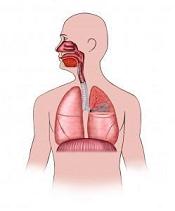
Diaphragm Function & Diaphragmatic Breathing Benefits
Diaphragm,
in normal health, does over 75% of the work of breathing at rest (Ganong, 1995;
Castro, 2000). Most
modern people, as it is easy to observe, have predominantly chest breathing.
Does chest breathing interfere with the health of humans and
the normal functioning of the diaphragm? What are the benefits of diaphragmatic
breathing?
Two Main Functions of the Diaphragm and Benefits of diaphragmatic breathing
- To regulate efficient O2 delivery and (partial) CO2 elimination. (Note that, while the majority of modern people believe in the deep breathing myth and the poisonous nature of CO2, medical science has found dozens of benefits of CO2 in the human body.)
Respiratory Physiology, by John West, documents that the upper 7% of the lung delivers 4 ml of oxygen per minute, while the lower 13% of the lung brings in 60 ml of oxygen every minute (West, 2000). Therefore, lower parts of the lungs are about 7 times more productive in oxygen transport. While normal breathing at rest has a small tidal volume (only about 500 ml for a 70-kg person), it provides hemoglobin in the arterial blood with up to 98-99% O2 saturation due to the leading role of the diaphragm in the respiratory process.
In contrast, chest breathing is usually larger and deeper (up to 12-18 L/min for minute ventilation, 700-900 mL for tidal volume, and 18-25 breaths/minute in mild forms of heart disease, diabetes, asthma and so forth). But during thoracic breathing, blood oxygen levels are actually reduced due to inhomogeneous gas exchange: lower the parts of the lungs do not get fresh air supply during chest breathing. In certain cases, this pathology (chest breathing) can greatly contribute to or even lead to pneumoperitoneum, emphysema, chronic respiratory fatigue, severe asthma, bronchitis, cystic fibrosis, heart disease, diabetes, cancer tumor growth, and other pathologies.
- To perform lymphatic drainage of the lymph nodes from the visceral organs. The diaphragm is a lymphatic pump since about 60% of all lymph nodes in the human body are located just under the diaphragm. Dr. Shields, in his study, "Lymph, lymph glands, and homeostasis" (Shields, 1992), reported that diaphragmatic breathing stimulates the cleansing of the lymph nodes by creating a negative pressure pulling the lymph through the lymphatic system. This increases the rate of toxic elimination by about 15 times.
Chest breathing at rest causes lymphatic stagnation in the stomach, pancreas, spleen, liver, kidneys, large and small colon, and other organs. Hence, effective lymphatic drainage is also among the benefits of diaphragmatic breathing.
Other functions and benefits of the diaphragm (not related to breathing)
- To help in defecation, urination, and vomiting by increasing the intra-abdominal pressure. All these processes are mainly reflexive in their nature and the contribution of the diaphragm to these processes, in health, is small but valuable.
However, alveolar hyperventilation (or elevated minute ventilation rates due to thoracic breathing) can lead to spasm in the muscles of the lower digestive tract causing constipation. People with constipation strain themselves too much (in the elderly, this often results in the formation of diverticula). But with regular, gentle diaphragmatic breathing, bowel movements occur more easily - and it becomes unnecessary to use the diaphragm forcefully (creating high intra-abdominal pressure) to make the bowel movement.
- To help in the production of speech (voice) and other sounds (e.g., laughter) by changing the intra-abdominal pressure. In normal health, high CO2 levels dilate the airways making air movements easier, while the diaphragm naturally remains relaxed. In this case, the diaphragm plays a main role in the generation of speech sounds and voice sounds.
When we switch to thoracic breathing (as during unnoticeable hyperventilation), this function of the diaphragm is taken over by the chest muscles. The resulting hypocapnia constricts bronchi and bronchioles leading to a tenser voice and higher pitch of the voice. This effect is especially noticeable during singing, so it is not a surprise that singing teachers encourage diaphragmatic breathing in their students.
Causes of the diaphragm dysfunction and chest breathing in modern people
Hyperventilation is the main and generally only cause of chest breathing in modern people and their inability to enjoy the diaphragmatic breathing benefits. Why? Because alveolar hypocapnia, regardless of the presence of the ventilation-perfusion mismatch, leads to hypoxia in body cells including the muscle cells of the diaphragm. As a result, the diaphragm gets into a state of spasm. If breathing gets slower or closer to the norm (e.g., due to breathing retraining), the oxygen level in the diaphragm will increase and it will be again the main respiratory muscle used for breathing at rest.
How to restore function to the diaphragm
Diaphragm function can be improved using simple
Diaphragmatic Breathing
Exercises, Techniques and Instructions. In order to achieve constant
abdominal breathing, it is necessary to use more special techniques. Medical
research and numerous clinical trials suggests that resistive breathing (e.g.,
pursed lip breathing and western respiratory sport trainers) improves diaphragm
function and lung function results. However, there are faster and better ways to
restore the functioning of the diaphragm and enjoy the benefits of diaphragmatic
breathing. These include breathing exercises and techniques and the use of
breathing devices (e.g., the Frolov device, Samozdrav, and Amazing DIY breathing
device).
Reference Web Pages: Breathing norms, Medical Graphs and Tables about Breathing Rates (Minute Ventilation) and
Body Oxygen in Healthy, Normal and Sick People
Breathing
norms Parameters, graph, and description of the normal
breathing pattern
6 breathing myths 6
myths about breathing and body oxygenation (prevalence: over 90%)
Hyperventilation Definitions of
hyperventilation: their advantages and weak points
Hyperventilation Syndrome in the
Sick. Table
1. Western scientific evidence about prevalence of CHV
(chronic hyperventilation) in patients with various chronic conditions
(34 medical studies)
Normal Minute Ventilation in
Healthy Subjects: Easy and Light Breathing (14 Studies)
Hyperventilation Prevalence Present in Over 90% of
Normal People (24 medical publications)
HV and hypoxia
How and why deep breathing reduces oxygenation of cells and tissues of
all vital organs
Body oxygen test
How to measure your own breathing and body oxygenation (a simple DIY test)
Body oxygen in healthy
Table 4. CP (body oxygen level) in healthy people (27 medical
studies)
Body oxygen in sick Table 5.
CP (body oxygen level) in sick people (14 medical studies)
Buteyko
Table of Health Zones with clinical description of most common zones
Morning HV Morning
hyperventilation effect or how and why critically ill people are most
likely to die during early morning hours
References: CO2 Effects Web Pages
Vasodilation: CO2 expands arteries and arterioles facilitating perfusion
(or blood
supply) to all vital organs
The Bohr effect
How and why oxygen is released by red blood cells in tissues
Cell Oxygen Levels and oxygen transport are controlled by
alveolar CO2 and breathing
Oxygen Transport depends on
breathing and these two effects (Vasoconstriction-Vasodilation and the Bohr
effect) are parts of two diagrams that summarize influences of hypocapnia (low CO2
content in the blood and cells) on circulation and O2 delivery
Free Radical Generation takes
place due to anaerobic cell respiration caused by cell hypoxia. Hence,
antioxidant defenses of the human body are also regulated by CO2 and breathing
Inflammatory Response is controlled by
breathing since hypoxia leads to or intensifies chronic inflammation through over-expression
of the hypoxia-inducible factor 1, while normal
breathing reduces these processes
Nerve stabilization takes place due to calmative or
sedative effects of carbon dioxide in neurons or nerve cells
Muscle relaxation or relaxation of muscle cells
is normal at high CO2, while hypocapnia causes muscular tension, poor posture
and, sometimes, aggression and violence
Brochodilation - dilation of
airways (bronchi and bronchioles) by carbon dioxide, and their constriction due
to hypocapnia
CO2: Best Natural Cough Suppressant
and "home remedy" since it calms urge-to-cough nerve receptors located in the
tracheobronchial tree and larynx
Blood
pH regulation and regulation of other bodily fluids
CO2: Lung Damage Healer: Elevated carbon
dioxide prevents injury and promotes healing of lung tissues
CO2: Skin and Tissue Healer
Synthesis of Glutamine
in the Brain, CO2 fixation, and other chemical reactions
CO2 myth
"CO2 is a toxic waste gas" myth
Breathing control
How is our breathing regulated? Why hypocapnia makes breathing uneven and erratic?
References
Castro M. Control of breathing. In: Physiology, Berne RM, Levy MN (eds), 4-th edition, Mosby, St. Louis, 1998.
Ganong WF, Review of medical physiology, 15-th ed., 1995, Prentice Hall Int., London.
Shields JW, MD, Lymph, lymph glands, and homeostasis, Lymphology, Dec. 1992, 25, 4: 147.
West JB. Respiratory physiology: the essentials. 6th ed. Philadelphia: Lippincott, Williams and Wilkins; 2000.

Poole DC, Sexton WL, Farkas GA, Powers SK, Reid MB, Diaphragm structure and
function in health and disease, Med Sci Sports Exerc. 1997 Jun;29(6):738-54.
Department of Kinesiology, Kansas State University Manhattan 66506, USA.
The diaphragm is the primary muscle of inspiration, and as such
uncompromised function is essential to support the ventilatory and gas
exchange demands associated with physical activity. The normal healthy
diaphragm may fatigue during intense exercise, and diaphragm function is
compromised with aging and obesity. However, more insidiously, respiratory
diseases such as emphysema mechanically disadvantage the diaphragm,
sometimes leading to muscle failure and death. Based on metabolic
considerations, recent evidence suggests that specific regions of the
diaphragm may be or may become more susceptible to failure than others. This
paper reviews the regional differences in mechanical and metabolic activity
within the diaphragm and how such heterogeneities might influence diaphragm
function in health and disease. Our objective is to address five principal
areas: 1) Regional diaphragm structure and mechanics (GAF). 2) Regional
differences in blood flow within the diaphragm (WLS). 3) Structural and
functional interrelationships within the diaphragm microcirculation (DCP).
4) Nitric oxide and its vasoactive and contractile influences within the
diaphragm (MBR). 5) Metabolic and contractile protein plasticity in the
diaphragm (SKP). These topics have been incorporated into three discrete
sections: Functional Anatomy and Morphology, Physiology, and Plasticity in
Health and Disease. Where pertinent, limitations in our understanding of
diaphragm function are addressed along with potential avenues for future
research.
Darnley GM, Gray AC, McClure SJ, Neary P, Petrie M, McMurray JJ, MacFarlane
NG, Effects of resistive breathing on exercise capacity and diaphragm function
in patients with ischaemic heart disease, Eur J Heart Fail. 1999 Aug;1(3):297-300.
Institute of Biomedical and Life Sciences, Glasgow University, Scotland, UK.
BACKGROUND: Muscle weakness has been suggested to result from the
deconditioning that accompanies decreased activity levels in chronic
cardiopulmonary diseases. The benefits of standard exercise programs on
exercise capacity and muscular strength in disease and health are well
documented and exercise capacity is a significant predictor of survival in
patients with chronic heart failure (CHF). Selective respiratory muscle
training has been shown to improve exercise tolerance in CHF and such
observations have been cited to support the suggestion that respiratory
muscle weakness contributes to a reduced exercise capacity (despite biopsies
showing the metabolic profile of a well trained muscle).
AIMS: This study aimed to determine the effects of selective inspiratory
muscle training on patients with chronic coronary artery disease to
establish if an improved exercise capacity can be obtained in patients that
are not limited in their daily activities.
METHODS: Nine male patients performed three exercise tests (with respiratory
and diaphragm function assessed before the third test) then undertook a
4-week program of inspiratory muscle training. Exercise tolerance,
respiratory and diaphragmatic function were re-assessed after training.
RESULTS: Exercise capacity improved from 812+/-42 to 864+/-49 s, P<0.05, and
velocity of diaphragm shortening increased (during quiet breathing from
12.8+/-1.6 to 19.4+/-1.1 mm s(-1), P<0.005, and sniffing from 71.9+/-9.4 to
110.0+/-12.3 mm s(-1), P<0.005). In addition, five from nine patients were
stopped by breathlessness before training; whereas only one patient was
stopped by breathlessness after training.
CONCLUSION: The major findings in this study were that a non-intensive
4-week training programmed of resistive breathing in patients with chronic
coronary artery disease led to an increase in exercise capacity and a
decrease in dyspnea when assessed by symptom limited exercise testing.
These changes were associated with significant increases in the velocity of
diaphragmatic excursions during quiet breathing and sniffing. Patients that
exhibited small diaphragmatic excursions during quiet breathing were most
likely to improve their exercise capacity after the training programmed.
However, the inspiratory muscle-training programmed was not associated with
any significant changes in respiratory mechanics when peak flow rate, forced
expiratory volume and forced vital capacity were measured. The resistive
breathing programmed used here resulted in a significant increase in the
velocity of diaphragm movement during quiet breathing and sniffing. In other
skeletal muscles, speed of contraction can be determined by the relative
proportion of fiber types and muscle length (Jones, Round, Skeletal Muscle
in Health and Disease. Manchester: University Press, 1990). The intensity of
the training programmed used here, however, is unlikely to significantly
alter muscle morphology or biochemistry. Short-term training studies have
shown that there can be increases in strength and velocity of shortening
that do not relate to changes in muscle biochemistry or morphology. These
changes are attributed to the neural adaptations that occur early in
training (Northridge et al., Br. Heart J. 1990; 64: 313-316). Independent of
the mechanisms involved, this small, uncontrolled study suggests that
inspiratory muscle training may improve exercise capacity, diaphragm
function and symptoms of breathlessness in patients with chronic coronary
artery disease even in the absence of heart failure.
| Disclaimer | Copyright © 2011 Artour Rakhimov | About Artour | Contributions | Contact details | Promote this site |