- Updated on August 3, 2026
 By Dr. Artour Rakhimov, Alternative Health Educator and Author
- Medically Reviewed by Naziliya Rakhimova, MD
In this YouTube video below, Dr. Artour explains the idea of breathing retraining to
Generally, most people just do various cardiovascular endurance exercises and activities but do not have a system or method that provides clear test-criteria and guarantees specific benefits after achieving certain results. However, our system is based on the body oxygen test that predicts amazing health benefits for those who get over 60+ s for the body oxygen test. These benefits include 4 hours of great sleep (naturally and without trying), a natural desire (often craving!) to exercise, a great boost in cardio endurance and VO2max, and many other effects (see the last Table on this page below). In order to experience these effects, you need to change the way you breathe 24/7 or to retrain your automatic (unconscious) breathing 24/7.
 Cardiovascular endurance is defined as the ability of the heart to provide enough oxygen to muscles during physical exercise for a long period of time. Elite endurance athletes always have very high VO2max (usually over 70 ml/kg/min in males). VO2max (maximum O2 consumption measured in ml of O2 per kg of body weight in 1 minute) is mainly an inherited factor. Therefore, you need to have super genes to become an Olympic champion. However, whatever your current VO2max, optimum training and correct breathing 24/7 can increase it by up to 15-20 units. Let us consider how.
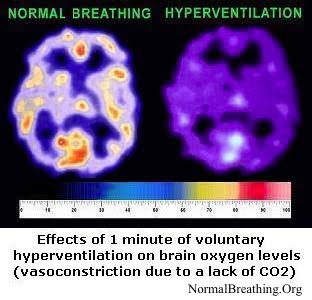 Oxygen is provided via respiration. Therefore, it is necessary to find out the ideal or optimum breathing patterns at rest and during exercise that provide maximum O2 amounts for muscles of the body.
Clinical experience of more than 150 Soviet and Russian medical doctors with sick patients and elite athletes suggests that people with more frequent and deep breathing at rest have reduced cardio fitness and less O2 levels in cells. My own experience with hundreds of my students agrees with observations of these doctors.
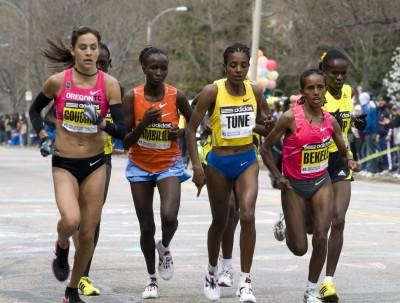 If you pay close attention to the breathing of very fit and healthy elite athletes at rest and during exercise, you can notice that they breathe slower and less in both situations. (Note that millions of people believe that breathing deeper or more air improves O2 delivery to cells, but hundreds of clinical studies proved that hyperventilation reduces O2 transport to body cells.) Here is a summary of the main findings related to 4 common breathing patterns at rest. You can click the links to see dozens of studies that confirm these numbers.
Table. MV (Minute Ventilation) and Rf (Respiratory Frequency) at rest
| Condition | MV, L/min | Rf, breaths/min | Oxygen extraction, % |
Breath pattern | References (click below for details) |
| Diseases* | 12-18 | >18 | <12 % | Overbreathing | Over 40 studies |
| Healthy | 6-7 | 10-12 | 25 % | Normal | Results of 14 studies |
| Norm | 6 | 12 | 25 % | Normal | Medical textbooks |
| Super-health | 2 | 3 | >60 % | Ideal | Observations/yoga |
*Chronic diseases include heart disease, diabetes, asthma, COPD, cystic fibrosis, cancer, and many others. Study Hyperventilation Syndrome for references and numbers.
As it is easy to observe, heavy breathing at rest results in relatively heavy breathing during exercise and that makes moderate or intensive exercise in the sick very difficult or impossible.
Table. Minute ventilation during moderate exercise (15-fold metabolism)
| Condition | Minute ventilation |
Short-term respiratory effects | Blood lactate | Duration of performance |
| Chronic diseases | About 150 L/min | Maximum mouth ventilation | Very high | A few minutes |
| Normal breathing | 90 L/min | Heavy nose breathing | Elevated | 1-2 hours |
| Super health states | 30 L/min | Easy nose breathing | Nearly normal | Many hours |
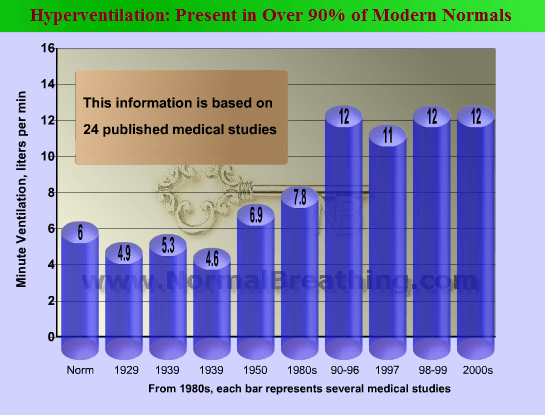
In spite of huge improvements in diet, modern people are less fit and have reduced cardio endurance in comparison with people living about a century ago. This graph explains the cause.
Furthermore, fast or deep breathing at rest undermines the desire of ordinary people and athletes to exercise and do sports activities, their sports performance and cardiovascular endurance, as the next Table and its examples show.
This YouTube video features Dr. Artour Rakhimov who explains how to improve cardiovascular endurance.
Table. Examples of automatic breathing patterns on cardio endurance
| Body-oxygen level | Breathing pattern | Level of cardiovascular endurance |
| 1-5 s CP | Very heavy breathing pattern | Physical activity can be life-threatening since acute exacerbation can occur at any moment due to critically low body oxygen level. No performance. |
| 5-10 s CP | Heavy breathing pattern | Exercise can cause acute exacerbation of health problems (asthma attacks, stroke, angina pain, seizures, and so forth). Poor performance |
| 11-20 s CP | Ineffective breathing pattern | Most people experience and complain about chronic fatigue, but can walk with only nose breathing for hours on a flat surface. Fit athletes can exercise with mouth breathing. Cardiovascular endurance and health are greatly compromised. |
| 20-30 s CP | Deep breathing pattern | There are less or no complaints about fatigue. Physical activity (e.g., easy relaxed jogging) is well tolerated, but requires considerable psychological effort and self-discipline, unless one is an athlete. Reduced cardiovascular endurance. |
| 30-40 s CP | Light degree of hyperventilation | Exercise is comfortable and relatively easy, but a systematic or daily exercise routine generally requires some self-discipline. Subnormal level of cardiovascular endurance. |
| 40-60 s daily CP, less than 40 s morning CP | Subnormal breathing pattern | Exercise is easy and pleasant; nose breathing during exercise is natural and comfortable. Nearly normal levels of cardiovascular endurance and performance. |
| About 60 s morning CP | Normal breathing pattern | Exercise is joyful and people crave it. Level of energy is very high. If people force themselves not to exercise, their CP drops. Physiologically normal cardiovascular endurance. |
| Over 90 s MCP | Very light breathing pattern | States of super health with enhanced cardiovascular endurance |
For more information on how basal breathing patterns determine health symptoms, lifestyle, and health states, visit Buteyko Table of Health Zones.
Natural lifestyle choices before and after breathing retraining
| Lifestyle factor: | Body oxygen < 30 s | Body oxygen > 50 s |
| Energy level | Medium, low, or very low | High |
| Desire to exercise | Not strong, but possible | Craving and joy of exercise |
| Intensive exercise with nose breathing | Hard or impossible | Easy and effortless |
| Typical mind states | Confusion, anxiety, depression | Focus, concentration, clarity |
| Craving for sugar and junk foods | Present | Absent |
| Addictions to smoking, alcohol, and drugs | Possible | Absent |
| Desire to eat raw foods | Weak and rare | Very common and natural |
| Correct posture | Rare and requires efforts | Natural and automatic |
| Sleep | Often of poor quality; > 7 hours | Excellent quality; < 5 hours naturally |
How to increase cardio endurance (lifestyle examples)
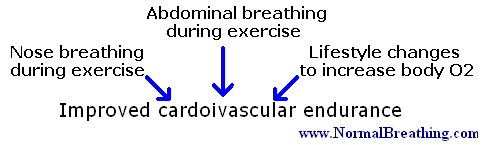
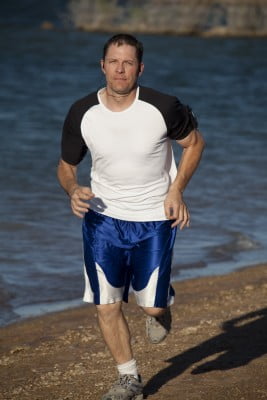 There are 3 main respiratory factors that produce negative effects on body oxygenation and cardiovascular endurance: thoracic (chest) breathing, mouth breathing (during sleep or exercise), and habitual overbreathing (increased breathing frequency and tidal volume at rest). All these factors reduce body oxygenation and worsen sports performance, physical health, muscular endurance, sleep, recovery from injuries, digestion, metabolism of carbohydrates, lipids, proteins, and reduce other benefits. One needs to reverse these lifestyle factors in order to increase cardio fitness and VO2max.
Our basal or unconscious breathing pattern at rest is the main factor that defines cell oxygen levels. Hence, when we breathe faster and deeper at rest (chronic hyperventilation), we have less oxygen in body cells and less desire and motivation to exercise. Furthermore, overbreathing, which is present in over 90% of modern athletes, leads to reduced cardiovascular endurance, hampered recovery after workout and injuries, symptoms of chronic diseases, and many other effects. You surely know about examples of famous athletes who have, had or even died from chronic conditions.
How to improve cardio fitness (specific goals)
You can increase your cardiorespiratory and cardiovascular endurance and VO2max by slower and easier unconscious breathing at rest (during sleep too). You need to breathe so slowly that your body oxygenation gets up to 50-60 seconds 24/7. Then you will be very fit and will enjoy exercise and greatly improved physical health. If you want to be super fit and get super benefits from sports activities and exercise, you need to get up to 2-3 minutes for the body-oxygen test by slowing down your automatic or unconscious breathing to 3-5 breaths per minute at rest. One can get up to 5-7 units of VO2max increase (in ml/kg/min) just by changing their basal breathing pattern. This site provides detailed instructions on how to increase cardiorespiratory endurance using natural remedies and techniques.
This old YouTube video (on the right side) explains how and why exercise with nose breathing is the most essential health factor for an ordinary person in order to fight and cure chronic diseases (such as asthma, hypertension, diabetes and many others) and increase cardio fitness. The video provides quotes from Dr. Buteyko Lecture at the Moscow State University.
You can also click this link to watch the same video on YouTube: How to improve cardiovascular endurance.
In his video below, Dr. Artour Rakhimov discusses physical exercise for NormalBreathing vs. Buteyko courses.
Cardio endurance for super fitness and elite athletes
If you are in competitive sports and fitness and want to improve your cardiovascular endurance, there is one great device that maximizes exercise benefits. It allows one to increase exercise efficiency nearly 2 times even in comparison with exercise with strictly nasal breathing. I have been testing this device myself for over 3 years. Many of my best breathing students also found great benefits of this device on health, fitness and cardio stamina. You can find the link to my review of this device right below here as your bonus content.
It is called the Training Mask. Learn more about effects of Training mask on cardiorespiratory endurance on this page: Training Mask.

[/sociallocker]
Sport and fitness articles:
- Simple breathing exercise for higher VO2max
- Increase VO2max by breathing differently at rest
- Exercise is joy if the body is oxygenated at rest
- When exercise is 100% safe for chronic diseases
- Why modern man gets little, if any, benefits from exercise
- Which exercise parameters increase body oxygenation