- Updated on September 9, 2020
 By Dr. Artour Rakhimov, Alternative Health Educator and Author
- Medically Reviewed by Naziliya Rakhimova, MD
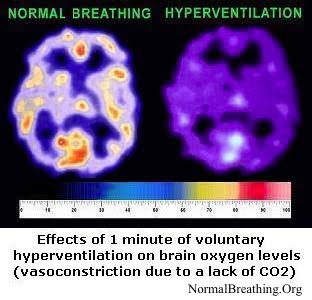 This natural home remedy for How to Relieve Constipation is a breathing exercise for quick constipation relief. It has been used by more than 150 Soviet and Russian medical doctors on thousands of their patients with a striking success rate (over 80%).
The exercise works quickly for children and during pregnancy too. This home remedy helps to prevent spasms providing more oxygen and blood for all gastrointestinal organs. As you can guess, this is the most natural and very fast home remedy since it requires only control of your breathing. And it takes only about 1-2 minutes.
The main reason to read this article “How to Relieve Constipation” People with constipation usually have less than 30 seconds for the body-oxygen test, while we should have about 40 s (the medical norm).
The cause of low body oxygen content in modern people is their too fast and heavy breathing (or deep breathing). Overbreathing reduces CO2 in the lungs, and this reduces the O2 content in all body cells (see the brain image).
In addition, low CO2 in smooth muscles creates a muscular spasm. To stop and prevent constipation we need to breathe slower and less (closer to the medical norm).
How to Relieve Constipation (breathe-easy exercise)
Do this exercise when you are sitting in the bathroom on the toilet. To relieve constipation fast or in about 1 minute, pinch your nose after your usual exhalation. Start holding your breath. (Note that you should avoid any mouth breathing during this exercise.)
You will probably hold your breath without any stress only for about 20 seconds. This is common for modern people. They have about twice reduced body-O2 content in comparison with people living about 100 years ago. But you should hold your breath a little longer or until you get a strong desire to breathe (for more carbon dioxide).
Try to get about 30 or more seconds for the breath hold. After you release your nose, make the first inhalation only through the nose and start reduced breathing (breathing less air than before this exercise).
Instead of taking your usual big and frequent inhalations, take a smaller inhalation and using the diaphragm (belly) only. Then relax all muscles of the body for the exhalation.
Repeat the cycle: make another short inhalation and again just relax all muscles to exhale. Practice this reduced breathing while remaining relaxed. In other words, try to breathe slower and less.
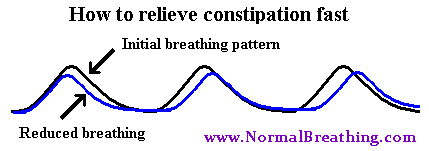
In order to help with constipation, your purpose is to maintain air hunger (a shortage of air) for about 1 minute with total relaxation of the body.
Why does this technique cause constipation relief?
This breathing remedy increases brain and body oxygen content. When you get increased alveolar and arterial CO2 levels, CO2 will dilate arteries and arterioles. CO2 is the most potent dilator of arteries and arterioles.
Hence, it causes easing the spasm and providing more oxygen for cells. Over 90% of people can stop constipation with this exercise in 1-2 minutes.
This YouTube video provides the same exercise to relieve constipation fast: Constipation Remedies: Relief in 1 Min.
How to Relieve Constipation Naturally (permanent cure)
Just below here is the conclusion and requirement of these Soviet MDs for How to Relieve Constipation who tested and helped to prevent chronic constipation in thousands of their patients. Their criterion and goal are hidden as your bonus content.
If your body-O2-test results are more than 30 s all the time, your blood flow to all organs and O2 content in body cells are high enough to get rid of problems with constipation. This is a permanent remedy for our topic that is How to Relieve Constipation.
In order to achieve high-body O2, you need to stop or avoid your heavy automatic breathing by teaching yourself how to breathe slower and easier 24/7. All additional instructions are in the Learning Section. Read Following links for know more about How to Relieve Constipation.
[/sociallocker]
Related web pages:
– Home Remedies for Chronic Constipation.
– Constipation Causes: Low body oxygen and CO2 levels .