- Updated on August 3, 2026
 By Dr. Artour Rakhimov, Alternative Health Educator and Author
- Medically Reviewed by Naziliya Rakhimova, MD
 Air hunger or breathlessness is caused by overbreathing or hyperventilation. Other causes of labored breathing are mouth- and chest-related respiratory problems.
Breathlessness is a sensation of air hunger and an uncomfortable awareness of one’s own breathing at rest or on exertion due to low oxygenation of tissues and the negative feedback of the respiratory receptors in the human brain. Other similar terms are “dyspnea” and “shortness of breath”. Breathlessness and heavy breathing are common in people with chronic diseases, such as advanced diabetes, cancer, cystic fibrosis, HIV-AIDS, heart disease, COPD, bronchitis, and many other conditions. It can appear on exertion, after meals, during night sleep, or during pregnancy.
Causes of Air hunger
There are many contributing reasons that can lead to breathlessness. However, in cases of chronic diseases, there are 3 main causes of breathlessness that relate to mouth breathing, chest breathing, and ineffective breathing patterns. This last cause plays the central role since its elimination leads to the disappearance of breathlessness. Consider these clinical results.
Minute ventilation rates (chronic diseases)
| Condition | Minute ventilation |
Number of people |
All references or click below for abstracts |
| Normal breathing | 6 l/min | – | Medical textbooks |
| Healthy Subjects | 6-7 l/min | >400 | Results of 14 studies |
| COPD | 14 (+-2) l/min | 12 | Palange et al, 2001 |
| COPD | 12 (+-2) l/min | 10 | Sinderby et al, 2001 |
| COPD | 14 l/min | 3 | Stulbarg et al, 2001 |
| Cancer | 12 (+-2) l/min | 40 | Travers et al, 2008 |
| Heart disease | 15 (+-4) l/min | 22 | Dimopoulou et al, 2001 |
| Heart disease | 16 (+-2) l/min | 11 | Johnson et al, 2000 |
| Heart disease | 12 (+-3) l/min | 132 | Fanfulla et al, 1998 |
| Heart disease | 15 (+-4) l/min | 55 | Clark et al, 1997 |
| Heart disease | 13 (+-4) l/min | 15 | Banning et al, 1995 |
| Heart disease | 15 (+-4) l/min | 88 | Clark et al, 1995 |
| Heart disease | 14 (+-2) l/min | 30 | Buller et al, 1990 |
| Heart disease | 16 (+-6) l/min | 20 | Elborn et al, 1990 |
| Pulm hypertension | 12 (+-2) l/min | 11 | D’Alonzo et al, 1987 |
| Asthma | 13 (+-2) l/min | 16 | Chalupa et al, 2004 |
| Asthma | 15 l/min | 8 | Johnson et al, 1995 |
| Asthma | 14 (+-6) l/min | 39 | Bowler et al, 1998 |
| Asthma | 13 (+-4) l/min | 17 | Kassabian et al, 1982 |
| Asthma | 12 l/min | 101 | McFadden, Lyons, 1968 |
| Cystic fibrosis | 15 L/min | 15 | Fauroux et al, 2006 |
| Cystic fibrosis | 10 L/min | 11 | Browning et al, 1990 |
| Cystic fibrosis* | 10 L/min | 10 | Ward et al, 1999 |
| CF and diabetes* | 10 L/min | 7 | Ward et al, 1999 |
| Cystic fibrosis | 16 L/min | 7 | Dodd et al, 2006 |
| Cystic fibrosis | 18 L/min | 9 | McKone et al, 2005 |
| Cystic fibrosis* | 13 (+-2) l/min | 10 | Bell et al, 1996 |
| Cystic fibrosis | 11-14 l/min | 6 | Tepper et al, 1983 |
| Diabetes | 12-17 l/min | 26 | Bottini et al, 2003 |
| Diabetes | 15 (+-2) l/min | 45 | Tantucci et al, 2001 |
| Diabetes | 12 (+-2) l/min | 8 | Mancini et al, 1999 |
| Diabetes | 10-20 l/min | 28 | Tantucci et al, 1997 |
| Diabetes | 13 (+-2) l/min | 20 | Tantucci et al, 1996 |
| Sleep apnea | 15 (+-3) l/min | 20 | Radwan et al, 2001 |
| Liver cirrhosis | 11-18 l/min | 24 | Epstein et al, 1998 |
| Hyperthyroidism | 15 (+-1) l/min | 42 | Kahaly, 1998 |
In all these cases, breathlessness is caused by chronic hyperventilation (or an automatic deep breathing pattern) leading to alveolar hypocapnia (lack of CO2) and cell hypoxia, which creates air hunger and provokes the respiratory center to further intensify breathing.
Breathing of healthy people is small: only 500 ml of tidal volume, 10-12 breaths/min for the respiratory rate, and 6 L/min for minute ventilation for a 70-kg person). But patients with breathlessness and heavy breathing have over 12 L/min (more than double the norm) for their ventilation rates and over 18 breaths/min for respiratory frequency. That causes constriction of airways and hypoxic and tense respiratory muscles.
What causes Air hunger on exertion?
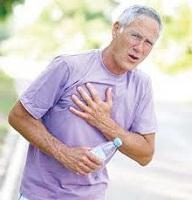 Exertion increases minute ventilation rates and this causes losses in alveolar CO2. Hypocapnia either worsens ventilation-perfusion ratio (in case of lung problems) or immediately constricts arterial blood vessels, causing reduced oxygen delivery to all vital organs. In both cases, increased breathing reduces oxygen transport to tissues. Breathlessness on exertion is particularly strong in cases of mouth breathing that leads to more losses in CO2 and additional losses in the absorption of nasal nitric oxide.
Chest breathing is another crucial factor that leads to chronic breathlessness due to the drastic reduction in blood oxygenation, sometimes leading to hypoxemia.
What causes breathlessness after eating
The main physiological effect of meals and eating is also increased ventilation due to biochemical stress caused by food substances that require assimilation and redistribution. Increased respiratory volumes cause the same effects as it is described above for exertional dyspnea.
Why anxiety, night sleep, and pregnancy trigger breathlessness
 Overbreathing is a normal physiological reaction to stress. As a result of stress and anxiety, the human body has reduced oxygenation of cells and diminished carbon dioxide in the lungs. Transition into a horizontal position also results in lowered alveolar CO2, leading to decreased cellular oxygen tensions. Numerous studies proved that end-tidal CO2 is lowered in pregnancy, causing the same effects as described above.
As a result, in all these cases, the main physiological mechanism remains the same: all these factors increase minute ventilation rates, causing reduced oxygen levels in body cells.

 The main causes of breathlessness and heavy breathing (why it is hard to breathe):
- constriction of airways due to hypocapnia in the airways
- reduced oxygen levels in the respiratory muscles
- tense chest muscles and the diaphragm due to low CO2 since CO2 is a potent muscle relaxant.
Exacerbation causes in the pathophysiology of labored respiration and breathlessness include:
- chest breathing
- mouth breathing (that causes low absorption of nitric oxide and reduced CO2 level in alveoli)
- inflammation and sputum or mucus in air passages causing additional narrowing or even an obstruction of air and oxygen flow, as in people with asthma or COPD.
This YouTube video explains the main causes and successful treatment of breathlessness or shortness of breath.
Exertion, mouth breathing, physical exercise with mouth breathing, chest breathing, heavy meals, overeating, anxiety, stress, attempts to inhale deeply, deep breathing exercises with CO2 losses, poor posture, night sleep and other lifestyle factors are already-discussed causes of hyperventilation. Hence, they worsen breathlessness and heavy breathing.
Successful treatment of breathlessness
 Over 160 Russian medical doctors tested thousands of people with breathlessness and heavy breathing and found that all of them had less than a certain number X (in seconds) for the body-oxygen test. These doctors also discovered that breathing normalization (achieving normal breathing parameters) leads to complete elimination of breathlessness and heavy breathing with air hunger.
As their clinical experience revealed, with over X s for the body-oxygen test, patients do not experience these negative symptoms. This result has been achieved in many clinical trials after the application of various breathing therapies and devices (the Buteyko method, Frolov breathing device therapy, and others).
This number X is provided right below here as your bonus content.
You need to have at least 20-25 seconds for the DIY body oxygen test.
[/sociallocker]