- Updated on September 10, 2020
 By Dr. Artour Rakhimov, Alternative Health Educator and Author
- Medically Reviewed by Naziliya Rakhimova, MD
Definition of hypoxemia
 Hypoxemia (also known as low oxygen desaturation) is defined as an abnormally-low partial pressure of oxygen in the arterial blood. Oxygen cascade (or oxygen delivery from the outer air to body cells) is highly sensitive to various abnormalities that can appear anywhere in the air (e.g., reduced oxygen content), airways, lungs, or cardiovascular system. The examples and causes are explained below. Oximeters are commonly used these days in hospitals and by critical-care professionals to define blood oxygen levels and diagnose hypoxemia.
On an average, the normal oxygen levels in our bloodstream are about 85 mm Hg. In people suffering from hypoxemia, this falls down to as low as 60 mmHg. During hypoxemia, the oxygen saturation in the body is less than 90 percent. This is the formal definition of hypoxemia. Normal pulse oximeter readings can range from 95 to 100 percent. If the same falls below 80 percent, the condition is referred to as severe hypoxemia.
Hypoxemia has a profound negative effect on quality of life (Nonoyama et al, 2007; Orth et al, 2008; Sans-Torres et al, 1999; Tanni et al, 2007). Even nocturnal hypoxemia (i.e., temporary hemoglobin desaturation during sleep) has negative effects on life quality (Young et al, 2011).
Causes of hypoxemia
 1) The inspired air has reduced oxygen content (e.g., at high altitude or due to other causes).
2) Insufficient gas exchange is caused by alveolar hypoventilation (or breathing too little) with chest breathing. It can happen, for example, during sleep or during physical exercise for people with lung diseases.
3) Some parts of the lungs are obstructed, or damaged, or have insufficient ventilation (e.g., as for emphysema, COPD and other conditions).
4) Blood shunting causes the arterial and venous blood to mix and this causes reduced oxygenation of the arterial blood.
5) Impaired alveolar-capillary diffusion (e.g., due to thick mucus during exercise in people with cystic fibrosis).
In many cases, transition into a horizontal position, sleep (especially REM sleep), overeating, slouching (or poor posture) and physical exercise (e.g., in cystic fibrosis and COPD) can cause hypoxemia or greatly worsened hypoxemia. Nocturnal desaturation is common for many conditions, including cystic fibrosis (Coffey et al, 1991), heart disease (Tanigawa et al, 2006) and diabetes (Mahler et al, 2011).
The main cause of chronic hypoxemia
 While hypoxemia may occur suddenly, or due to an accident or unusual and exotic situations, most cases of chronic hypoxemia relate to gradual worsening of blood oxygenation due to chronic lung diseases, such as cystic fibrosis, COPD (severe asthma, bronchitis, emphysema, and so on), lung cancers, bronchiectasis and many others. In such cases, gradual deterioration in blood oxygenation is accompanied by hypercapnia (too much CO2 in the arterial blood) and has a simple single cause: an abnormal breathing pattern that is manifested in the following factors:
– hyperventilation
– thoracic (or chest, or shallow) breathing
– mouth breathing.
Ventilation rates (chronic diseases)
| Condition | Minute ventilation |
Number of people |
All references or click below for abstracts |
| Normal breathing | 6 L/min | – | Medical textbooks |
| Healthy Subjects | 6-7 L/min | >400 | Results of 14 studies |
| Asthma | 13 (+-2) L/min | 16 | Chalupa et al, 2004 |
| Asthma | 15 L/min | 8 | Johnson et al, 1995 |
| Asthma | 14 (+-6) L/min | 39 | Bowler et al, 1998 |
| Asthma | 13 (+-4) L/min | 17 | Kassabian et al, 1982 |
| Asthma | 12 L/min | 101 | McFadden, Lyons, 1968 |
| COPD | 14 (+-2) L/min | 12 | Palange et al, 2001 |
| COPD | 12 (+-2) L/min | 10 | Sinderby et al, 2001 |
| COPD | 14 L/min | 3 | Stulbarg et al, 2001 |
| Cystic fibrosis | 15 L/min | 15 | Fauroux et al, 2006 |
| Cystic fibrosis | 10 L/min | 11 | Browning et al, 1990 |
| Cystic fibrosis* | 10 L/min | 10 | Ward et al, 1999 |
| CF and diabetes* | 10 L/min | 7 | Ward et al, 1999 |
| Cystic fibrosis | 16 L/min | 7 | Dodd et al, 2006 |
| Cystic fibrosis | 18 L/min | 9 | McKone et al, 2005 |
| Cystic fibrosis* | 13 (+-2) L/min | 10 | Bell et al, 1996 |
| Cystic fibrosis | 11-14 L/min | 6 | Tepper et al, 1983 |
Hyperventilation, regardless of the ventilation-perfusion ratio (or the presence of lung problems during the initial stages), leads to alveolar hypocapnia. This, in turn, causes a cascade of pathological effects that involve drying and overcooling of airways, constriction of airways, inability of the body to heal lung damage, over-production of thick mucus, suppression of the immune system, possible appearance of allergies, over-expression of hypoxia-inducible factor 1, oxidative stress, and many other effects (see the CO2-related links below). Alveolar hyperventilation leads to the appearance of 2 other factors: chest breathing and mouth breathing.
Chest breathing immediately leads to reduced-blood oxygenation since lower portions of the lungs get about 6-7 times more blood, due to gravity, in comparison with the top parts of the lungs.
Mouth breathing causes reduction in alveolar CO2 due to reduced-dead volume, possible reduction in absorption of nasal NO (nitric oxide), as in cystic fibrosis, and frequent respiratory infections. Alveolar hypocapnia directly contributes to worsened ventilation-perfusion ratio.
For uneducated and archaic views on hypoxemia, you may check this Wikipedia article: click here.
Treatment for hypoxemia
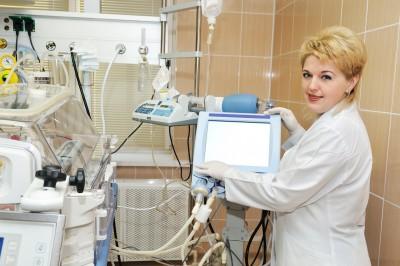 Note. Severe cases of hypoxemia require the attention of emergency or critical care professionals. Their treatment for hypoxemia may include mechanical ventilation and supplemental oxygen therapy.
Successful treatment of chronic hypoxemia in patients with COPD, cystic fibrosis, emphysema, severe asthma, and other lung diseases has been demonstrated clinically by more than 600 Russian MDs. This website provides detailed instructions for Buteyko breathing exercises. However, after testing my students, I know that there are even better methods that work nearly twice more effectively. The names of these methods are provided below down here as your bonus content.
The best treatment is based on breathing retraining using breathing devices: the Frolov breathing device or the Amazing DIY Breathing Device. Breathing devices provides more load for respiratory muscles and alveoili of the lungs in comparison with the Buteyko exercises.
[/sociallocker]
One also needs to address lifestyle-risk factors (supine sleep, mouth breathing, overeating, insufficient or incorrect physical exercise, nutritional deficiencies, and many others) in order to achieve permanent changes in automatic breathing patterns. These factors are analyzed in the Section Learn here.
Medical References
Coffey MJ, FitzGerald MX, McNicholas WT, Comparison of oxygen desaturation during sleep and exercise in patients with cystic fibrosis, Chest. 1991 Sep;100(3):659-62.
Lebecque P, Lapierre JG, Lamarre A, Coates AL, Diffusion capacity and oxygen desaturation effects on exercise in patients with cystic fibrosis, Chest. 1987 May;91(5):693-7.
Mahler DA, Gifford AH, Waterman LA, Ward J, Machala S, Baird JC, Mechanism of Greater Oxygen Desaturation during Walking Compared with Cycling in COPD, Chest. 2011 Jan 27.
Neumann C, Martinez D, Schmid H, Nocturnal oxygen desaturation in diabetic patients with severe autonomic neuropathy, Diabetes Res Clin Pract. 1995 May;28(2):97-102.
Nonoyama ML, Brooks D, Guyatt GH, Goldstein RS, Effect of oxygen on health quality of life in patients with chronic obstructive pulmonary disease with transient exertional hypoxemia, Am J Respir Crit Care Med. 2007 Aug 15;176(4):343-9. Epub 2007 Apr 19.
Orth M, Walther JW, Yalzin S, Bauer TT, de Zeeuw J, Kotterba S, Baberg HT, Schultze-Werninghaus G, Rasche K, Duchna HW, Influence of nocturnal oxygen therapy on quality of life in patients with COPD and isolated sleep-related hypoxemia: a prospective, placebo-controlled cross-over trial [German], Pneumologie. 2008 Jan;62(1):11-6.
Sans-Torres J1, Domingo C, Rué M, Durán-Tauleria E, Marín A., An assessment of the quality of life of patients with COPD and chronic hypoxemia by using the Spanish version of the Chronic Respiratory Disease Questionnaire [Spanish], Arch Bronconeumol. 1999 Oct;35(9):428-34.
Tanigawa T, Yamagishi K, Sakurai S, Muraki I, Noda H, Shimamoto T, Iso H, Arterial oxygen desaturation during sleep and atrial fibrillation, Heart. 2006 Dec;92(12):1854-5.
Tanni SE, Vale SA, Lopes PS, Guiotoko MM, Godoy I, Godoy I, Influence of the oxygen delivery system on the quality of life of patients with chronic hypoxemia, J Bras Pneumol. 2007 Apr;33(2):161-7.
Young AC, Wilson JW, Kotsimbos TC, Naughton MT, The impact of nocturnal oxygen desaturation on quality of life in cystic fibrosis, J Cyst Fibros. 2011 Mar;10(2):100-6.