- Updated on October 29, 2020
 By Dr. Artour Rakhimov, Alternative Health Educator and Author
- Medically Reviewed by Naziliya Rakhimova, MD
What is Constipation Causes ? Low O2 in the Gut
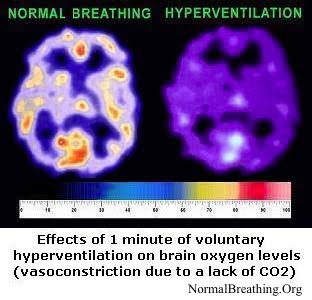 The clinical experience of Soviet and Russian medical doctors suggests that people with normal body oxygen levels (40 s for the body-oxygen test) do not experience constipation and spasms or cramps in muscles. The main cause of constipation is ineffective breathing, which reduces body-oxygen content. Superficially it seems that constipation is caused by low amounts of fiber in the diet, a lack of physical exercise, acne, stress, and other lifestyle factors. However, all these factors make breathing heavier and deeper.
 About 100 years ago, Yandell Henderson, MD, Yale University Professor, found that arterial hypocapnia (low aCO2) caused by hyperventilation resulted in the loss of tone in the blood vessels located in the abdominal viscera of dogs and produced extreme intestinal congestion (causing constipation and weight gain). It also leads to acne. Saturation of the blood with carbon dioxide quickly eliminated the congestion (Henderson, 1907). His study was published in the American Journal of Physiology (see the reference below).
Why has chronic constipation become a problem during the last 100 years? Do modern people breathe too much? This graph shows results of 24 medical studies that measured how much modern normal subjects breathe. The small bar on the left is the medical norm (6 liters of air per minute at rest). If you click on the graph, you will get references for this graph.
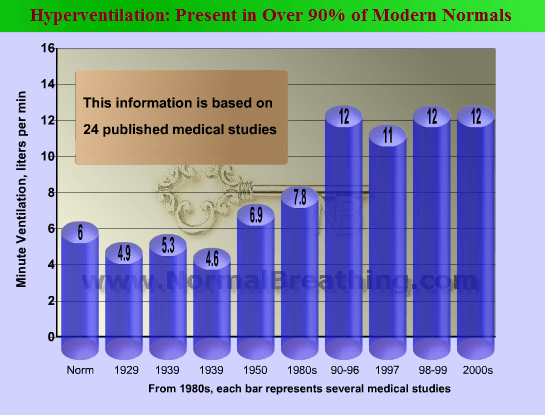
Sick people breathe about 2-3 times more than medical norms, as you can see from studies on the Homepage of this site.
 Chronic hyperventilation (i.e. breathing more than the norm) and correspondingly low CO2 values in the arterial blood cause problems with the perfusion and oxygenation of the digestive organs. All vital organs and tissues get less oxygen. The same is true for the skin on a face and problems with acne. We already proved this fact in the section devoted to the CO2 vasodilation effect. For example, Dr. Gilmour and his colleagues showed in his article “Colon blood flow in the dog: effects of changes in arterial carbon dioxide tension” published in Cardiovascular Research that low CO2 reduced blood supply to the colon promoting constipation (Gilmour et al, 1980).
These and other changes (e.g., of a biochemical nature) cause various problems with the GI system. Other studies found that blood flow, for example, to the liver and colon is proportional to arterial CO2 due to the same CO2-vasodilation effect. As a result, over-breathing leads to reduced blood and oxygen supply to all GI organs, rectum, and surrounding muscles and tissues included. This is the key cause of constipation. A low oxygen level in cells triggers anaerobic cellular respiration, elevated lactic acid content, suppression of the immune system, pathological flora in the gut, and many other negative effects, such as bloating and acne.
 Furthermore, it is another known physiological fact that CO2 is crucial for the normal work of nerve cells since carbon dioxide possesses sedative and calming neurological effects. Indeed, a more recent investigation, entitled “Hyperventilation, central autonomic control, and colonic tone in humans” (Ford et al, 1995), researchers observed that hyperventilation worsened digestive problems due to changes in hemodynamic function through central and peripheral mechanisms. They also suggested that some of the pathological changes in colonic function were caused by altered autonomic control mechanisms in the brain.
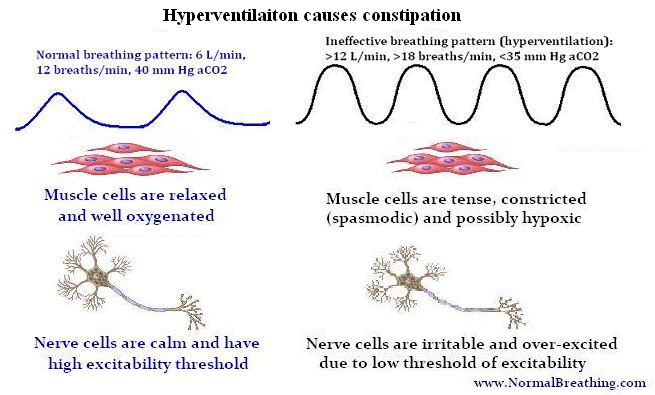
Low levels of CO2 and O2 cause an overexcitement of nerve cells and involuntary contraction (spasm) of muscle fibers (Brown et al, 1953; Macefield et al, 1991; Schwartz et al, 1993; Seyal et al, 1998, Sparing et al, 2007). Therefore, chronic overbreathing causes those effects in muscle and nerve cells that are directly responsible for muscular spasm present in chronic cases of constipation.
Breathing exercises cure constipation and provide a relief in 1 minute
Normally, during elimination, the descending colon and all subsequent muscles function together and in harmony, as a well-trained team. According to Russian MDs,
 chronic constipation happens as a result of local spasms due to strained muscles, pooling of the venous blood and reduced cell oxygen content due to ineffective breathing (increased thoracic breathing and elevated minute ventilation leading to O2 and CO2 deficiencies). Hence, your goal is to normalize your respiration pattern.
Therefore, it is not a surprise that over 90% of people can get fast relief from constipation (in 1-2 minutes or nearly suddenly) using a simple breathing exercise (remedy) developed by Russian medical doctors. This most natural home remedy was tested on thousands of people with chronic constipation. It is Remedy No.4 on this page: Home remedies for chronic constipation.
How automatic-breathing parameters relate to spasms and cramping
(muscle, stomach, leg cramps in bed; periods or menstrual cramps; and many other types)
| Respiratory Frequency* | Body Oxygen Test (morning result) |
Chances of cramps |
| More than 20 breaths/min | Less than 20 s | Very possible |
| 15-20 breaths/min | 20-30 s | Possible |
| 12-15 breaths/min | 30-40 s | Very rare |
| 12 or less breaths/min | > 40 s | Virtually impossible |