- Updated on October 14, 2020
 By Dr. Artour Rakhimov, Alternative Health Educator and Author
- Medically Reviewed by Naziliya Rakhimova, MD
Why Sleeping on Your Back is Very Bad for Your Health
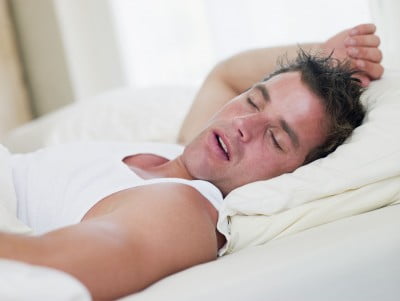 Surely, sleep is crucial for good health, and each sleep parameter matters for well-being and even the life of many people. What are the ideal sleeping positions for better health? If you try to search the World Wide Web using simple keywords like “best sleeping postures” or “correct sleeping positions” or “perfect postures for sleep”, you will find out that over 80% of popular websites advise sleeping on one’s back (called “supine sleep”). They say that it is the ideal sleep position due to minimal stress for a human spine. These internet resources are usually created by chiropractors, medical doctors, nurses, and alignment specialists. They view the human body as a physical device with angles, bones, curves, pressure, and tension. These professionals surely have good intentions while providing this advice, but their oversimplified view of the human organism has catastrophic effects on health causing higher mortality due to nocturnal hypoxemia.
 Professional medical research has found that sleeping on one’s back is the most harmful sleeping posture for:
– coughing attacks,
– sleep apnea,
– back pain in pregnancy,
– irregular or periodic breathing,
– sleep paralysis and terrifying hallucinations,
– nocturnal asthma,
– health of geriatric inpatients,
– asthma,
– health of pregnant women,
– asthma and allergies,
– pulmonary tuberculosis treated by thoracoplasty,
– snoring, hypopneas, and apneas,
– heart failure with sleep apnea,
– chronic respiratory insufficiency,
– bruxism and clenching episodes,
– stroke in elderly patients.
Supine sleep also causes a large increase in nocturnal hypoxemia. For references and abstracts of all these studies quoted, see the links below.
In this YouTube video below, Dr. Artour Rakhimov explains how and why supine sleep causes nocturnal hypoxemia due to heavier breathing with a drop in body oxygenation during sleep.
Furthermore, there are no professional medical publications or articles that found positive aspects of sleeping on one’s back for any health problem. (As I am going to argue below, supine sleep will gradually destroy even bones and the spine in predisposed individuals.)
Is there any common mechanism since numerous studies revealed the same adverse impact of supine sleep on very different health troubles? Authors of several healthcare publications found the biggest reduction in the oxygenation of the arterial blood (nocturnal hypoxemia) for sleeping on one’s back in comparison with lateral sleep (left side or right side) and prone sleep (sleeping on the stomach, chest or belly) (Hjalmarsen & Hykkerud, 2008; Trakada et al, 2003; Szollosi et al, 2006; Fast & Hertz, 1992). It is a common finding that reduced oxygen content in the body or nocturnal hypoxemia is the critical factor that leads to the progress of many chronic diseases.
 Furthermore, scientific publications have clearly determined that the highest mortality rates and most pronounced acute symptoms occur during the early morning hours (from about 4 to 7 am) for diabetes, COPD, coronary spasms, sudden cardiac arrest and deaths, inflammatory disorders, cerebral ischemia and stroke, epilepsy seizures, asthma and morning sickness. Other healthcare articles devoted to circadian variations in different physiological parameters in healthy subjects also determined that these early morning hours are their worst times. For medical references and quotes see the links below.
 Why do all these problems occur? If you observe the respiratory movements of people sleeping on their backs, you can discover that they breathe more (e.g., faster and deeper) in comparison with any other sleeping posture. For example, snoring is a very common effect present for many people only during their supine sleep. Why? This is because our rib cage and tummy are not limited and can freely move in and out without any resistance. When we sleep on our sides or the stomach, breathing movements are confined. Hence, sleeping on one’s back lowers the oxygenation of cells due to overbreathing or hyperventilation (or breathing more than the tiny medical norm: 10-12 breaths per minute and only 4-6 l/min at rest). This explains the causes of nocturnal hypoxemia.
Breathing and ideal sleep positions
 The reasons that overbreathing lowers the body’s oxygen content are:
1. With tiny normal breathing, human arterial blood is approximately 98 percent saturated with oxygen. Hence, deep and big breathing cannot increase the oxygenation of the arterial blood.
2. Most hyperventilators are chest breathers. Lower segments of the lungs do not receive fresh air with superior oxygen content. Therefore, oxygenation of the arterial blood becomes less.
3. Overbreathing signifies a CO2 deficiency in the blood and body cells, and that immediately creates two effects: A) constriction of blood vessels (less blood and oxygen is transported to all essential organs of the human body) and B) the suppressed Bohr effect (less oxygen is released in our tissues by red blood cells since this oxygen release is controlled by carbon dioxide).
 Both these effects REDUCE oxygen and blood supply to cells promoting heart disease, asthma, stroke, arthritis, cancer, diabetes, COPD, epilepsy, obesity, and many other common problems.
Moreover, numerous medical research articles found that hyperventilation disrupts normal calcium metabolism and can lead to osteoporosis, brittle bones, and other related abnormalities. Hence, sleeping on one’s back will gradually destroy bones too. The effect will be even stronger if a person sleeps the whole night in a supine position.
Sleep is not a joke to take care of bones only. It is a fatal poison for the chronically sick since millions of patients die every year because of the impacts of sleep, where supine sleep is one of the leading factors of these deaths. Therefore, the ideal or best sleeping postures must be selected based on optimum personal respiratory parameters (easier and slower breathing) and the greatest body-oxygen test results. A particular stress-free breath-holding time check is the easiest way to choose your best individual sleeping positions and measure nocturnal hypoxemia, as it is explained in the first link above “Proper Sleep Postures”.
Reference web pages:
Proper Sleep Postures Medical Summary
Morning Heavy Breathing Effect – Summary of studies related to the highest chances of acute attacks and mortality during the early morning hours. Watch this YouTube video clip How We Breathe in the Morning for details.
– Press Release: Best sleep position myth – World’s leading health media promotes disinformation.
Or go back to Symptoms
Below are authentic comments, questions, and testimonials from the same page on the old PHP site before we converted it to WordPress.
On 2017-06-23T15:59:36, Dr. Artour (mod) wrote:
I teach how to breathe. How people sleep is secondary.
For personal programs, one needs to book a class online.
On 2017-06-23T04:49:45, Al wrote:
Good day doctor! How should I sleep if I have NASH and my liver hurts and it’s enlarged?
On 2016-09-25T10:11:55, Artour (mod) wrote:
Yes, we measure breathing using the body oxygen test. This reflects how heavy/deep is one’s breathing.
On 2016-09-24T16:22:41, Anonymous wrote:
Below is what I found as the first paragraph on the homepage. Is this what you are referring to?
“While breathing 2-3 times more than the medical norm, most people believe that they have good or normal breathing. Some of them even say that they are “barely breathing”. But normal breathing is so tiny that healthy people experience virtually no sensations in relation to their breathing at rest.”
On 2016-09-24T13:44:47, Artour (mod) wrote:
Did you read the first paragraph on the Homepage?
On 2016-09-23T15:56:14, Anonymous wrote:
The article states “This is because our rib cage and tummy are not limited and can freely move in and out without any resistance. When we sleep on our sides or the stomach, breathing movements are confined.” Is it still possible to maintain small breaths while sleeping supine because I don’t breathe deeply when I am in the supine sleep position?
On 2014-10-28T09:04:30, Artour Rakhimov (mod) wrote:
For palpitations, one needs to get 30 s morning CP. If insomnia is a part of the picture, then inclined sleep therapy helps. This elevates the head and the whole body. Otherwise, 3-4 inches elevation is useful.
On 2013-04-30T06:12:49, Artour (mod) wrote:
Yes, this is how Buteyko described the effects of sleep.
Did you try to sleep on the floor or a very hard surface?
On 2013-04-29T21:09:09, Anonymous wrote:
Artour,
I get more energy and feel more refreshed when I sleep 15 minutes in a sitting position than I get from sleeping on the left side for 8 hours, I can wake up exhausted after 8 hours of sleep. How can this be… I have done everything, grounding, mouth taping, hard mattress, Inclined bed, sleep on the left side, your diet tips, 1 hour running a day morning CP still don’t go up). I just can’t get the sleep I get when I lay down as I do when I sit up. But it is very hard for me to Sit up and sleep for long periods of time, even though I feel wonderful when I wake up. What can I do?? It seems my sleep laying down) is destroying my health.