- Updated on August 3, 2026
 By Dr. Artour Rakhimov, Alternative Health Educator and Author
- Medically Reviewed by Naziliya Rakhimova, MD
What is vasodilation? Definition of vasodilation
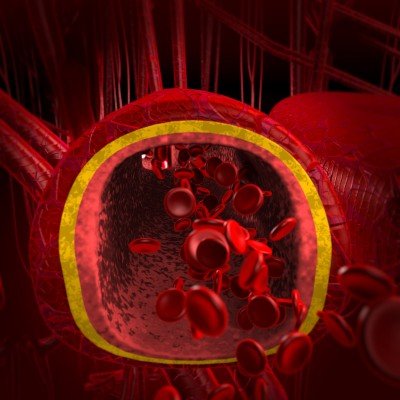 Vasodilation (definition) = the increase in the internal diameter of blood vessels that is caused by the relaxation of smooth muscles within the wall of the vessels, thus causing an increase in blood flow. The opposite effect is vasoconstriction.
During vasodilation, when blood vessels dilate, the blood flow is increased due to a decrease in vascular resistance. However, for practical purposes, the dilation of arteries and arterioles has the most significant therapeutic value since these blood vessels are the main contributors to systemic-vascular resistance and, therefore, dilation of arteries and arterioles leads to an immediate decrease in arterial blood pressure and heart rate. Hence, chemical-arterial dilators are used to treat heart failure, systemic and pulmonary hypertension, and angina. Dilation of venous-blood vessels decreases venous-blood pressure. Such agents can be used to reduce cardiac output, venous-and-arterial pressure, tissue edema (due to better capillary-fluid filtration), and myocardial oxygen demands. Let us consider practical or real-life aspects of vasodilation and vasoconstriction. Official medical sources ignore these major aspects.
Content of this page:
Vasodilation, vasoconstriction, and CO2: most potent vasodilator
 Among arterial dilators, the natural vasodilation agent CO2 is probably the most powerful chemical. The vasodilation effect is present in healthy people due to normal arterial CO2 concentration. According to Dr. M. Kashiba, MD and his medical colleagues from the Department of Biochemistry and Integrative Medical Biology, School of Medicine, Keio University in Tokyo, CO2 is a “potent vasodilator” (Kashiba et al, 2002), while Dr. H. G. Djurberg and his team from the Department of Anesthesia, Armed Forces Hospital, in Riyadh, Saudi Arabia wrote that “Carbon dioxide, a most potent cerebral vasodilator…” (Djurberg et al., 1998).
Nitric oxide is another very potent vasodilator, which is generated within the human body from foods. More about Most Potent Natural Vasodilators: CO2 and NO.
Who is going to suffer from vasoconstriction?
Since CO2 is the most potent vasodilator, vasoconstriction should be a problem for those people who suffer from arterial hypocapnia. This relates to people with hyperventilation (or breathing more than the medical norms) and a normal or nearly normal ventilation-perfusion ratio (e.g., no problems with lungs). Indeed, people with, for example, COPD, may hyperventilate, but their blood CO2 is generally higher than normal. Here are some studies that explain blood flow and vasodilation/vasoconstriction in healthy and sick people.
Minute ventilation rates (chronic diseases)
| Condition | Minute ventilation |
Number of people |
All references or Click below for abstracts |
| Normal breathing | 6 L/min | – | Medical textbooks |
| Healthy Subjects | 6-7 L/min | >400 | Results of 14 studies |
| Heart disease | 15 (+-4) L/min | 22 | Dimopoulou et al., 2001 |
| Heart disease | 16 (+-2) L/min | 11 | Johnson et al., 2000 |
| Heart disease | 12 (+-3) L/min | 132 | Fanfulla et al., 1998 |
| Heart disease | 15 (+-4) L/min | 55 | Clark et al., 1997 |
| Heart disease | 13 (+-4) L/min | 15 | Banning et al., 1995 |
| Heart disease | 15 (+-4) L/min | 88 | Clark et al., 1995 |
| Heart disease | 14 (+-2) L/min | 30 | Buller et al., 1990 |
| Heart disease | 16 (+-6) L/min | 20 | Elborn et al., 1990 |
| Pulm hypertension | 12 (+-2) L/min | 11 | D’Alonzo et al., 1987 |
| Cancer | 12 (+-2) L/min | 40 | Travers et al., 2008 |
| Diabetes | 12-17 L/min | 26 | Bottini et al., 2003 |
| Diabetes | 15 (+-2) L/min | 45 | Tantucci et al., 2001 |
| Diabetes | 12 (+-2) L/min | 8 | Mancini et al., 1999 |
| Diabetes | 10-20 L/min | 28 | Tantucci et al., 1997 |
| Diabetes | 13 (+-2) L/min | 20 | Tantucci et al., 1996 |
| Asthma | 13 (+-2) L/min | 16 | Chalupa et al., 2004 |
| Asthma | 15 L/min | 8 | Johnson et al., 1995 |
| Asthma | 14 (+-6) L/min | 39 | Bowler et al., 1998 |
| Asthma | 13 (+-4) L/min | 17 | Kassabian et al., 1982 |
| Asthma | 12 L/min | 101 | McFadden, Lyons, 1968 |
| Sleep apnea | 15 (+-3) L/min | 20 | Radwan et al., 2001 |
| Liver cirrhosis | 11-18 L/min | 24 | Epstein et al., 1998 |
| Hyperthyroidism | 15 (+-1) L/min | 42 | Kahaly, 1998 |
| Cystic fibrosis | 15 L/min | 15 | Fauroux et al., 2006 |
| Cystic fibrosis | 10 L/min | 11 | Browning et al., 1990 |
| Cystic fibrosis* | 10 L/min | 10 | Ward et al., 1999 |
| CF and diabetes* | 10 L/min | 7 | Ward et al., 1999 |
| Cystic fibrosis | 16 L/min | 7 | Dodd et al., 2006 |
| Cystic fibrosis | 18 L/min | 9 | McKone et al., 2005 |
| Cystic fibrosis* | 13 (+-2) L/min | 10 | Bell et al, 1996 |
| Cystic fibrosis | 11-14 L/min | 6 | Tepper et al., 1983 |
| Epilepsy | 13 L/min | 12 | Esquivel et al., 1991 |
| CHV | 13 (+-2) L/min | 134 | Han et al., 1997 |
| Panic disorder | 12 (+-5) L/min | 12 | Pain et al., 1991 |
| Bipolar disorder | 11 (+-2) L/min | 16 | MacKinnon et al., 2007 |
| Dystrophia myotonica | 16 (+-4) L/min | 12 | Clague et al., 1994 |
Note that advanced stages of some conditions (e.g., asthma and CF) can lead to lung destruction,
ventilation-perfusion mismatch and arterial hypercapnia, causing a further reduction in body oxygen levels.
However, there are solid physiological reasons why the first creatures with lungs, that existed more than 2 million years ago, did not suffer from CO2 related vasodilation due to one environmental factor. The explanation to this curious fact is provided below as your bonus content. This factor also explains why hyperventilation was useful and effective in order to get more oxygen in the cells of the body.
The composition of the air was very different. CO2 levels in the air, according to studies, was about 10-12%, while oxygen levels were less than 1% when first creatures with lungs appeared on Earth. Hence, they could not get less than 10% CO2 in the lungs and blood however heavy they breathed.
[/sociallocker]
Studies related to CO2-induced vasodilation and vasoconstriction
Dr. K. P. Buteyko and his colleagues found that there were vasoconstrictive effects of hypocapnia (CO2 deficiency) on arteries and peripheral blood vessels (Buteyko et al., 1964a; Buteyko et al., 1964b; Buteyko et al., 1964c; Buteyko et al., 1965; Buteyko et al., 1967), while additional CO2 causes vasodilation, which is a normal state of arteries and arterioles.
 As western physiological studies found, vasodilation requires normal arterial CO2 concentration, while hypocapnia (low CO2 concentration in the arterial blood) decreased perfusion of the following organs due to vasoconstriction:
– brain (Fortune et al., 1995; Karlsson et al., 1994; Liem et al., 1995; Macey et al., 2007; Santiago & Edelman, 1986; Starling & Evans, 1968; Tsuda et al., 1987),
– heart (Coetzee et al., 1984; Fox et al., 1979; Karlsson et al., 1994; Okazaki et al., 1991; Okazaki et al., 1992; Wexels et al., 1985),
– liver (Dutton et al, 1976; Fujita et al., 1989; Hughes et al., 1979; Okazaki, 1989),
– kidneys (Karlsson et al., 1994; Okazaki, 1989),
– spleen (Karlsson et al., 1994),
– colon (Gilmour et al., 1980).
Some abstracts from these studies are provided at the bottom of this page.
Vasodilation and vasoconstriction in simple terms
 What is the physiological mechanism of the reduced blood flow to vital organs? Arteries and arterioles have tiny smooth muscles that can constrict or dilate (causing vasodilation) depending on CO2 concentrations. When we breathe more, our arterial CO2 level becomes smaller; blood vessels constrict and vital organs (like the brain, heart, kidneys, liver, stomach, spleen, colon, etc.) get less blood supply. Similarly, hypocapnia causes spasm of all other smooth muscles of the human body: airways or bronchi and bronchioles, diaphragm, colon, bile ducts, etc.
This effect explains why sick people have less blood going to their brains, heart, liver, and other vital organs. A normal breathing pattern provides people with normal perfusion and oxygen supply for all vital organs due to CO2 vasodilation. However, since modern people breathe more than the medical norm (hyperventilate), they have to suffer from CO2-deficiency effects.
Are there any related systemic effects? The state of these blood vessels (arteries and arterioles) defines total resistance to the systemic blood flow in the human body. Thus, hypocapnia increases strain on the heart. Normal CO2 parameters make resistance to blood flow in the cardiovascular system small. Hence, breathing directly participates in the regulation of the heart rate. The father of cardiorespiratory physiology, Yale University Professor Yandell Henderson (1873-1944), investigated this effect about a century ago.
Among his numerous physiological studies, he performed experiments with anesthetized dogs on mechanical ventilation. The results are described in his publication “Acapnia and shock. – I. Carbon dioxide as a factor in the regulation of the heart rate”. In this article, published in 1908 in the American Journal of Physiology, he wrote, “… we were enabled to regulate the heart to any desired rate from 40 or fewer up to 200 or more beats per minute. The method was simple. It depended on the manipulation of the hand bellows with which artificial respiration was administered. As the pulmonary ventilation increased or diminished, the heart rate was correspondingly accelerated or retarded” (p.127, Henderson, 1908).
Be observant. When you get a small bleeding cut or a wound, deliberately hyperventilate and see if that can help stop the bleeding. It should stop due to vasoconstriction. As an alternative, perform comfortable breath-holding and breathe less and accumulate CO2. What would happen with your bleeding? (It should increase due to vasodilation.) Now you know what to do after dental surgeries, brain traumas, and other accidents involving bleeding. It is natural for humans and other animals to breathe heavily in such conditions. Hence, hyperventilation can be life-saving in cases of severe bleeding.
 As many health professionals found, blood flow to vital organs is directly proportional to blood CO2 concentrations. Consider this example of vasodilation – vasoconstriction. According to the Handbook of Physiology (Santiago & Edelman, 1986), cerebral blood flow decreases by 2% for every mm Hg decrease in CO2 pressure. When people have 20 mmHg CO2 in their blood (half of the official norm), they have about 40% less blood supply to the brain in comparison with normal conditions. Only skeletal muscles can get more blood in conditions of hyperventilation.
“…cerebral blood flow decreases 2% for every mm Hg decrease in CO2” Professor Newton, University of Southern California Medical Center, Hyperventilation Syndrome, 2004 June 17, Topic 270, p. 1-7 (www.emedicine.com).
Personal experiment. Take 100 deep and fast breaths through the mouth, and you can pass out due to lack of oxygen and inadequate blood supply for the brain. Why? Because CO2 is a vasodilator (dilator of blood vessels).
Note that there is another powerful chemical NO (nitric oxide) that is also able to produce vasodilation, while its lack causes vasoconstriction. Humans generate nitric oxide in sinuses and, hence, mouth breathing prevents us from inhaling nitric oxide (see web page: Nasal Nitric Oxide Effects). Meanwhile, as some medical studies claim, CO2 is the most potent known vasodilator.
YouTube Video about CO2 – Vasodilation-Vasoconstriction effect
The first part of this video clip explains how and why voluntary forceful hyperventilation leads to fainting: when we start to breathe heavily, CO2 content in the arterial blood sharply falls within seconds and blood vessels (arteries and arterioles) constrict since CO2 is the crucial factor in vasodilation.
References about the effects of CO2 on vasodilation.
– This page in Spanish: Vasodilatación y Vasoconstricción.