- Updated on November 1, 2020
 By Dr. Artour Rakhimov, Alternative Health Educator and Author
CO2: The Best Natural Muscles Relaxant
Carbon dioxide (CO2) is most likely the best natural muscles relaxant since it also provides O2 for the muscles and other body cells. I have seen the powerful effects of breathing exercises on hundreds of my students. Their posture, gait, and many other lifestyle factors change. When people have normal breathing parameters during their basal or automatic breathing, they effortlessly maintain correct posture with a straight spine. It is easy for them to have diaphragmatic (vs. chest) breathing 24/7. There are no signs of stress in their gait.
What happens with muscles and posture in modern people?

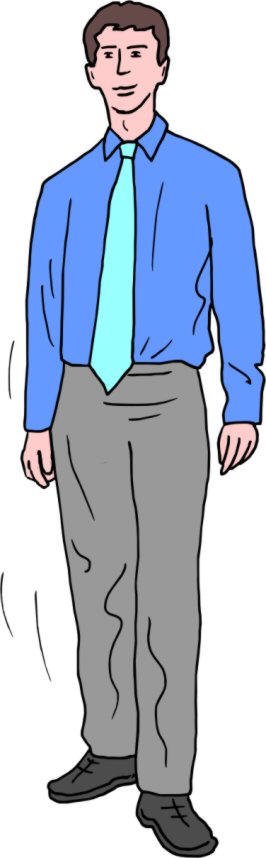
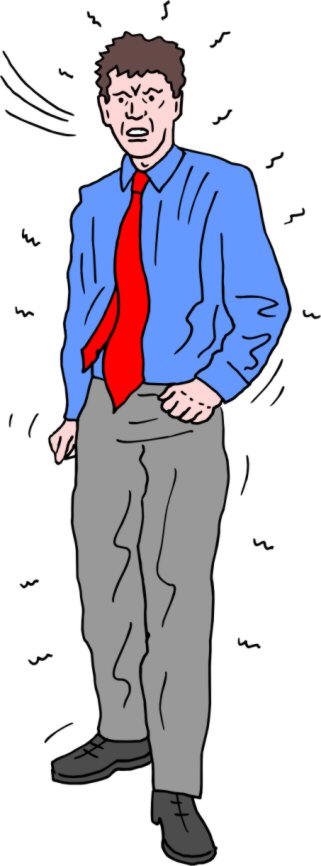 Since ordinary modern people breathe about twice more than the medical norm, they suffer from the effects of chronic hyperventilation. One of them is a cellular CO2 deficiency (hypocapnia), which makes muscles cells tense and irritable since CO2 is a muscles relaxant.
Physiological science accumulated evidence of the adverse effects of low carbon dioxide levels on muscles cells. In his research review paper, “Physiological effects of hyperventilation” Dr. Brown from the Department of Physiology at the University of Kansas Medical Center (USA) analyzed almost 300 professional studies. He stated, “Studies designed to determine the effects produced by hyperventilation on nerve and muscles have been consistent in their finding on increased irritability” (Brown, 1953). Muscles cells become irritated or abnormally sensitive and predisposed to spasms and twitching.
That was also an experimental observation of Dr. Hurlock from the Department of Physiology (University of Birmingham Medical School, UK) in his book Muscle blood flow (Hurlock, 1973). Many other published research studies found that CO2 is a natural muscles relaxant (Lamont, 1987; Gencarelli, 1983; Hoylea, 1960).
This fact, together with the properties of CO2 mentioned previously, will help us to understand the mechanism by which normal carbon dioxide concentrations can restore the harmonious work of different muscular groups (such as all smooth muscles of arteries and arterioles, the heart, respiratory muscles, muscles of the digestive tract, etc.) in order to eliminate muscular spasms (e.g., heart attacks, asthma attacks, constipation, etc.). In fact, there are separate web pages that consider how CO2 deficiency contributes to or even creates chest breathing, vasoconstriction, and bronchoconstriction.
Moreover, since skeletal muscles also get irritated, it is reasonable to expect that when people breathe too much, they are more likely to be tense, anxious, stressed, aggressive, and violent. Together with the abnormally excited state of the nervous system, this muscular effect can create conditions of tension and irritability. A slight provocation can create various problems for a hyperventilating person (and for those who are around!) since the muscles are irritated and the brain cells are abnormally excited.
Vice versa, normal carbon dioxide concentrations would result in muscular relaxation. Hence, the relief or treatment of chronic problems with muscular tension should be based on breathing exercises or breathing retraining therapies.
The best muscles relaxant influences feelings and emotions
Studies have found that people become duller and less able to concentrate because of chronic overbreathing. In addition, because of “spontaneous and asynchronous firing of cortical neurons”, people can become impulsive, moody, inconsistent, anxious, irritated, intolerant, disrespectful, depressed, hyperactive, verbally abusive, jealous, envious, greedy, and addicted to various unnatural substances and activities due to abnormal effects of CO2 deficiency on the human nerve cells. During overbreathing, it becomes more and more difficult to control irrational emotions. Confusion is another common result of overbreathing.
(Note that normal breathing does not guarantee a complete absence of irrational emotions. Upbringing and environmental factors are also important. However, for most people, destructive or self-defeating behavior is possible or more likely in conditions of hyperventilation.)
Due to tense muscles, CO2-deficient people can easily become poorly coordinated, over-active, aggressive, or even violent (see right). This often leads to destructive behavior, which requires self-justification on the part of the perpetrators. How is that possible? Physiology has proved that the nerve cells become irritable during hyperventilation or cell hypocapnia. As a result, the brain, instead of being a tool for the exploration of the world and the analysis of one’s behavior, often becomes a tool for the invention of excuses.
In other situations, hyperventilating people can suffer themselves. CO2-related physiological mechanisms (muscular spasms and abnormally excited states of the nerve cells) help us to understand and prevent (treat) epilepsy and other types of seizures; many, but not all black-outs; febrile seizures; cases of eclampsia; and twitches. In many life-threatening situations, when breathing is very heavy, and people can have heart attacks, strokes, or epilepsy attacks, their bodies can become very stiff with a decisive or significant contribution due to CO2 deficiency.
There are three additional tools in order to make muscular cells relaxed. These methods are provided right below here as your bonus content.
These 3 remedies include meditation (use this link for buying meditation audio files – Top Meditation Science and Practice, then go to YouTube and search using his name), Earthing (grounding) of the human body, and honey.
[/sociallocker]
For clinical studies with abstracts related to CO2 effects, visit this page: muscle relaxers.
Medical references
Brown E, Physiological effects of hyperventilation, Physiological Reviews 1953 Oct; 33 (4): p. 445-471.
Hurlock OT, Muscle blood flow, 1973; Swets & Zeitlinger, Amsterdam.
Lamont A, Roberts M, McLeod L, Hypocarbia [CO2 deficiency] and muscles relaxant plasma levels, Anaesthesia and Intensive Care, 1987 Aug; 15(3): p. 354-355.