- Updated on September 11, 2020
 By Dr. Artour Rakhimov, Alternative Health Educator and Author
- Medically Reviewed by Naziliya Rakhimova, MD
 Millions of people suffer from various types of cramps (spasms) every day (Jansen et al, 1991). The most common and painful types are stomach cramps, spasms in muscles (e.g., legs or feet), and severe menstrual cramping (due to periods). This simple breathing remedy was developed and used by over 150 Russian MDs. They have successfully applied this method to thousands of their patients. Virtually all people reported that they could prevent or stop their suffering in about 1-2 minutes. This technique is used to relieve severe menstrual cramps, stomach and leg-foot spasms, and many other types of cramps. It can be also applied during night-time sleep.
Steps to Follow (How to Get Rid of Muscle Spasms)
 Relax all your muscles, the affected area included. Next, after your usual exhalation, pinch your nose and hold your breath until you experience initial discomfort, but bear in mind that you need to breathe only through the nose after the breath hold.
When you release the nose after this period of breath holding, instead of taking a large inhalation, take a smaller inhalation using the abdominal (stomach) muscles only and then immediately relax all muscles. Take another (smaller) inhalation using the abdomen and again completely relax to exhale.
With each breath, inhale a small amount of air (about 20-30% less than your usual breathing).
 Make these inhalations only through the nose and using the abdominal muscles. Then completely relax all your muscles. Your goal is to maintain a shortage of air or air hunger for the next 1-2 minutes.
This breathing technique helps you to stop or eliminate cramping about 2-10 times faster than doing nothing or using conventional techniques (relaxing and stretching the affected muscles or area, and so forth). Severe spasms may require a period of breath retraining so that your automatic breathing pattern is slower and lighter (for higher body oxygenation).
If you use this breathing exercise prior night-time sleep for spasms in legs, feet, or stomach; or spasms due tosevere menstrual periods, lie on your chest or the left side.
Here is a YouTube video: How to get rid of cramps
The YouTube video provides instructions for this breathing exercise.
How does it help in getting rid of cramps?
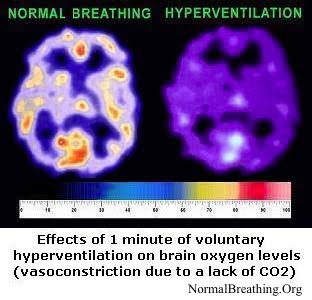
As a result of this exercise, higher CO2 levels suppress increased (or abnormal) excitability of neurons, restores normal transmission of signals in the nervous network that controls work of muscle cells, and improves blood and oxygen delivery to the affected area.
The same mechanism is applicable to muscle spasms due to severe menstrual periods and those during sleep at night.
While pain due to most leg spasms, and muscle or stomach cramps can be reduced or stopped in 1-2 minutes, more time and higher body-oxygen levels (up to 30-35 seconds) are required for elimination of suffering due to severe menstrual periods.
How to get rid of cramps and period cramps for good
For many people, the above exercise is not enough to get rid of cramps completely. Here are 3 steps to solve this problem completely (for over 90% of people):
Solution 1. Nearly all people with a poor diet cannot get rid of their cramps due to a lack of a certain unknown-yet chemical substance in vegetables that makes cramps disappear.
These vegetables (that contain this substance) are dark (usually green or brown), such as broccoli, lentils (green and brown lentils) and beans (but not from cans or jars); and possibly leafy greens, like spinach, green or red lettuces, and so on. Try eating them for 1-2 days and monitor the effects.
Solution 2. For many, but not all people, electrical grounding of the body to Earth fixes cramps too. Cramps in the past were very rare since people had a barefoot lifestyle, which provided humans with free electrons from Earth.
On the other hand, nearly all contemporary people carry a large positive electrical charge (indicating electron deficiency). Grounding while sleeping and during the day is a very effective method to get rid of cramps for good. You can learn more about grounding and grounding techniques on pages devoted to Earthing and How to ground yourself.
Solution 3 (the ultimate “cramp-killer”). There is a simple number for the body oxygen test that you need to have 24/7 in order to be cramp-free 24/7. Find it out below…
Together with the 2 previous methods, get over 30-35 seconds for the body-oxygen test so that you have much better fitness, sleep, digestion and overall health. See “Learning Section” of this site for more details.
[/sociallocker]
 Warnings.
– If you suffer from hypertension, panic attacks, anxiety, or migraine headaches, you may experience negative effects due to holding your breath for too long. You can apply a safer version of the same exercise without holding your breath: start to breathe about 10% less and gradually accumulate air hunger.
– If you are in a poor health state, your breath hold is going to be short (because of low body-oxygen levels) and your breathing pattern will be frequent during this reduced breathing exercise. This is normal because you are hyperventilating 24/7.
– Deficiencies in minerals (calcium, magnesium, sodium, and potassium) make spasms more frequent and severe. Learn methods and ways to check and correct these nutritional deficiencies: Major nutrients guide for body oxygenation.
Related web page: Causes of cramps.
How automatic-breathing parameters relate to spasms and cramping
(muscle, stomach, leg cramps in bed; periods or menstrual cramps; and many other types)
| Respiratory Frequency* | Body Oxygen Test (morning result) |
Chances of cramps |
| More than 20 breaths/min | Less than 20 s | Very possible |
| 15-20 breaths/min | 20-30 s | Possible |
| 12-15 breaths/min | 30-40 s | Very rare |
| 12 or less breaths/min | > 40 s | Virtually impossible |
* You cannot measure your respiratory frequency just by counting it (more info: Breathing rates)
References
Jansen PH, Joosten EM, Van Dijck J, Verbeek AL, Durian FW, The incidence of muscle cramp, J Neurol Neurosurg Psychiatry. 1991 Dec; 54(12): 1124-5.