![Spanish flag with link to page about: Pranayama Benefits: Only If You Extend Cycles and Breathe Less [24/7!]](https://www.normalbreathing.com/wp-content/uploads/2019/07/spanish-sign-s.png "Pranayama Benefits: Only If You Extend Cycles and Breathe Less [24/7!]")
- Updated on November 1, 2020
![Pranayama Benefits: Only If You Extend Cycles and Breathe Less [24/7!] 1](https://en.gravatar.com/userimage/17352396/a82dc6cd35be1847e9005a6148746959.jpeg "Pranayama Benefits: Only If You Extend Cycles and Breathe Less [24/7!]") By Dr. Artour Rakhimov, Alternative Health Educator and Author
By Dr. Artour Rakhimov, Alternative Health Educator and Author
- Medically Reviewed by Naziliya Rakhimova, MD
In this YouTube video (below), yoga teacher Volker Schmitz from Hamburg, Germany, and Dr. Artour (Toronto, Canada) discuss progress in pranayama and its benefits.
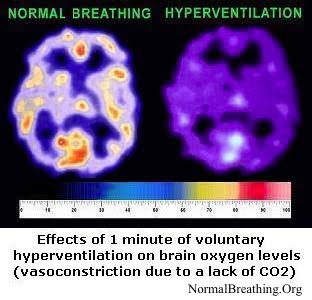 Instead of exploring and teaching the essence of Pranayama breathing and Pranayama benefits, most yoga teachers today are busy with dividing and sub-dividing this wise and exceptionally powerful breathing practice into various forms. Yes, there are many possible exercises in Pranayama, but only one essential process: slowing down our automatic breathing and gradually extending the cycles of pranayama.
If you practice the same session (5 s for inhalation, 10 s breath holding, 10 s for exhalation, etc.) even for months or years, you will not get any significant health or pranayama benefits.
 What is true progress in Pranayama breathing?
The Shiva Samhita (17-18 century)
(5) The Pranayama
“22. Then let the wise practitioner close with his right thumb the pingala (right nostril), inspire air through the ida (the left nostril); and keep the air confined – suspend his breathing – as long as he can; and afterwards let him breathe out slowly, and not forcibly, through the right nostril.
23. Again, let him draw breath through the right nostril, and stop breathing as long as his strength permits; then let him expel the air through the left nostril, not forcibly, but slowly and gently.”
“39. When the Yogi can, of his will, regulate the air and stop the breath (whenever and how long) he likes, then certainly he gets success in kumbhaka, and from the success in kumbhaka only, what things cannot the Yogi commend here?”
“43. … from the perfection of pranayama, follows decrease of sleep, excrements and urine.”
Increase of Duration
“53. Then gradually he should make himself able to practice for three gharis (one hour and a half at a time, he should be able to restrain breath for that period). Through this, the Yogi undoubtedly obtains all the longed for powers.”
“57. When he gets the power of holding breath (i.e., to be in a trance) for three hours, then certainly the wonderful state of pratyahar is reached without fail.”
Traditional yoga, as well as yoga books are written 50-100 years ago, say that a yoga student will get pranayama benefits if he or she gradually increases the duration of phases.
How to Get Benefits of Pranayama
 Therefore, the goal is to slow one’s automatic or unconscious breathing pattern. The ideal breathing pattern at rest, as we considered before, is only 3 breaths/min. It corresponds to the very top level (6th zone of super-endurance) in the Buteyko Table of Health Zones. This is the goal of an aspiring hatha yoga student, if he or she wants to be a real yoga master. This zone corresponds to up to 7-8 minutes for the maximum breath holding time test (after a complete inhalation and for as long as possible).
 Clinical experience of about 200 Russian medical doctors shows that if our basal breathing pattern remains unchanged after weeks or months of Pranayama practice, then our diseases, symptoms, pains, sleep, anxieties, digestion, body weight, and so on, will also be unchanged.
Why does the practice of Pranayama breathing sometimes not result in improvements in health? Several possible reasons exist, for example, a person can spend many hours every day practicing Pranayama, but if he or she sleeps on his back or breathes through his mouth during sleep, their unconscious breathing pattern will likely not change due to the Sleep Heavy Breathing Effect that can cancel all the benefits of Pranayama breathing exercises.
Hence, in order to achieve Pranayama benefits, one needs to increase his or her morning body-oxygen levels. Correction of abnormal lifestyle factors and additional methods (e.g., physical exercise with nose breathing) are necessary for fast progress. These lifestyle changes and instructions in relation to sleep hygiene, cold shower rules, physical exercise benefits, nutritional deficiencies and so forth are discussed on this site.
How Does Pranayama Work?
 Yoga Pranayama breathing practice (e.g., alternate nostril breathing) increases alveolar CO2 tension because it is a very slow breathing exercise. Naive people incorrectly call Pranayama a “deep breathing exercise”, and this confuses people. Dr. Buteyko was absolutely correct in saying,
Advocates of deep breathing confuse these two concepts and, in their defense, they say, “Yogis, for thousands of years, have breathed deeply and we see that they are super-humans”. Quite the contrary. Full breathing of yogis is shallow breathing in our understanding. It is done, first, very slowly, inhalations and exhalations as well; second, with maximum breath holds after inhalations and exhalations.
And finally one should not confuse the following concepts: We are speaking about breathing, which goes on day and night, about our basal breathing, the foundation of life. Meanwhile, the system of yogis has separate breathing exercises. Therefore, it is practically unimportant for us how and what you do: feet upwards or downwards, through the right or left nostril, or by right or left side. We are interested in where you will arrive as a result of these exercises. If carbon dioxide increases, and breathing decreases, with each day, then this will ensure the transition of man into a super-endurance state.
(For more Dr. Buteyko quotes about yoga and yoga Pranayama breathing, visit Yoga breathing)
Depending on the current CP for a person, with progress in breathing retraining, he or she would be able to have longer and longer cycles while practicing pranayama. The exact relationship (CP to pranayama cycles) would surely depend on the volume of the lungs and the “training effect” (an ability to have a larger difference between the maximum pause or maximum breath holding and the CP). If you want to know possible breathing cycles for pranayama with the ratio 1:4:2:2 (inhalation, breath hold, exhalation, breath hold), and how the body oxygen test (CP test) in seconds relates to these breathing cycles, these details are provided as your bonus content below here.
At 30 seconds current CP, one could be able to breathe with 5:20:10:10 (all in seconds, starting with an inhalation first). With around 60-80 s CP, 10:40:20:20 should be possible.
[/sociallocker]
 Warning. Breathing exercises can cause powerful cleansing reactions and can be dangerous for pregnant women, people with organ transplants, GI problems, and panic attacks, as well as those who take medication for diabetes, hypertension, hypothyroidism, and other conditions. Consult your health care provider and follow special guidelines, which can be found in the Module Restrictions, limits, and temporary contraindications.