Glutamine: Synthesized in the Brain... If You Breathe Correctly
Glutamine is the most abundant and most required amino acid in the human organism (hence,
its popularity for bodybuilding). It is also the amino acid most
required for tissue repair. However, “since the supply of glutamic acid from the
circulating blood is insufficient for the formation of additional amount of
glutamine, the dicarboxylic acid has to be synthesized in the brain.” (Berl
et al, 1962) This last substance is a CO2 derivative and its production depends
on CO2 levels in the brain and our breathing patterns.
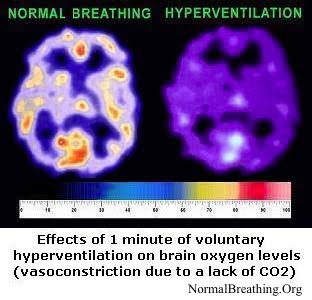
Many normal people - and all people with chronic diseases - have low body oxygen levels due to deep automatic breathing (chronic hyperventilation) 24/7. Why is it so?
Overbreathing,
as shown in dozens of studies, leads to reduced oxygen transport to brain
cells and cells of other vital organs in the human body. This leads to anaerobic
acidic environment and generation of free radicals causing oxidative damage to
the brain and other tissues and organs. As a result, people experience increased
glutamine demands for cell repair and insufficient glutamine synthesis due to low levels of CO2 in body cells. Why could CO2 levels matter?
A
review of numerous research studies devoted to this subject was given by Waelsch
and colleagues (1964) in an article entitled “Quantitative
aspects of CO2 fixation in mammalian brain in vivo”. They found that
aspartic and glutamic amino acids and glutamine were the substances chemically
synthesized in mammalian brains. But CO2 is used
to synthesize glutamine (Rossi et al, 1962; Waelsch et al, 1964; Pincus,
1968; Pincus et al, 1969; Cheng, 1971; Konitzer et al, 1977; Cheng et al,
1978; Tachiki & Baxter, 1980; Lockwood & Finn, 1982; Martin et al, 1992; Oz
et al, 2004). You can read abstracts of some of these studies at the bottom of
this page.
All these studies suggest that the gas we exhale plays the crucial role in glutamine synthesis, while many other studies have found that cell hypocapnia (low CO2) causes generation of free radicals, oxidative stress, chronic inflammation, poor repair of injuries and many other negative effects (see CO2 links below).
Thus,
CO2 can be fixed by the human organism to rebuild nervous tissues in
the brain. The rate of CO2-derived glutamine production is proportional to CO2
concentration in the brain. It follows that low CO2 in the brain not only makes
the brain unreasonably excited (often causing
anxiety, insomnia, fears, panic attacks, aggression, hostility, violence, or other
strong emotions), but also has adverse effects on its cellular repair.
As a result, slow and light diaphragmatic nasal breathing leads to higher oxygen levels in the brain and body cells favoring effective glutamine synthesis and normalizing numerous other chemical reactions.
References: CO2 Effects Web Pages
Vasodilation: CO2 expands arteries and arterioles facilitating perfusion
(or blood
supply) to all vital organs
The Bohr effect
How and why oxygen is released by red blood cells in tissues
Cell Oxygen Levels and oxygen transport are controlled by
alveolar CO2 and breathing
Oxygen Transport depends on
breathing and these two effects (Vasoconstriction-Vasodilation and the Bohr
effect) are parts of two diagrams that summarize influences of hypocapnia (low CO2
content in the blood and cells) on circulation and O2 delivery
Free Radical Generation takes
place due to anaerobic cell respiration caused by cell hypoxia. Hence,
antioxidant defenses of the human body are also regulated by CO2 and breathing
Inflammatory Response is controlled by
breathing since hypoxia leads to or intensifies chronic inflammation through over-expression
of the hypoxia-inducible factor 1, while normal
breathing reduces these processes
Nerve stabilization takes place due to calmative or
sedative effects of carbon dioxide in neurons or nerve cells
Muscle relaxation or relaxation of muscle cells
is normal at high CO2, while hypocapnia causes muscular tension, poor posture
and, sometimes, aggression and violence
Brochodilation - dilation of
airways (bronchi and bronchioles) by carbon dioxide, and their constriction due
to hypocapnia
CO2: Best Natural Cough Suppressant
and "home remedy" since it calms urge-to-cough nerve receptors located in the
tracheobronchial tree and larynx
Blood
pH regulation and regulation of other bodily fluids
CO2: Lung Damage Healer: Elevated carbon
dioxide prevents injury and promotes healing of lung tissues
CO2: Skin and Tissue Healer
Synthesis of Glutamine
in the Brain, CO2 fixation, and other chemical reactions
CO2 myth
"CO2 is a toxic waste gas" myth
Breathing control
How is our breathing regulated? Why hypocapnia makes breathing uneven and erratic?
Reference Web Pages: Breathing norms, Medical Graphs and Tables about Breathing Rates (Minute Ventilation) and
Body Oxygen in Healthy, Normal and Sick People
Breathing
norms Parameters, graph, and description of the normal
breathing pattern
6 breathing myths 6
myths about breathing and body oxygenation (prevalence: over 90%)
Hyperventilation Definitions of
hyperventilation: their advantages and weak points
Hyperventilation Syndrome in the
Sick. Table
1. Western scientific evidence about prevalence of CHV
(chronic hyperventilation) in patients with various chronic conditions
(34 medical studies)
Normal Minute Ventilation in
Healthy Subjects: Easy and Light Breathing (14 Studies)
Hyperventilation Prevalence Present in Over 90% of
Normal People (24 medical publications)
HV and hypoxia
How and why deep breathing reduces oxygenation of cells and tissues of
all vital organs
Body oxygen test
How to measure your own breathing and body oxygenation (a simple DIY test)
Body oxygen in healthy
Table 4. CP (body oxygen level) in healthy people (27 medical
studies)
Body oxygen in sick Table 5.
CP (body oxygen level) in sick people (14 medical studies)
Buteyko
Table of Health Zones with clinical description of most common zones
Morning HV Morning
hyperventilation effect or how and why critically ill people are most
likely to die during early morning hours
References: Glutamine synthesis and CO2 fixation (Titles only and then abstracts below)
Quantitative aspects of CO2 fixation in mammalian brain in vivo (Waelsch
et al, 1964)
Neuroglial metabolism in the awake rat brain: CO2 fixation increases with
brain activity (Oz et al, 2004)
Carbon dioxide fixation in rat brain: Relationship to cerebral
excitability (Pincus et al, 1969)
11C-carbon dioxide fixation and equilibration in rat brain: effects on
acid-base measurements (Lockwood & Finn, 1982)
Role of carbon dioxide fixation, blood aspartate and glutamate in the
adaptation of amphibian brain tissues to a hyperosmotic internal
environment (Tachiki & Baxter, 1980)
Carbon dioxide fixation in the brain: its relation to glucose synthesis (Konitzer
et al, 1977)
Release and fixation of CO2 by guinea-pig kidney tubules metabolizing
aspartate (Martin et al, 1992)
CO2 fixation in the nervous tissue (Cheng, 1971)
The effect of atmospheric carbon dioxide on carbon dioxide fixation in rat
brain (Pincus, 1968)
Rate of CO2 fixation in brain and liver (Rossi et al, 1962)
Effects of sodium thiopental on the tricarboxylic acid cycle metabolism in
mouse brain: CO2 fixation and metabolic compartmentation (Cheng et al,
1978)
Waelsch H, Berl S, Rossi CA, Clarke DD, Purpura DP,
Quantitative aspects of CO2 fixation in mammalian brain in vivo,
J. Neurochem. Oct 1964, 11: 717-728.

New York State Psychiatric Institute and Departments of Biochemistry and
Neurological Surgery, College of Physicians and Surgeons, Columbia
University New York, N.Y.
The data presented in this paper support the conclusion that CO2 fixation in
the mammalian brain is a process which responds to the change in the
metabolic environment. The rate of CO2 fixation is increased when the tissue
is exposed to a metabolic stress, such as an elevated ammonia concentration,
which results in an increased synthesis of glutamine. The data show that CO2
fixation is of considerable significance in brain metabolism and not
negligible. It plays an essential role in maintaining the concentration of
dicarboxylic acids in the citric acid cycle. The continuous removal of
oxoglutarate without replenishment would lead to a breakdown of the citric
acid cycle and consequently to a deficiency in the production of ATP.
Although the data suggest that CO2 fixation may well replenish the
intermediates of the citric acid cycle in case of increased ammonia
concentration in brain tissue, these acute experiments give no answer as to
the chronic effects of ammonia on the citric acid cycle.
Oz G, Berkich DA, Henry PG, Xu Y, LaNoue K, Hutson SM, Gruetter R. .
Neuroglial metabolism in the awake rat brain: CO2 fixation increases with
brain activity.
J Neurosci. 2004 Dec 15;24(50):11273-9.
Center for Magnetic Resonance Research, Department of Radiology, University
of Minnesota, Minneapolis, Minnesota 55455, USA.
Glial cells are thought to supply energy for neurotransmission by increasing
nonoxidative glycolysis; however, oxidative metabolism in glia may also
contribute to increased brain activity. To study glial contribution to
cerebral energy metabolism in the unanesthetized state, we measured neuronal
and glial metabolic fluxes in the awake rat brain by using a double
isotopic-labeling technique and a two-compartment mathematical model of
neurotransmitter metabolism. Rats (n = 23) were infused simultaneously with
14C-bicarbonate and [1-13C]glucose for up to 1 hr. The 14C and 13C labeling
of glutamate, glutamine, and aspartate was measured at five time points in
tissue extracts using scintillation counting and 13C nuclear magnetic
resonance of the chromatographically separated amino acids. The isotopic 13C
enrichment of glutamate and glutamine was different, suggesting significant
rates of glial metabolism compared with the glutamate-glutamine cycle.
Modeling the 13C-labeling time courses alone and with 14C confirmed
significant glial TCA cycle activity (V(PDH)((g)), approximately 0.5
micromol x gm(-1) x min(-1)) relative to the glutamate-glutamine cycle (V(NT))
(approximately 0.5-0.6 micromol x gm(-1) x min(-1)). The glial TCA cycle
rate was approximately 30% of total TCA cycle activity. A high pyruvate
carboxylase rate (V(PC), approximately 0.14-0.18 micromol x gm(-1) x
min(-1)) contributed to the glial TCA cycle flux. This anaplerotic rate in
the awake rat brain was severalfold higher than under deep pentobarbital
anesthesia, measured previously in our laboratory using the same
13C-labeling technique. We postulate that the high rate of anaplerosis in
awake brain is linked to brain activity by maintaining glial glutamine
concentrations during increased neurotransmission.
Pincus JH
Carbon dioxide fixation in rat brain: Relationship to cerebral excitability
Experimental Neurology, Volume 24, Issue 3, July 1969, Pages 339-347
Section of Neurology, Yale University School of Medicine, New Haven,
Connecticut 06510 USA
Experiments were undertaken to determine whether CO2 fixation by cerebral
tissue in the rat is increased by increasing the atmospheric concentration
of CO2. The measure of CO2 fixation was considered the ratio of the specific
activity of glutamate to the specific activity of CO2. This ratio in both
brain and liver of animals exposed to 5% CO2 was double that of control
animals exposed to room air 10, 15, and 30 min after injection. After
breathing a mixture of 20% CO2 and 80% O2 for 30 min, the fixation ratio was
not significantly elevated above control values. Tail blood pH in control
animals was 7.44. After 30-min exposure of the animals to 5% CO2 the pH fell
to 7.16, and after 30 min exposure to 20% CO2 it fell further to 6.58. After
exposure to 20% CO2 three of ten animals had spontaneous seizures. These
experiments indicate that CO2 fixation occurs at all tested concentrations
of inspired CO2 and that a marked increase in CO2 fixation occurs during
exposure to 5% CO2 but not 20% CO2. The possible relationship of the
membrane stabilizing properties of CO2 and CO2 fixation was considered.
Lockwood AH, Finn RD.
11C-carbon dioxide fixation and equilibration in rat brain: effects on
acid-base measurements.
Neurology. 1982 Apr;32(4):451-4.
The positron-emitting isotope 11C was used to label CO2 for studies of
metabolic fixation and equilibration after a single-breath inhalation by
rats. Metabolic fixation and loss of the label via exhalation caused the
metabolized fraction of the label in the brain to rise to 30.1 +/- 0.7%
within 30 minutes. The T12 for equilibration of the label between blood and
brain was 1.95 minutes. When the label was 95% equilibrated, 12% was
metabolically trapped by brain, and when only 5% was trapped, the
blood-brain equilibration process was only 50% complete. Labeled CO2 thus
has limited usefulness as an acid-base or metabolic tracer for
positron-emission tomography.
Tachiki KH, Baxter CF.
Role of carbon dioxide fixation, blood aspartate and glutamate in the
adaptation of amphibian brain tissues to a hyperosmotic internal
environment.
Neurochem Res. 1980 Sep;5(9):993-1010.
Mechanisms have been examined by which hyperosmotic blood plasma might
elevate the levels of aspartate and glutamate in the brain of the toad Bufo
boreas. CO2 fixation was assessed by two in vivo methods using [2-14
C]glucose injected intracisternally. Thirty minutes after injection, the 14C
labeling of glutamate and aspartate was more than 100 times greater in brain
than in liver. In brain tissues, 40 + % of 14C atoms appeared to be
incorporated into aspartate via the pyruvate carboxylase pathway. Brain
tissues of control toads and toads adapting or adapted to hyperosmotic
plasma osmolality revealed no differences in the rate of CO2 fixation as
related to glucose utilization or tissue pool sizes of glutamate and
aspartate. Elevated levels of these amino acids in blood plasma preceded
increases in brain tissues. Carbon atoms required during hyperosmotic
adaptation for expansion of amino acid pools in brain tissues may, in part,
originate from amino acids in blood but apparently not from CO2 fixation in
brain.
Konitzer K, Voigt S, Hetey L.
Carbon dioxide fixation in the brain: its relation to glucose synthesis.
Acta Biol Med Ger. 1977; 36(2):147-56.
The incorporation in vivo of radiocarbon from 14C-bicarbonate in blood into
relevant metabolites in rat brain is described. The animals, partially
hepatectomized and nephrectomized, received the tracer bicarbonate via the
intravenous route. The time course of label was followed in CO2 of blood and
brain, in the anionic and cationic fractions of brain extract, in aspartate,
glutamate, glutamine and in free glucose and in glycogen. From the tracer
kinetic data a flux of 0.08 microgram atom fixed carbon min-1.g-1 brain
tissue was calculated. Substantial amounts of 14C were found in free
glucose, only a few percent in glycogen. The flux of newly synthetized
glucose was approximated to 0.5--1.0 percent of the steady state level of
glucose in brain tissue. In special experiments the localization of 14C in
the carbon chain of aspartate and glucose was examined. 5 min following the
tracer injection a practically total randomization of 14C between C-1 and
C-4 aspartate was seen. From the radioactivity in glucose 94 percent were
found in C-3 and C-4, only 6 percent in residual carbon. This 14C-pattern is
typical for the labelling of glucose by CO2 fixation and retrograde
Embden-Meyerhof pathway.
Martin G, Michoudet C, Vincent N, Baverel G.
Release and fixation of CO2 by guinea-pig kidney tubules metabolizing
aspartate.
Biochem J. 1992 Jun 15; 284 (Pt 3): 697-703.
Laboratoire de Physiologie Rénale et Métabolique, CNRS URA 1177, Faculté de
Médecine Alexis Carrel, Lyon, France.
1. The metabolism of L-[U-14C]aspartate, L-[1-14C]aspartate and
L-[4-14C]aspartate was studied in isolated guinea-pig kidney tubules. 2.
Oxidation of C-1 plus that of C-4 of aspartate accounted for 90-92% of the
CO2 released from aspartate, whereas oxidation of the inner carbon atoms of
aspartate (which occurs beyond the 2-oxoglutarate dehydrogenase step)
represented only 8-10% of aspartate carbon oxidation. 3. The formation of
[1-14C]glutamine and [1-14C]glutamate from [1-14C]aspartate and
[4-14C]aspartate indicated that about one-third of the oxaloacetate
synthesized from aspartate underwent randomization at the level of fumarate.
4. With [U-14C]aspartate as substrate, the percentage of the C-1 of
glutamate and glutamine found radiolabelled after 60 min of incubation was
92.7% and 47.5% in the absence and the presence of bicarbonate respectively.
5. That CO2 fixation occurred at high rates in the presence of bicarbonate
was demonstrated by incubating tubules with aspartate plus [14C]bicarbonate;
under this condition, the label fixed was found in C-1 of glutamate,
glutamine and aspartate, as well as in C-4 of aspartate, demonstrating not
only randomization of aspartate carbon but also aspartate resynthesis
secondary to oxaloacetate cycling via phosphoenolpyruvate carboxykinase,
pyruvate kinase and pyruvate carboxylase. 6. The importance of CO2 fixation
in glutamine synthesis from aspartate is discussed in relation to the
possible role of the guinea-pig kidney in systemic acid-base regulation in
vivo.
Cheng SC.
CO2 fixation in the nervous tissue.
Int Rev Neurobiol. 1971;14:125-57.
Pincus JH.
The effect of atmospheric carbon dioxide on carbon dioxide fixation in rat
brain.
Neurology. 1968 Mar;18(3):293.
Rossi, CA, Berl, S., Clark, DD, Purpura, DP, and Waelsch, H.
Rate of CO2 fixation in brain and liver.
Life Sci. 1962 Oct;1:533-9.
Cheng SC, Naruse H, Brunner EA.
Effects of sodium thiopental on the tricarboxylic acid cycle metabolism in
mouse brain: CO2 fixation and metabolic compartmentation
J Neurochem. 1978 Jun;30(6):1591-3.
Back to Effects of carbon dioxide on human health
| Disclaimer | Copyright © 2011 Artour Rakhimov | About Artour | Contributions | Contact details | Promote this site |